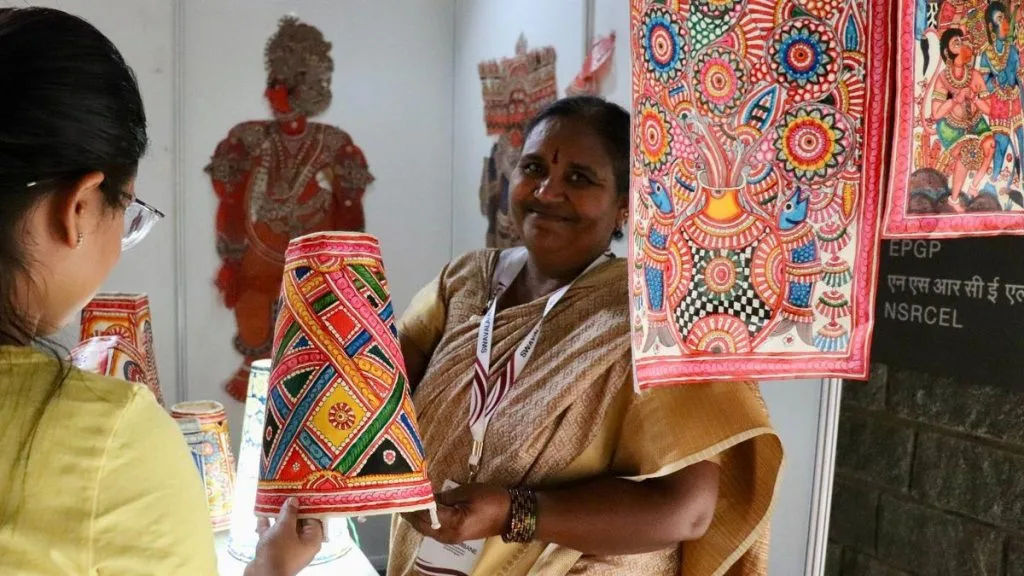
Women’s participation in entrepreneurship in India has historically remained far below its potential, not because of lack of ambition or talent, but due to systemic constraints that disproportionately affect women. Limited access to capital, absence of sustained mentoring, weak market linkages, and minimal institutional handholding have made entrepreneurship a difficult path, particularly for young women studying in smaller towns and universities outside major metropolitan centres. For many, the lack of exposure and confidence at an early stage of career decision-making has meant that entrepreneurship never even appears as a realistic option.
Recognising this persistent gap, the Ministry of Skill Development and Entrepreneurship launched the Swavalambini – a Women Entrepreneurship Programme in February 2025 as a pilot project. The programme is specifically targeted at female students enrolled in Higher Education Institutions and universities, with the objective of introducing entrepreneurship early in their professional journey, before social pressures, risk aversion, or lack of opportunity begin to narrow their choices. Rather than treating entrepreneurship as a fallback option, Swavalambini positions it as a legitimate, aspirational, and achievable career path.
Unlike many earlier initiatives that focused on short-term skill training or standalone workshops, Swavalambini has been conceptualised as a long-duration, end-to-end entrepreneurial journey. The programme is designed to take participants through every stage of enterprise development, beginning with awareness and ideation and extending all the way to business creation, mentoring, and handholding support. This structure reflects the understanding that entrepreneurship is not a single decision but a process that requires time, guidance, and consistent support.
The implementation of the Swavalambini Scheme rests on a carefully designed institutional collaboration. The Ministry of Skill Development and Entrepreneurship is responsible for the overall execution, supervision, monitoring, and funding of the programme. NITI Aayog, through its Women Entrepreneurship Platform, acts as the knowledge partner, contributing mentoring support, organising workshops, facilitating access to seed funding, and recognising successful participants through initiatives such as Award To Reward.
On the ground, the programme is implemented by two specialised autonomous institutions: the National Institute for Entrepreneurship and Small Business Development in Noida and the Indian Institute of Entrepreneurship in Guwahati. This multi-layered framework ensures that Swavalambini is not limited to classroom-based learning but is anchored in policy oversight, national networks, and practical entrepreneurship expertise.
Currently, Swavalambini is being implemented in its pilot phase across six Higher Education Institutions and universities located in five states-Assam, Meghalaya, Mizoram, Uttar Pradesh, and Telangana. The selection of these states reflects a conscious effort to ensure regional diversity, covering the North-East, a large Hindi-speaking state, and southern India. By doing so, the programme seeks to test its effectiveness across varied socio-economic and educational contexts. The government has also clarified that there is no proposal at present to expand the scheme to Andhra Pradesh, underlining that the pilot phase is still under evaluation before any nationwide rollout is considered.
The beneficiaries of the Swavalambini Scheme are young women students enrolled in HEIs and universities who demonstrate interest in entrepreneurship, innovation, and self-employment. The programme has been designed to cover 1,200 female students during the pilot phase. By focusing on students rather than already established entrepreneurs, Swavalambini attempts to shape entrepreneurial thinking at an early stage, when guidance and exposure can have a lasting impact on career trajectories. This early intervention model distinguishes the scheme from many previous initiatives that primarily targeted individuals who had already entered business.
At the core of Swavalambini is a structured, multi-stage training model that mirrors the real-life entrepreneurial journey. The first stage focuses on building awareness and confidence among participants. Through the Entrepreneurship Awareness Programme, students are introduced to the basic idea of entrepreneurship, the range of government schemes and institutional support available, the functioning of startup ecosystems, and examples of women who have successfully built enterprises despite challenges.
This stage plays a crucial role in breaking mental barriers and helping participants view entrepreneurship not as a risky gamble but as a viable and respectable career option.
From this larger pool of participants, a smaller group is selected for more intensive training under the Entrepreneurship Development Programme. This phase is designed to convert ideas into actionable plans. Participants receive in-depth training in areas such as validating business ideas, developing skills and production processes, accessing finance and credit, building market linkages, understanding legal and regulatory compliance, and networking with service providers and potential collaborators. By addressing these practical aspects, the programme bridges the gap between aspiration and execution, which is often where many potential entrepreneurs falter.
Following formal training, selected participants receive an extended period of mentorship and handholding support lasting 21 weeks. This phase is particularly significant because it addresses the most vulnerable stage of enterprise development, the early execution phase. During this period, industry leaders and experienced entrepreneurs mentor participants, offering guidance on real-world challenges such as pricing strategies, sourcing of raw materials, branding, customer acquisition, and scaling operations. Mentors also share personal experiences, including failures and setbacks, helping participants develop resilience and realistic expectations. The long duration of this support recognises the fact that most startups fail not at the idea stage, but when faced with practical and operational challenges.
To ensure that the impact of Swavalambini extends beyond individual participants, the programme also includes a Faculty Development Programme. Faculty members from participating institutions undergo a five-day intensive training designed to equip them with the skills needed to identify entrepreneurial talent, guide students through ideation and incubation, and provide ongoing mentorship even after the pilot phase concludes. By strengthening the capacity of educators, the programme aims to embed entrepreneurship within campus culture, making it a sustained institutional priority rather than a one-time intervention.
As of January 29, 2026, significant progress has been made under the pilot project. All targeted faculty members have completed training, while a substantial number of students have already undergone entrepreneurship awareness and development programmes. In several states, advanced stages of training are still ongoing, reflecting the phased nature of the implementation. These numbers indicate that while the programme is still mid-course, it has already established a foundational ecosystem for women entrepreneurship within participating institutions.
Financially, the Ministry of Skill Development and Entrepreneurship has allocated ₹40,46,016 for training implementation through NIESBUD and IIE. A portion of this amount has already been released, with further disbursements linked to progress and evaluation. The funding model is deliberately modest and focused on capacity-building rather than direct subsidies, emphasising sustainability and skill development over short-term financial assistance.
To ensure transparency and effectiveness, a comprehensive monitoring and evaluation mechanism has been put in place at the Ministry level in collaboration with NITI Aayog. This system tracks participant outcomes, assesses business creation and sustainability, measures institutional capacity-building, and identifies best practices that could inform future expansion. The data generated through this process will play a decisive role in determining whether Swavalambini is scaled up at the national level.
What sets Swavalambini apart from many earlier entrepreneurship schemes is its emphasis on early-stage intervention, long-term mentoring, institutional ecosystem-building, and women-specific challenges. Rather than focusing solely on credit linkage or short-term training, the programme reflects a shift from welfare-oriented empowerment to capability-based empowerment, where women are equipped with knowledge, networks, and confidence to build sustainable enterprises.
The Swavalambini Scheme represents a strategic attempt to reshape India’s entrepreneurial landscape by investing in young women at the point of potential rather than crisis. By combining training, mentoring, institutional reform, and policy oversight, the programme lays the groundwork for women-led enterprises that can generate employment, strengthen local economies, and challenge entrenched gender roles.
As stated by the Minister of State (Independent Charge) for the Ministry of Skill Development and Entrepreneurship, Shri Jayant Chaudhary, in a written reply to the Lok Sabha, Swavalambini remains a pilot initiative. However, its outcomes may well determine the future architecture of women entrepreneurship support in India. If scaled thoughtfully, Swavalambini has the potential to evolve from a government scheme into a nationwide movement of self-reliant women entrepreneurs shaping India’s growth story from the grassroots up.