To drive economic growth under the Viksit UP for Viksit Bharat 2047 vision, the Uttar Pradesh government has set an ambitious goal to increase the tourism sector’s share of total employment from the current 1.4 per cent to 5 per cent by 2047. This move is part of Uttar Pradesh’s long-term development strategy to transform tourism into a leading driver of inclusive growth and job creation.
According to officials from the UP tourism and culture department, the plan will be executed in a phased manner over the next two decades, with a strong focus on improving tourism infrastructure, promoting cultural heritage circuits, and creating large-scale employment in associated industries such as accommodation, transport, food services, and local crafts.
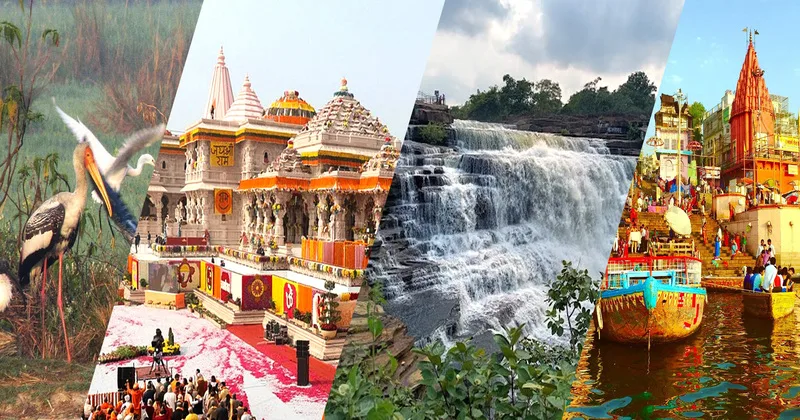
The decision was taken following a high-level meeting chaired by Tourism Minister Jaiveer Singh, which was attended by senior officials, including Additional Chief Secretary Amrit Abhijat and Chief Minister’s Advisor Awanish Kumar Awasthi. During the meeting, officials acknowledged that while Uttar Pradesh is home to some of India’s most iconic tourist destinations, including the Taj Mahal, Varanasi, Ayodhya, Mathura, and Kushinagar, the sector’s potential remains underutilised.
“Tourism has become an important factor in driving development across the world. Now, we are looking at positioning it as an employment-led growth propeller in Uttar Pradesh,” said Minister Jaiveer Singh. Currently, tourism contributes around 1.2 per cent to Uttar Pradesh’s Gross Value Added (GVA). The goal is to raise this figure to 5 per cent by 2047. This is expected to generate large-scale, decentralised employment opportunities, particularly in rural and semi-urban areas.
Officials revealed that the government plans to expand tourism capacity by enhancing both infrastructure and visitor experience. The number of available hotel rooms per lakh population is expected to rise from the current 50 to around 150 by 2047.
To achieve this, Uttar Pradesh will focus on enhancing its premium hotel inventory, improving air and road connectivity, and encouraging private investments in hospitality.
Key Focus Areas for Development
The strategy emphasises several key components to accelerate tourism-led employment:
Infrastructure Strengthening: The government plans to invest in improving roads, transport links, and public amenities across major religious and cultural destinations, including Ayodhya, Kashi, Mathura, and Kushinagar. Upcoming projects also include developing emerging heritage towns like Naimisharanya, which hold spiritual and historical significance.
Diversified Tourism Circuits: Besides religious tourism, the government aims to promote eco-tourism, rural tourism, adventure tourism, and wellness tourism to attract diverse categories of visitors. This will help decentralise benefits and bring growth to less-explored districts.
Skill Development: With rising tourist inflows, demand for skilled manpower in hospitality, language services, tour operations, and food and beverage management will increase. Specialised training centres will be established to upskill local youth and women entrepreneurs.
Foreign Tourist Engagement: UP plans to extend the average stay duration of foreign tourists by enhancing travel experiences and safety measures. Higher footfall and longer stays will directly translate into higher per capita spending and sustained income for local economies.
Tourism is among the most employment-intensive sectors globally, generating both direct and indirect jobs in various allied domains. In Uttar Pradesh, the government envisions the tourism sector becoming a key contributor to its trillion-dollar economy target.
Officials estimate that increasing the tourism sector’s job share from 1.4 per cent to 5 per cent could create millions of new jobs across sectors such as hotels, restaurants, transport, handicrafts, guiding, event management, and cultural activities. Awasthi said tourism helps everyone, not just big investors, but also small business owners, artisans, and local communities. Every tourist visiting Uttar Pradesh supports the local economy by buying handicrafts, using local transport, and staying in small guest houses.
The government’s plan focuses on using Uttar Pradesh’s rich cultural and spiritual heritage to boost tourism. With Ayodhya gaining global attention after the Ram Temple inauguration and Varanasi becoming a major spiritual centre, the state aims to establish itself as the cultural heart of India. The plan also includes revitalising lesser-known but historically rich sites such as Shravasti, Sankisa, Chitrakoot, and Naimisharanya, aiming to develop them as vibrant tourist hubs through improved infrastructure and promotion.
The UP tourism department plans to collaborate with private players, investors, and local communities to implement projects under public-private partnership (PPP) models. Efforts are also underway to encourage homestays and village-based tourism enterprises to ensure that local communities are direct beneficiaries of tourism growth.
The upcoming Tourism Investment Summit will focus on attracting domestic and international investments in the hospitality and entertainment sectors, including luxury resorts, theme parks, and convention centres.
The government has outlined a phased strategy with short-, medium-, and long-term goals to systematically build infrastructure and capacity. The focus will be on upgrading connectivity and amenities in key circuits. The medium-term plan (2030-2040) will focus on strengthening training, developing premium tourism products, and boosting digital marketing. By 2047, Uttar Pradesh aims to establish itself among the top tourism-driven states contributing significantly to employment, revenue, and sustainable development.