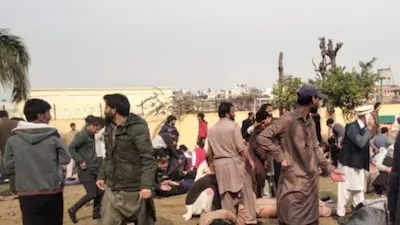
A suspected suicide blast struck the Tarlai Imambargah, a Shiite religious centre in Pakistan’s federal capital, Islamabad, on Thursday (Feb 5) evening, leaving at least 31 people dead and 169 injured, according to local media reports. The explosion triggered scenes of panic and chaos in the densely populated Shehzad Town area as worshippers and residents scrambled for safety.
Police teams, bomb disposal squads, and rescue workers rushed to the spot immediately after the blast to begin relief and evacuation operations. Several ambulances were seen ferrying the injured to nearby hospitals as authorities cordoned off the area to prevent further casualties.
Hospital authorities at the Pakistan Institute of Medical Sciences (PIMS) and the Polyclinic Hospital declared an emergency following the explosion. Doctors said many of the injured suffered shrapnel wounds and blast-related trauma, with several reported to be in critical condition.
Videos circulating on social media platforms showed harrowing visuals from the site, with debris scattered across the campus and people running in panic amid cries for help. Officials present at the scene were seen attempting to control the situation and assist the injured as security personnel tightened the cordon.
Islamabad Capital Territory Police spokesperson Taqi Jawad said it was too early to conclusively determine the nature of the explosion. “Forensic teams are collecting evidence from the site to ascertain whether it was a suicide bombing or a planted explosive device,” he said, adding that a detailed investigation was underway.
No group has so far claimed responsibility for the attack. However, suspicion is likely to fall on banned terror outfits such as the Tehreek-e-Taliban Pakistan (TTP) or Islamic State-linked groups, which have previously targeted Shiite worshippers, a religious minority in Pakistan.
Pakistan has witnessed a long and violent pattern of sectarian intolerance within Islamist groups, with Shia Muslims repeatedly targeted by extremist Sunni outfits over the past decade. From the mass killings of Hazara Shias in Quetta in 2013, suicide bombings inside Shia mosques in Shikarpur (2015) and Peshawar (2022), to attacks on pilgrim buses, markets, and religious processions, sectarian terror has remained a persistent reality.
Banned organisations such as Tehreek-e-Taliban Pakistan (TTP), Lashkar-e-Jhangvi, and Islamic State Khorasan (ISKP) have openly justified violence against Shias by branding them heretics, exposing deep ideological fractures and intolerance among radical Islamist sects. Despite periodic security operations and official condemnations, these attacks underline Pakistan’s continuing failure to dismantle sectarian jihadist networks that thrive on intra-faith hatred and repeatedly turn religious spaces into targets of mass violence.
The latest attack comes against the backdrop of heightened security concerns, nearly a week after Pakistani security forces reportedly clashed with Baloch separatists, killing around 216 militants. It also revives memories of a similar incident in November 2025, when a suicide blast outside a district and sessions court building in Islamabad killed 12 people and injured at least 30 others.
Security agencies have launched a comprehensive probe into the latest incident, while additional police and paramilitary forces have been deployed across sensitive areas of the capital to prevent any further attacks.