Over the past few years, several European countries have adopted increasingly strict measures to counter what they describe as the growing influence of radical Islamisation. Among the most significant steps are laws aimed at Islamic separatism, foreign-funded religious networks, and extremist online content. France has taken the lead with its landmark Anti-Separatism Law, passed in 2021. The legislation grants the government authority to dissolve religious organisations deemed contrary to republican values and places tight controls on foreign funding for mosques and religious associations. In May 2025, Paris went further by proposing a ban on girls under the age of 15 wearing the veil in public spaces.
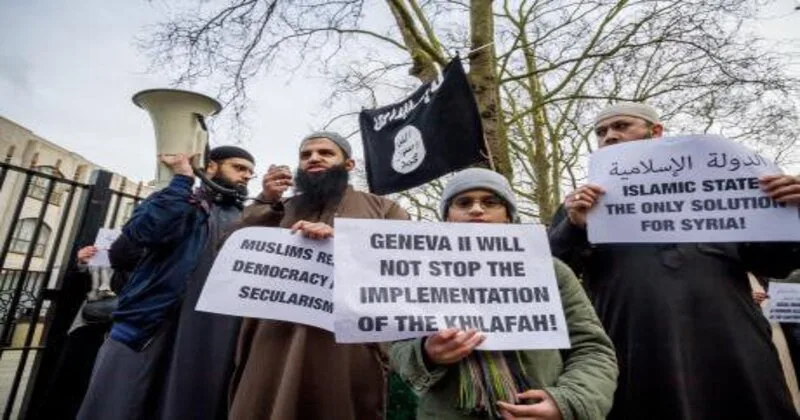
Germany followed with decisive action in November 2025, banning the organisation ‘Muslim Interactive’ for spreading extremist ideology. Authorities said the group promoted the establishment of a caliphate and targeted young people through platforms such as TikTok. Around the same period, Germany also shut down several Islamic institutions, including the Islamic Centre Hamburg, citing national security concerns. Across the continent, governments are intensifying scrutiny of foreign funding for mosques and Islamic centres, particularly money originating from Qatar and Turkey. Austria has introduced rules requiring only locally trained imams to serve in mosques, aiming to curb external ideological influence.
At the supranational level, the European Union has implemented tougher mechanisms to remove extremist material from social media platforms. In November 2025, Europol reported the takedown of thousands of jihadist websites and links. Meanwhile, countries such as Denmark and Portugal have strengthened laws allowing the denial of citizenship and the deportation of individuals associated with terrorist organisations or hate speech.
Burqa bans spread across the continent
Parallel to these security measures, several European states have enacted or expanded bans on face-covering Islamic garments in public spaces. France became the first European nation to impose a nationwide prohibition on the burqa and niqab, declaring full face covering illegal in public.
Belgium followed in July 2011, citing public safety and social cohesion. In October 2025, Portugal approved legislation banning face-covering clothing in public; once signed by the president, violators could face fines of up to €4,000, with prison terms for anyone forcing another person to wear such attire. Switzerland introduced its burqa ban after a 2021 referendum, with the law taking effect on 1 January 2025. Austria has enforced a similar ban since October 2017. Denmark implemented its prohibition in 2018, while Bulgaria enacted a complete ban as early as 2016. Parts of the Netherlands and Germany also maintain partial bans in schools, hospitals, and public transport.
Attention is now turning to Spain, where a nationwide ban may soon be debated. The parliament of the Balearic Islands, covering Mallorca, Menorca, Ibiza and Formentera, recently passed a resolution urging Madrid to outlaw the burqa and niqab. The motion was backed by the conservative People’s Party and the Vox Party, according to British media reports. Vox had earlier even demanded a ban on the hijab, though that proposal faced resistance across party lines.
Spain is home to an estimated three million Muslims, mainly concentrated in Catalonia, Madrid, Valencia and Andalusia. Supporters of tighter laws argue they are essential for security and integration. Together, these developments reflect a broader European shift toward assertive policies on religious radicalism and extremism to protect national identity, signalling that governments are prepared to take firm action as concerns over radicalisation continue to grow.