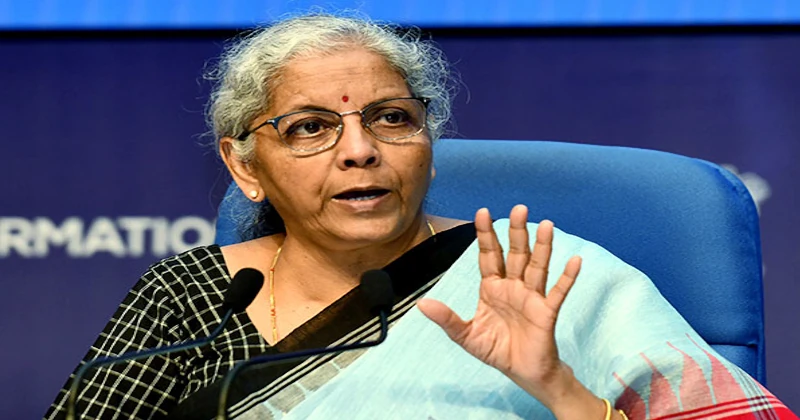
Union Finance Minister Nirmala Sitharaman will present the Union Budget 2026-27 on February 1, with the education sector expected to feature prominently amid growing concerns over learning outcomes, school retention and the quality of higher education. The budget is being keenly followed by students, teachers, education entrepreneurs and policymakers across the country.
In the previous Union Budget, the BJP-led central government announced the addition of 75,000 seats in medical colleges over a five-year period and committed to strengthening infrastructure at IITs established after 2014. For the year 2025, the Centre allocated Rs 1,28,650.05 crore to the education sector, marking a 6.65 per cent increase over the previous year’s allocation.
However, the Economic Survey 2025-26, tabled in Parliament ahead of the Budget, has flagged challenges in India’s education system. While school enrolment has reached near-universal levels at the elementary stage, the survey notes that this has not translated into consistent learning outcomes, particularly beyond primary education.
The survey highlights a sharp drop in enrolment at the secondary level, with the net enrolment rate falling to just over 52 per cent. Student retention after Class 8 remains a significant concern, especially in rural areas, where access to secondary schools is limited. According to the survey, 54 per cent of schools in rural India offer only foundational and preparatory education, while a mere 17.1 per cent provide secondary-level schooling.
As the Budget approaches, voices from the education sector have also raised concerns over affordability.
In a symbolic outreach to the student community, Finance Minister Sitharaman is scheduled to interact with around 30 college students from diverse academic backgrounds after presenting the Budget. The students will also witness the Budget presentation live from the Lok Sabha Gallery, reflecting an effort to directly engage young stakeholders in the policy process.
The education sector has long demanded that public spending on education be raised to 6 per cent of GDP. While allocations have seen incremental increases over the years, from Rs 1.12 lakh crore in 2024 to Rs 1,28,650.05 crore in 2025.
With expectations centred on school infrastructure, higher education reforms, skilling initiatives and digital learning, the Education Budget 2026 is being closely watched for signals on whether the government plans to prioritise structural reform over incremental expansion.
Stay tuned for live updates as Finance Minister Nirmala Sitharaman presents the Union Budget 2026-27.