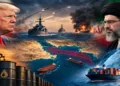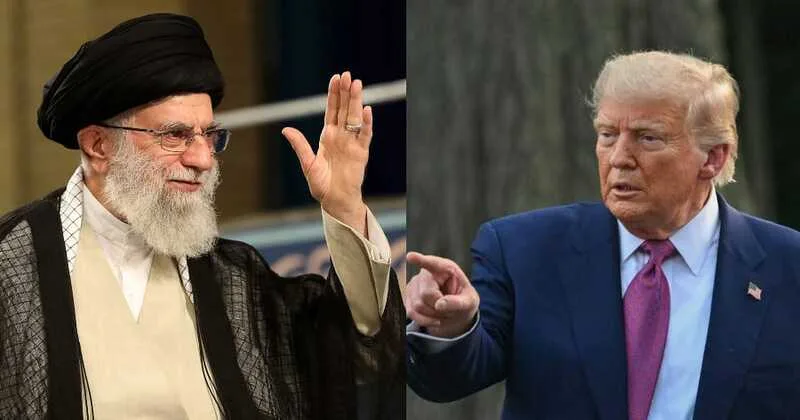
Washington: The war of words between the United States and Iran is intensifying, reviving fears of another armed conflict in the Gulf region. After the United States President Donald Trump warned of consequences unprecedented in scale, the Iranian military responded by adopting a firmer and more confrontational stance. Iran has declared that any military strike by the United States would be met with a decisive and powerful retaliation. Iranian Foreign Minister Abbas Araghchi stated that the country’s armed forces remain fully prepared to respond swiftly and forcefully to any form of aggression. This declaration follows repeated threats of possible military action by President Trump, which have further strained relations between the two nations. Iranian officials have emphasised through public statements and social media that their military stands ready to respond through land, sea, or air if Iran is attacked by any adversary.
Meanwhile, geopolitical analysts warn that a direct American strike on Iranian military installations could have far-reaching consequences capable of reshaping the political and security landscape of the Middle East. Heightened instability in the Gulf region, they argue, would inevitably trigger global economic disruptions, particularly in energy markets. International media outlets and policy experts are currently discussing several potential scenarios that could unfold should the United States initiate military action against Iran.
🚨🇺🇸🇮🇷 U.S. TROOPS ARE LOCKED IN: AND IRAN’S PROBABLY SWEATING
The U.S. just wrapped its military deployment in the Middle East. Troops, assets, all of it finalized.
No more “moving pieces,” now they’re just sitting there, waiting for the green light.
And J.D. Vance basically… pic.twitter.com/1ZuteMqDTR
— Mario Nawfal (@MarioNawfal) January 24, 2026
One possible outcome being debated is the weakening or collapse of Iran’s ruling establishment if its powerful military wing, the Islamic Revolutionary Guard Corps, were to suffer a severe blow. While some policymakers in Washington view such a development as a pathway toward democratic transition. The more likely consequence would be internal fragmentation and prolonged civil unrest, similar to the instability witnessed in countries such as Libya and Iraq following regime-shaking interventions.
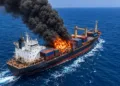
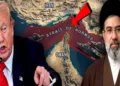
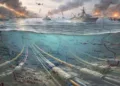
Another major concern centres on the Strait of Hormuz, a narrow but strategically vital maritime corridor through which a significant portion of the world’s oil supply is transported. Iran’s first response to a direct attack could involve efforts to obstruct or close the strait using naval mines, drones, and other asymmetric tactics. Any disruption to shipping traffic in this channel would likely send global oil prices soaring and place immense pressure on national economies already grappling with inflation and supply chain vulnerabilities.
In addition to maritime disruption, Iran could retaliate by targeting the US military bases located in Gulf countries such as Qatar and Bahrain. There are also fears of drone or missile attacks on oil refineries and energy infrastructure in Saudi Arabia and other allied nations. These risks have prompted several Gulf states to intensify diplomatic engagement aimed at preventing escalation, as they face the prospect of becoming battlegrounds or collateral victims in a wider confrontation.
Another scenario being examined involves a potential internal power shift within Iran should the civilian administration be weakened by conflict. In such a case, the Revolutionary Guard could assume direct control of governance, effectively transforming Iran into an overt military-dominated state. Such a transition would significantly alter the regional balance of power and complicate diplomatic engagement for years to come.
There is also speculation about whether sustained military pressure might compel Iran to reconsider its nuclear ambitions and return to negotiations. However, this possibility is unlikely, citing Iran’s past resistance to external pressure and its strategic emphasis on sovereignty and deterrence. Even amid reports that the United States is assessing options to strike nuclear and missile facilities, Iranian military leaders continue to project readiness and determination, indicating that they remain on high alert. The broader Gulf region, as a result, is widely perceived as sitting atop a volatile situation that could erupt with little warning.
President Trump has maintained that military action remains an option if a new nuclear agreement is not achieved. He has also indicated that significant naval assets have been mobilised to the region, reportedly exceeding the scale of previous deployments in other geopolitical flashpoints. Reports earlier in the year suggested that relations between Washington and Tehran were already approaching a critical threshold. The current escalation is further complicated by domestic unrest within Iran, where ongoing protests and stringent government crackdowns have drawn international scrutiny.
Human rights observers have alleged that thousands of individuals have lost their lives since protests began in late 2025, though precise figures remain difficult to verify.
Diplomatic relations deteriorated further after the United States administration adopted a strong position against the use of capital punishment for demonstrators and accused Iranian authorities of excessive force. In response to these developments, the United States dispatched a large naval presence to waters near West Asia. The deployment, led by the aircraft carrier USS Abraham Lincoln, reportedly includes thousands of personnel, advanced fighter jets, and guided missile destroyers, underscoring the seriousness of the standoff.
Despite these moves, Iranian leaders remain adamant that they will not yield to external pressure. Military officials have warned that any interference in Iran’s internal affairs would be met with retaliation. Tehran has also cautioned neighbouring countries against allowing their territories to be used as staging grounds for attacks, declaring that such cooperation would be viewed as hostile action.
The escalating tensions have also exposed fractures in Washington’s relationships with several Muslim-majority nations. Countries including Saudi Arabia, the United Arab Emirates, Egypt, and Turkey have publicly urged restraint and called for diplomatic solutions rather than military confrontation. The United Arab Emirates has already indicated reluctance to permit its territory to be used for offensive operations against Iran, a stance that presents a strategic challenge to American regional planning.
A direct military clash between Iran and the United States would carry profound implications for the global economy. Any obstruction of the Strait of Hormuz would likely cause a dramatic spike in fuel prices and intensify economic uncertainty worldwide. Additionally, regional conflicts such as the Israeli-Palestinian issue could become further entangled in the fallout of a broader war, adding layers of complexity to already fragile diplomatic efforts.
Although President Trump has at times expressed willingness to pursue peaceful negotiations, the continued expansion of military deployments has amplified fears that diplomacy may give way to confrontation. Most diplomatic experts agree that the immediate future will hinge on Iran’s next moves, the responses of regional powers, and the willingness of international actors to mediate. The coming days are widely viewed as critical in determining whether the crisis will de-escalate through dialogue or spiral into a conflict with global repercussions.