India’s long-standing challenge of high logistics costs appears to be easing, with the Economic Survey 2025-26 presenting the first clear evidence that the country’s large-scale infrastructure investments are translating into measurable economic gains.
Citing a joint study conducted by the Department for Promotion of Industry and Internal Trade (DPIIT) and the National Council of Applied Economic Research (NCAER), the Survey reports that logistics costs declined to 7.97 per cent of GDP in FY24. This marks a significant improvement from 8.84 per cent in FY23 and 8.79 per cent in FY22.
For over a decade, elevated logistics costs were widely recognised as a structural constraint on India’s manufacturing and export competitiveness. While advanced economies typically operate with logistics costs ranging between 6 and 8 per cent of GDP, India’s costs remained above 13 per cent for much of the previous decade, eroding efficiency and increasing the cost of doing business.
The drop below the 8 per cent threshold is therefore described in the Survey as a major milestone, indicating that coordinated and system-level policy interventions are beginning to yield tangible outcomes.
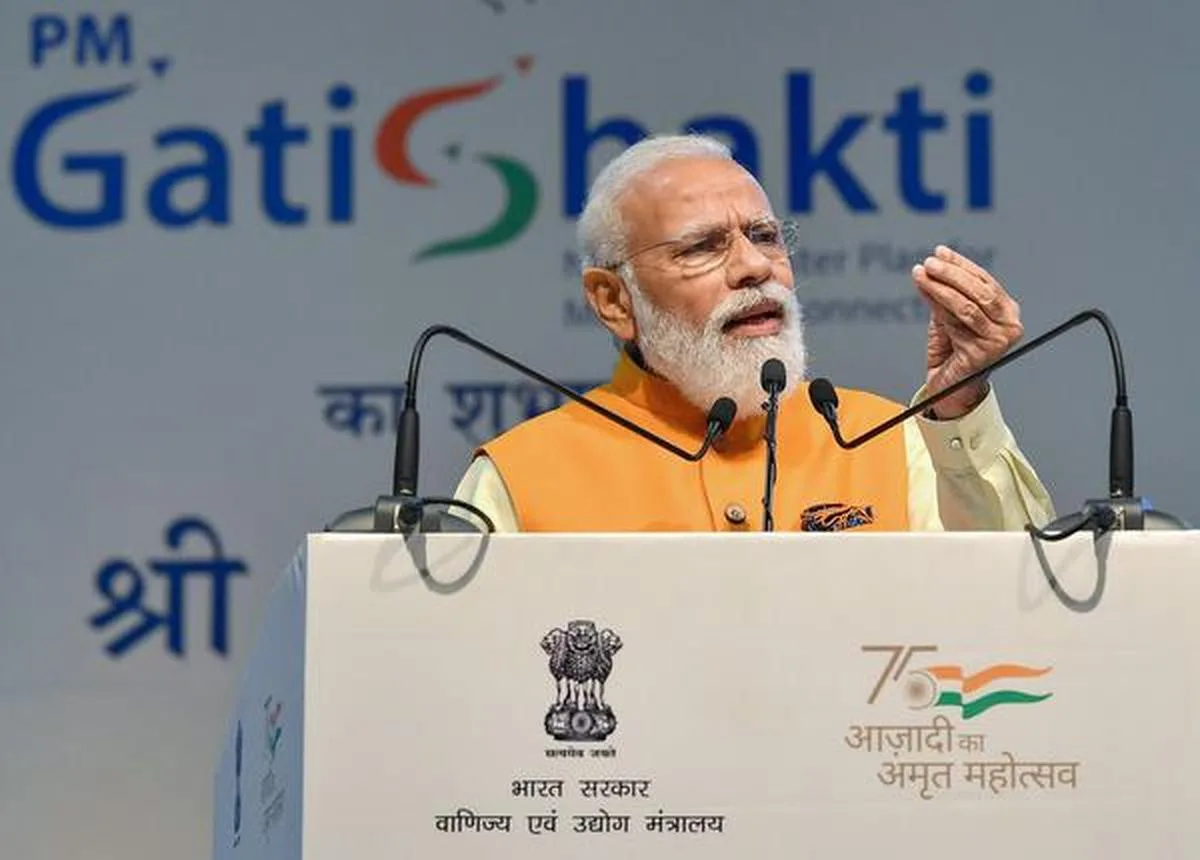
The Survey attributes this improvement to a series of interconnected infrastructure and logistics initiatives, including PM GatiShakti, the Dedicated Freight Corridor (DFC) projects, Bharatmala, and Sagarmala. Among these, PM GatiShakti is highlighted as a transformative framework that has reshaped how infrastructure planning and execution are approached in India.
Launched in 2021, PM GatiShakti has evolved from a coordination mechanism into an integrated geospatial planning platform. The programme enables different ministries and agencies to plan infrastructure projects using a common digital framework, reducing overlaps, identifying bottlenecks, and optimising investment decisions.
As of November 2025, a total of 57 ministries and departments have been onboarded onto the PM GatiShakti platform. More than 1,700 data layers have been integrated into the National Master Plan, allowing planners to visualise infrastructure networks across sectors and regions in real time.
This level of integration, the Survey notes, has helped avoid duplication in capital expenditure while improving route planning and project sequencing. By aligning road, rail, port, power, and telecom infrastructure, the platform has enabled more efficient movement of goods and reduced transit times.
The scope of the programme has also been expanded beyond government agencies. The recent launch of PM GatiShakti Public has opened access to 230 curated datasets for private developers, logistics players, and researchers. This move is expected to support better-informed investment decisions and strengthen public-private collaboration in infrastructure development.
At the state level, the Survey reports growing adoption of integrated logistics planning. Twenty-seven states have notified State Logistics Policies, while 28 Aspirational Districts are using the GatiShakti District Master Plan Module for area-based planning. These efforts aim to ensure that national logistics reforms translate into local-level efficiency gains.
Technology-driven integration is also visible in logistics operations. The Unified Logistics Interface Platform (ULIP) now connects 44 systems across 11 ministries through more than 2,000 data fields. Over 1,700 companies have registered on the platform, enabling seamless data exchange across ports, railways, customs, road transport, and other logistics nodes.
According to the Survey, such digital integration is critical to reducing friction in supply chains and improving predictability in freight movement. The impact is particularly significant for manufacturers, for whom lower logistics costs directly translate into improved margins, reduced inventory holding costs, and enhanced export competitiveness.