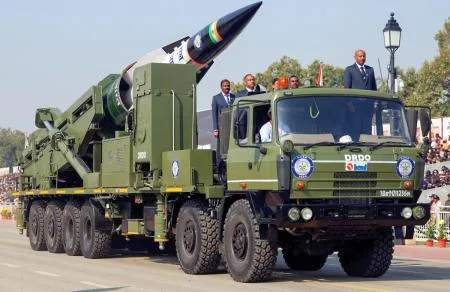
The 77th Republic Day parade at Kartavya Path was not merely a ceremonial display of military tradition but a carefully curated projection of India’s changing combat doctrine and operational priorities. Among the most striking highlights of this year’s celebrations was the first public appearance of the Bhairav light commando battalion, alongside the debut of the indigenous Universal Rocket Launcher System (URLS) ‘Suryastra’. Together, these elements underlined the Indian Army’s focus on rapid response capabilities, flexible force structures and long-range precision firepower.
Bhairav Battalion
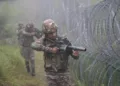
The Bhairav light commando battalion, formally raised in October 2025, marked its inaugural public outing during the parade. Designated as the 4 Bhairav Battalion of the Sikh Light Infantry Regiment, the unit has been conceptualised to bridge a critical operational gap between conventional infantry formations and elite special forces.
Military planners have long recognised the need for agile units capable of executing swift, high-intensity missions without the logistical footprint of larger formations. The Bhairav battalions have been raised precisely to meet this requirement, offering the Indian Army a flexible combat tool suited for rapid deployment across varied terrains and conflict scenarios.
Equipped and trained for fast-paced operations, the Bhairav unit is designed to undertake missions such as quick offensive thrusts, counter-terror operations, limited objective warfare and specialised tasks in contested environments. Its appearance at Kartavya Path symbolised a broader shift in the Army’s approach, away from purely manpower-intensive deployments towards precision, speed and tactical adaptability.
Suryastra: India’s Indigenous Rocket Artillery Leap
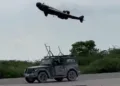
Sharing the spotlight with the Bhairav battalion was the first-ever Republic Day parade display of the Universal Rocket Launcher System ‘Suryastra’. Developed indigenously, Suryastra represents a significant technological leap in India’s surface-to-surface strike capabilities.
Unlike conventional rocket artillery systems that are limited to specific calibres or munitions, Suryastra has been engineered as a universal launcher platform. This design allows it to integrate and fire multiple rocket and missile variants from a single system, providing commanders with unmatched flexibility in choosing payloads based on mission requirements.
Capable of delivering precision strikes at extended ranges of 150 kilometres and up to 300 kilometres, Suryastra dramatically enhances India’s ability to engage targets deep inside adversary territory. Its induction reflects the Indian Army’s growing emphasis on long-range precision firepower as a key enabler of deterrence and battlefield dominance.
Defence officials described the system as a major milestone in the modernisation of India’s rocket artillery, particularly in the context of indigenous development under the Aatmanirbhar Bharat initiative. By combining range, accuracy and modularity, Suryastra is expected to play a crucial role in future conflict scenarios where speed and precision are decisive.
A Shift Towards Realistic Battlefield Representation
This year’s parade departed from long-standing ceremonial conventions to reflect a more operationally realistic portrayal of military movement and combat readiness. One of the notable changes was the introduction of a phased battle array formation, under which Army contingents advanced along Kartavya Path in a sequence resembling actual battlefield deployment.
Under this concept, reconnaissance elements led the formation, followed by logistics units, combat platforms and accompanying personnel, all clad in operational battle gear. This approach offered spectators a glimpse into how forces would move, coordinate and sustain themselves during real combat operations.
The mounted contingent of the 61 Cavalry also participated in this phased battle array, marking a departure from tradition. Historically known for leading the parade in ceremonial uniforms and distinctive headgear, the 61 Cavalry appeared this time in combat attire, reinforcing the parade’s overarching operational theme.
Elite Scouts Highlight High-altitude Readiness
Adding to the operational narrative was the maiden appearance of a mixed scouts contingent, dressed in heavy thermal combat gear. Led by Lieutenant Amit Choudhary of the 2 Arunachal Scouts, the contingent symbolised India’s specialised infantry units trained for high-altitude surveillance, border patrolling and reconnaissance missions along the country’s challenging frontiers.
The inclusion of scouts in full combat gear showed the Army’s preparedness for extreme weather and terrain conditions, particularly in mountainous and snow-bound regions. It also highlighted the critical role played by locally raised scout units in maintaining situational awareness and securing India’s borders.
The Republic Day celebrations commenced with a vibrant cultural performance by 100 artists, setting the tone for the parade around the theme “Vishwaguru Bharat – Ek Bharat Shreshtha Bharat”. The performance reflected India’s civilisational continuity and cultural diversity, seamlessly transitioning into the military spectacle that followed.
President Droupadi Murmu presided over the celebrations, unfurling the National Flag and leading the nation in commemorating the historic occasion. The unfurling of the Tricolour was followed by the playing of the National Anthem and a resounding 21-gun salute, executed using indigenous 105-mm Light Field Guns—further reinforcing the emphasis on self-reliance in defence.
Global Attention on India’s Republic Day
Adding international significance to the event, European Council President Antonio Costa and European Commission President Ursula von der Leyen attended the celebrations as Chief Guests. Their presence underscored India’s growing global stature and the increasing international interest in its strategic and defence capabilities.
The display of indigenous platforms, elite formations and modern combat systems during the parade sent a clear signal to both domestic and international audiences: India is steadily transforming its armed forces to meet contemporary security challenges with confidence and capability.
The debut of the Bhairav Battalion and the Suryastra rocket system at the 77th Republic Day parade was more than a symbolic gesture. It reflected a deeper transformation underway within the Indian Army, one that prioritises speed, precision, flexibility and indigenous innovation.
As the nation continues to modernise its forces and refine its combat doctrine, the sights on Kartavya Path served as a powerful reminder that India’s defence preparedness is evolving in step with its aspirations as a rising global power.