Cold wave conditions persisted all through 20 districts of the Union Territory (UT) of Jammu and Kashmir for the third day on Saturday. On Thursday evening, the prolonged dry spell had ended as skies opened up and there was rain as also snow in the upper reaches. Throughout the day on Friday, rain and snow continued with intermittent breaks. As a result, normal life was thrown out of gear as dozens of roads closed due to inclement weather, with sharp winds and heavy snow combining to make travel a nightmare.
To add to the problems of most citizens, electricity snapped off in several areas and at one time almost the entire Kashmir valley plunged into darkness. Most of 33 KV and 11 KV lines gave way and restoration took a lot of time. Power supply to essential establishments like hospitals and water supply establishments was also snapped.
In the Jammu region also, most places reported heavy snow as also rains, accompanied by sharp winds, leading to bone chilling cold. The power supply position in the region remained better than what it was in Kashmir for most part of the day. Several districts announced closure of schools, one after another, and the first to do so was Udhampur. Reports from Rajouri said that after almost a decade, the town itself saw snowfall.
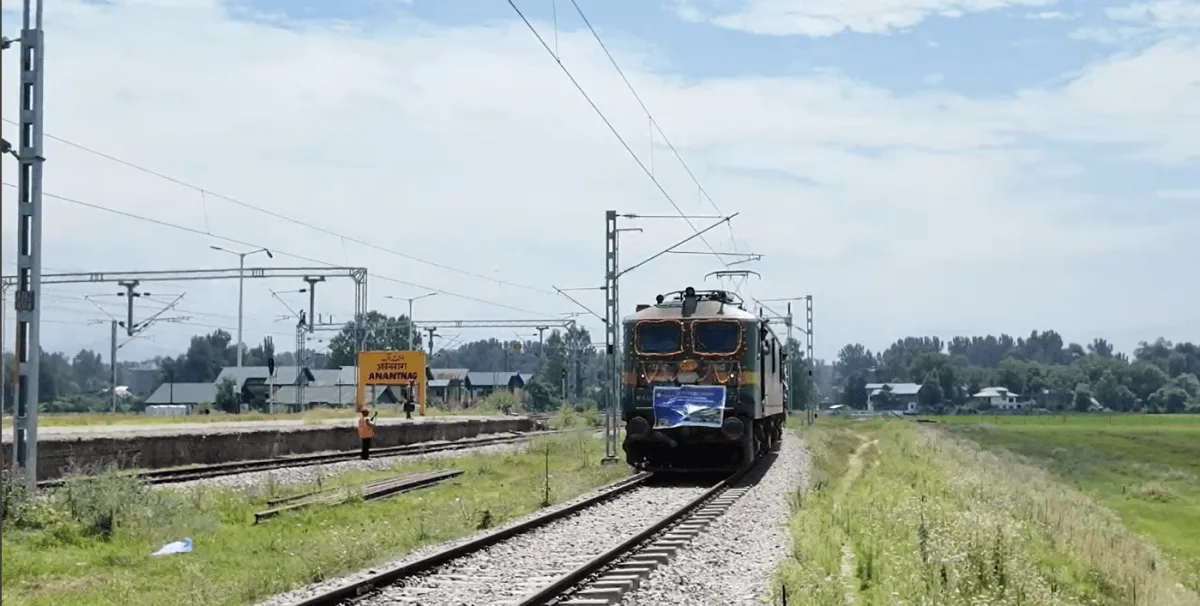
Amid all these challenges, the railways stood out for carrying out supply of foodgrains to the Kashmir valley. The Mughal Road, the Jammu-Srinagar highway and the road via Simthan Top in Kisthwar were closed. It is likely that the Mughal Road and Kishtwar-Kokernag road via Simthan Top will remain closed for some days more. While chaose reigned all over, a goods train carrying essential grains reached Anantnag town of the Kashmir Valley on Thursday.
The surface connectivity to Kashmir, which gets disrupted via roads, has now an alternative by way of the Udhampur-Katra-Banihal-Baramulla rail line. Some months ago, it had come as a saviour for the fruit growers as thousands of tonnes of apples were transported to Jammu and beyond. It was then the turn of Army tanks and other heavy equipment to be moved via rail.
The movement of grains, a full rake, is considered a significant boost to food security and logistics efficiency in the Kashmir Valley. The Indian Railways successfully transported the first full rake of foodgrain to Anantnag, underscoring the reliability of all-weather rail connectivity to the region. Qazigund in a major holding area for the grains sent to Kashmir by the Food Corporation of India (FCI).
For the first time, a complete rake comprising 42 wagons carrying 2,768 metric tonnes of rice reached the Anantnag goods shed on January 22, marking a major achievement in freight movement to the Valley. The rake was loaded at the Sangrur rail terminal in Punjab on January 21 and completed its journey within 24 hours, despite adverse weather conditions that had disrupted unloading operations a day earlier. It needs to be stressed here that due to dense fog and other related challenges, most trains in the northern India have been impacted, leading to significant delays.
Until now, grair movement to Kashmir by rail was limited to rakes of 21 wagons, carrying around 1,384 metric tonnes per consignment, half of the full capacity which was demonstrated on Thursday. The successful transition to full-rake operations by a goods train follows sustained coordination between Indian Railways and the Food Corporation of India (FCI), aimed at cutting logistics costs and enhancing supply chain efficiency.
Officials said the move is expected to significantly reduce dependence on road transport and heavy truck traffic along national highways, which often remains vulnerable to weather-related disruptions. Full-capacity rail transportation will not only lower freight and logistics costs but also ensure faster and more dependable movement of essential commodities, helping maintain adequate buffer stocks in the Valley, particularly during harsh winter months.
The development is seen as a major step towards strengthening the foodgrain distribution network in Kashmir, improving availability for local households and reinforcing supply resilience during periods of snowfall and highway closures. It also brings environmental benefits by reducing fuel consumption and emissions associated with long-haul road transport. Till about a decade ago, the closure of vital Jammu-Srinagar highway during winters was considered a fairly normal thing.
As such, winter stocking by households was a common practice adopted by all to cope up with weather vagaries. However, the Vande Bharat trains that run between Katra and Srinagar are redefining connectivity of passengers too even as road transport and airlines get impacted.
The successful movement of foodgrain builds on earlier rail-based transportation of apples, cement and fertilisers, reflecting the growing role of rail logistics in supporting sustained economic activity in the region.
The milestone highlights the transformative impact of the Udhampur-Srinagar-Baramulla Rail Link (USBRL), among the most ambitious railway engineering projects undertaken in independent India. Even as winter conditions challenge surface connectivity, the expanding all-weather rail network is emerging as a dependable lifeline for trade, logistics and essential supplies in the Kashmir Valley.