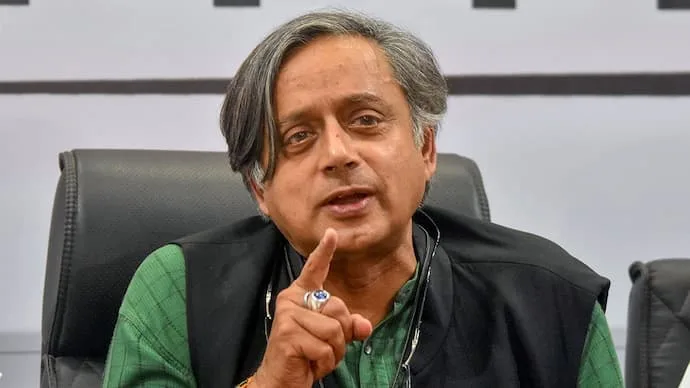
Congress leader and Thiruvananthapuram MP Shashi Tharoor underlined the enduring strength of the Indian Constitution, asserting that it has “stood the test of time” and now enjoys acceptance across political and ideological divides.
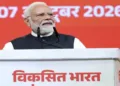
Speaking at the Kerala Literature Festival in Kozhikode, Tharoor responded to a question from the audience by stating that Prime Minister Narendra Modi considers the Constitution “sacrosanct.” He argued that this was less a personal endorsement and more a testament to the Constitution’s resilience and moral authority more than seven decades after its adoption.
However, the comment has invited a larger political and historical question: was the Constitution ever truly unaccepted in post-Independence India, and does framing its current acceptance as a recent phenomenon inadvertently rewrite political history?
Tharoor remarked that the Constitution’s legitimacy today transcends partisan boundaries, pointing to organisations such as the Rashtriya Swayamsevak Sangh (RSS), which he noted had historically expressed reservations but have since embraced the constitutional framework.
Yet, many argue that the Constitution’s authority has always been foundational to the Indian Republic, regardless of ideological disagreements. To suggest that its acceptance required validation decades later, or through the endorsement of the present political leadership, raises uncomfortable implications, particularly for a party that has consistently projected itself as the principal custodian of constitutional values.
Tharoor’s remarks have drawn attention not merely for their content, but for their timing and tone. They come amid a politically charged national discourse in which the Congress has repeatedly accused the BJP and its ideological affiliates of allegedly undermining constitutional institutions and values.
Against that backdrop, acknowledging constitutional reverence from the Prime Minister and acceptance by the RSS marks a notable departure from the party’s dominant narrative. Whether this reflects intellectual honesty or political misalignment is now being debated quietly within party circles.
Anticipating questions about his political positioning, Tharoor later addressed speculation about differences with the Congress leadership.
Tharoor recalled leading India’s diplomatic outreach to countries in the Americas to articulate New Delhi’s counterterrorism position, particularly in the context of Pakistan’s alleged role in sponsoring terrorism. He maintained that terrorist attacks should not go unanswered.
At the same time, he stressed that any response must be limited, calibrated and focused, avoiding escalation into a prolonged conflict. Notably, Tharoor said the government’s eventual actions aligned largely with his position, an admission that again places him awkwardly between party opposition and policy convergence.
He also referred to a column written after the Pahalgam terror attack, where he advocated a targeted kinetic response against terror camps rather than broad military escalation.
Tharoor also addressed reports surrounding his absence from a recent meeting between Kerala Congress leaders and the AICC high command ahead of next year’s Assembly elections. His absence had fuelled speculation of internal differences and possible sidelining.
Clarifying the matter, he said he had informed the leadership in advance and believed internal concerns should be raised within the party rather than aired publicly.
“Several things have appeared in the media, some may be true, others not and such matters should not be discussed on public platforms,” he said, adding that whatever he had to say would be conveyed internally.
While Tharoor framed the Constitution as a unifying national document transcending ideology, his remarks have inadvertently opened a deeper debate, not about the Constitution’s strength, but about political ownership of its legacy.