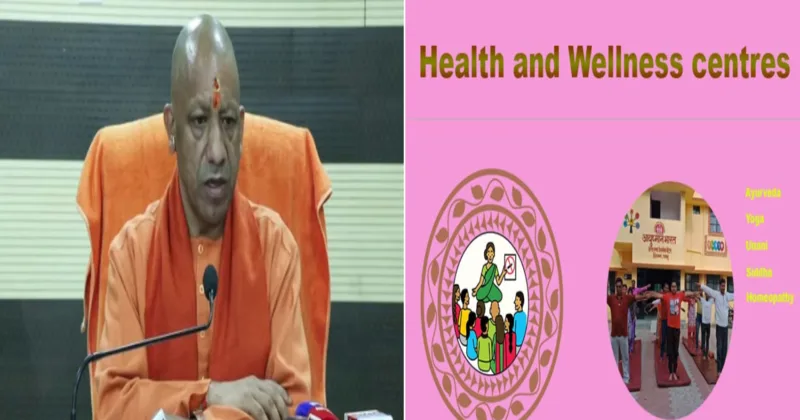
To strengthen the traditional healthcare systems and integrate them with modern medical research, the Yogi Adityanath government has announced plans to transform AYUSH centres across Uttar Pradesh into advanced research and development hubs. The aim is to make AYUSH-based healthcare more effective in addressing critical diseases and lifestyle-related ailments that are increasingly affecting large sections of the population. UP Chief Minister Yogi Adityanath stated that the state government is committed to upgrading the AYUSH health delivery system in a manner that not only enhances patient care but also promotes research into the causes and treatments of chronic illnesses. Efforts are being made to update AYUSH centres into research hubs. In addition to providing medical care to patients and visitors, these centres will soon evolve into research and development institutions equipped to address major health challenges such as cancer, diabetes, heart disease, and various lifestyle disorders.
Principal Secretary, AYUSH, Ranjan Kumar, emphasised that under CM Yogi’s leadership, continuous and concrete measures are being implemented to integrate Ayurveda, Yoga, Unani, Siddha, and Homoeopathy into the mainstream healthcare system. “Working together, modern medicine and AYUSH systems will make treatment more effective, help prevent diseases, and promote long-term health,” said the senior official. This combined approach will provide patients with comprehensive care by leveraging the strengths of both traditional and modern treatments for prevention, cure, and recovery.
A key feature of this initiative is the focus on data-driven research. The upgraded AYUSH centres will conduct detailed studies on disease causes, their impact, lifestyle factors, diet, and the response to AYUSH-based treatments. The primary objective, officials said, is to generate scientific evidence that establishes the effectiveness of AYUSH therapies for major health conditions. This will not only enhance credibility and public confidence in traditional medicine but also enable its wider adoption in clinical practice.
The centres will be equipped with advanced research infrastructure, digital record-keeping systems, and collaborations with universities and research organisations. Researchers will collect patient data, analyse treatment outcomes, and prepare reports demonstrating measurable results in areas such as chronic pain management, stress reduction, diabetes control, and heart health improvement.
The state government is also planning to enter into agreements, contracts, and Memoranda of Understanding (MoUs) with private institutions and healthcare organisations interested in partnering on AYUSH research and development. These collaborations will help mobilise expertise, technology, and investment into the state’s traditional medicine ecosystem. The research partnerships will focus on diseases such as hypertension, obesity, thyroid disorders, heart disease, joint pain, and mental health issues, all of which are becoming increasingly common due to urban lifestyles and stress.
By involving private-sector players, the Yogi government aims to make Uttar Pradesh a hub of AYUSH-based innovation, combining traditional wisdom with modern science to create effective, affordable, and sustainable healthcare solutions.
To ensure that the research efforts meet global standards, the Uttar Pradesh government will also engage with central research institutes and national organisations under the Ministry of AYUSH. These collaborations will assist the state in preparing a comprehensive roadmap for the upgradation of AYUSH centres and for designing scientifically sound research protocols. Officials mentioned that consultations are already underway with reputed national-level AYUSH research councils and universities. The plan includes training programs for AYUSH practitioners, establishing state-of-the-art laboratories, and setting up data analysis units within select centres.
By turning AYUSH centres into research-oriented institutions, the Uttar Pradesh government hopes to not only improve treatment outcomes but also promote a culture of healthy living and disease prevention among citizens.
In recent years, the demand for AYUSH-based healthcare has grown rapidly, both in India and abroad. Uttar Pradesh, with its vast network of AYUSH hospitals and wellness centres, is now positioning itself to lead this transformation through systematic research and policy support. The Yogi Adityanath government has consistently focused on strengthening healthcare infrastructure, promoting Ayurvedic and Yoga-based wellness, and ensuring that citizens have access to affordable and effective treatment options. The transformation of AYUSH centres into research hubs aligns perfectly with this larger vision.
It also complements India’s growing international recognition in the field of traditional medicine, following the establishment of the World Health Organisation (WHO) Global Centre for Traditional Medicine in Gujarat. With this progressive initiative, Uttar Pradesh is set to become a leader in AYUSH-based healthcare research and innovation. By integrating traditional healing systems with modern medical science, the state aims to provide effective, sustainable, and evidence-based solutions for today’s major health challenges.