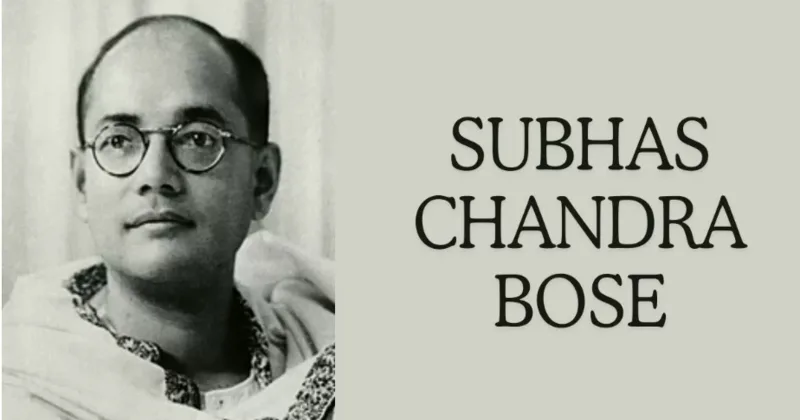
The history of India’s independence often overlooks armed struggle, focusing solely on non-violence. Netaji Subhas Chandra Bose was the primary architect of India’s modern ‘Nation State,’ defined by industrial sovereignty, social synthesis, and foreign policy realism. Bose’s work—through the National Planning Committee, the Azad Hind Provisional Government, and ideological battles—provides a vital blueprint for leadership and governance. His “Nation First” philosophy challenges contemporary ‘Western woke’ and Gen Z ideologies, offering a strategic framework for the 21st century’s geopolitical and cultural complexities.
Bose’s ‘Mother Industries’ Framework
While the narrative of Indian economic planning is often monopolised by the post-independence Nehruvian era, the foundational stones were laid explicitly by Subhas Chandra Bose during his presidency of the Indian National Congress in 1938. It was Bose, not Nehru, who first institutionalised the concept that political freedom was meaningless without economic reconstruction. In his seminal presidential address at Haripura in February 1938, Bose articulated a comprehensive strategy for socio-economic development that went far beyond mere political agitation. Bose argued that ‘The very first thing which our future national government will have to do would be to set up a commission for drawing up a comprehensive plan of reconstruction… However much we may dislike modern industrialism… we cannot go back to the pre-industrial era, even if we desire to do so.’
Bose asserted that eliminating poverty, illiteracy, and disease demanded “forced march” industrialisation under state control, not gradual reform or the “invisible hand.” To action this, he inaugurated the National Planning Committee (NPC) at a conference of Industries Ministers in Delhi in October 1938. Subash Bose says ‘We must aim at national autonomy, especially in the sphere of our principal needs… The Mother Industries—power, heavy chemicals, machinery, and railway materials—must be our first priority. We cannot be dependent on foreign countries for the essentials of our defense.’ This strategic move set urgency for preparedness of self reliance. While the colonial British felt a threat to their industrial operations.
Convergence of Science, Economy, and Political Leadership
A critical, often under-analysed aspect of Bose’s contribution was his bridging of the gap between the political elite and the scientific intelligentsia. The formation of the NPC was catalysed by Bose’s interactions with the renowned physicist Meghnad Saha. Saha had publicly challenged the Congress leadership in 1938, questioning whether they intended to build a modern nation or a medieval one based on the spinning wheel. Bose, unlike his contemporaries who were ambivalent about heavy machinery, embraced Saha’s critique wholeheartedly.
Bose showed pragmatic statesmanship by naming Jawaharlal Nehru as NPC chairman. Despite political differences, Bose knew the Planning Committee needed the Congress’s voice for the Nation. He argued for the prioritization of “Mother Industries”—power supply, metal production, machine tools, and chemicals—and the creation of a National Research Council to foster indigenous innovation, ensuring India would not remain technologically subservient to the West.
Drawing from his observations of municipal governance in Vienna during his European exile, Bose also envisaged “Municipal Socialism.” He argued that local governments must facilitate housing, health, and education, transforming cities into engines of social welfare rather than mere administrative units. This era marked the first time an Indian political leader explicitly linked Swaraj (self-rule) with scientific self-reliance. The NPC established 29 sub-committees covering sectors from heavy industry to women’s role in the economy, estimating an irreducible minimum income for every Indian and linking industrialization directly to standard-of-living improvements.
1939 Tripuri Crisis: Congress Political Survival
The 1939 Tripuri Session saw a major ideological clash between Subhas Chandra Bose and the Gandhi-Nehru group regarding the pace of achieving national independence. Gandhi opposed Bose’s call for a six-month ultimatum to the British, backing Pattabhi Sitaramayya. Despite Bose’s democratic win (1,580 to 1,377), Gandhi’s moral authority and the ‘Pant Resolution,’ which mandated Bose form his committee as Gandhi wished, nullified his mandate. Bose resigned in April 1939 to form the Forward Bloc; Nehru abandoned him for ‘political survival’. Post-independence, Nehru’s rivalry led to the erasure of Bose’s legacy, highlighted by his refusal to reinstate INA soldiers, fearing Netaji’s loyal veterans would destabilise his authority.
Azad Hind: Sovereignty in Exile
Perhaps the most singular achievement of Netaji was the establishment of the Arzi Hukumat-e-Azad Hind in Singapore on October 21, 1943. This was not a mere shadow cabinet or a pressure group; it was a fully functioning state apparatus with its own currency, civil code, army, and diplomatic relations. It was recognised by nine nations, including Germany, Japan, Italy, Croatia, Burma, Thailand, and the Philippines. Bose’s genius was projecting sovereignty for legitimacy. By declaring war on Britain and the U.S., the Azad Hind government transformed Indian soldiers from ‘mutineers’ into belligerents of a sovereign state, a legal distinction crucial during the Red Fort Trials. The government-administered territories, including the Andaman and Nicobar Islands and parts of Manipur and Nagaland, were liberated in the Imphal campaign.
To finance the war of liberation, Bose refused to rely on Japanese handouts, which would have reduced the INA to a mercenary force. Instead, he mobilised the Indian diaspora in Southeast Asia to achieve financial autonomy. The establishment of the National Bank of Azad Hind in Rangoon on 05 April 1944 is a case study in diaspora economics and strategic financing. The bank’s success demonstrated Bose’s unparalleled ability to command trust. Wealthy Chettiar merchants and poor plantation workers alike donated their life savings, driven by Bose’s call for “Total Mobilization.” This stands as a stark contrast to the coercive taxation of the colonial state and serves as a precursor to the potential of “Diaspora Bonds” for modern India.
The Rani of Jhansi Regiment: Matru Shakthi in Action
Bose was decades ahead in empowering women, seeing them as warriors, not just mothers. At the formal formation of the INA’s, Rani of Jhansi Regiment in Singapore, July 1943 Bose called on women ‘I want a unit of brave Indian women to form a “Death-defying Regiment” who will wield the sword… The time has come for you to share the burden of the struggle with your brothers. When I see the women of India, I am reminded of the Rani of Jhansi.’
The Jhansi Regiment, Asia’s first all-female combat unit, was led by Captain Lakshmi Sahgal. It comprised women, many of whom had never visited India, sourced from Malayan rubber estates and Burmese trading families. They received the same rigorous military training as men—handling rifles, bayonets, and grenades. Contrary to the sanitised myths, the regiment was a place of complex social dynamics. Bose insisted on absolute equality, breaking caste taboos by facilitating all recruits to eat and live together. This “Nation First” Matru Shakthi meant equality through equal state sacrifice.
Bose’s “Nation First” Foreign Policy
Bose’s foreign policy focused on national interest: “India has no permanent friends or enemies, only permanent interests.” Unlike Nehru’s moralistic approach, Bose adopted strict geopolitical realism, employing an “Enemy’s Enemy” strategy. He allied transactionally with Germany and Japan—meeting Hitler, Ribbentrop, and Tojo—solely to gain arms and recognition for a front against Britain, never endorsing their ideologies.
During WWII, Congress favoured the Allies, specifically the UK and China, due to their position on Fascism. Bose argued that for a slave nation, the only priority is breaking the chains, and if Germany or Japan could help break those chains, their help should be taken without hesitation. In a broadcast from Berlin, 1942, Bose said, ‘Foreign policy is a realistic affair… We should not be sentimental. The enemy of our enemy is our friend. We must utilize the international situation to our advantage… India has no enemy outside her own frontiers.’
Pan-Asianism and the “Look East” Precursor
Long before the “Look East” or “Act East” policies of the 1990s and 2010s, Bose envisioned an Asian Federation. He saw India’s destiny as inextricably linked to East and Southeast Asia rather than the West. His speeches in Tokyo and Singapore emphasised a shared Asian identity against Western imperialism, invoking a “Pan-Asian” consciousness that predated the Non-Aligned Movement. Bose drew on shared Buddhist heritage and anti-colonialism to build a coalition, promoting an “Asian Universalism” as a spiritual and social alternative to Western materialism. The INA’s Burma operations were the first time an Indian force projected power into Southeast Asia for liberation, foreshadowing modern India’s strategic interests from the Andaman Sea to the Malacca Strait.
Modern analysts and diplomats, such as Rajiv Bhatia, argue that India’s current “Act East” policy, which emphasises security and economic integration with ASEAN and Japan, is a belated realisation of Bose’s wartime strategy. The “Look East” policy’s focus on connectivity, commerce, and culture mirrors Bose’s cultivation of the Southeast Asian diaspora.
Bose’s Antidote to Woke and Gen Z
Gen Z’s resilience is challenged by Western “woke ideology,” which fosters identity politics, historical guilt, oikophobia, and individualism, thereby destabilising India’s national integrity. Thus, Bose selected the most effective global mechanisms to prioritise the “Nation First” agenda—a crucial nuance for Gen Z to grasp.
Bose was a deeply spiritual man, influenced by the spirituality of Swami Vivekananda. He believed that Indian nationalism must be rooted in Tyaga (sacrifice) and Seva (service). Bose envisioned a system of “National Socialism” that combined the intense discipline, national unity, and state authority of fascism with the egalitarian economic goals of socialism, prioritising the fight against imperialism.
Bose’s economic vision was rooted in his political philosophy of Samyavada. While he admired the Soviet Union’s rapid industrialisation and success in planned economics, he fundamentally rejected the anti-national and anti-religious character of orthodox Communism. In his treatise ‘The Indian Struggle’, Bose argued that Communism would not gain ground in India because of its disregard for Indian nationalism and its atheistic worldview, which clashed with the deeply spiritual nature of Indian society.
In the INA, Bose abolished caste and religious distinctions not through “tolerance” but through fusion. Hindus, Muslims, Sikhs, and Christians ate together in common kitchens (langars) and fought in mixed units. This was radical inclusion based on shared purpose i.e., Nationalism rather than shared grievance.
The Unfinished Revolution
Netaji Subhas Chandra Bose remains the “Prince among Patriots” and a pivotal “road not taken” towards India’s liberation. His vision remains an Unfinished Revolution, offering a complete blueprint for a nation that is industrially sovereign, militarily strong, and socially cohesive, and culturally unapologetic through fusion, not just tolerance.
For Gen Z, Bose’s ‘Nation First’ philosophy is an enduring call to Actionism, rejecting the modern victimhood narratives and Western woke models. As Bose told the youth of 1929, and as he speaks to the youth of 2026: ‘One individual may die for an idea, but that idea will, after his death, incarnate itself in a thousand lives’. It urges them to adopt Tyaga and Seva—sacrifice and service—to fully realise the spiritual nationalism and selfhood essential for India’s 21st-century greatness.