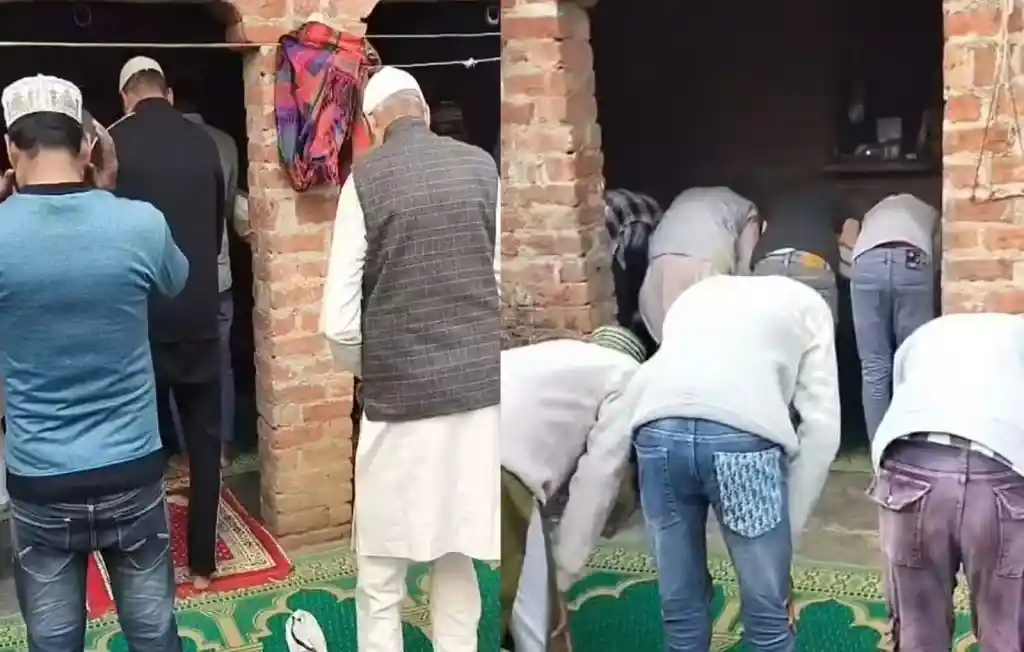
In January 2026, Bareilly once again became the stage for a familiar and carefully constructed controversy. Uttar Pradesh Police detained 12 Muslim men after it emerged that namaz was being regularly offered inside a private vacant house without administrative permission. Preliminary inquiries suggested that the house was being informally used not just as a prayer space, but also as a makeshift mosque and madarsa.
Almost instantly, Islamist groups and their ecosystem on social media projected the police action as an “attack on religious freedom”, branding routine detention and questioning as “arrest” and “persecution”. Hashtags were mobilised, emotive videos circulated, and the state was accused of criminalising prayer.
But strip away the rhetoric, and the Bareilly incident reveals a far more complex and worrying, reality. The police action was not about preventing namaz; it was about enforcing law, preventing illegal use of private property for organised religious activity, and stopping a pattern that has repeatedly led to encroachment, demographic intimidation and, eventually, forced conversions in several parts of the country.
Not an Isolated Incident, But a Repeated Template
Over the years, authorities across India have encountered a recurring modus operandi. What begins as “occasional prayers” in a house or vacant plot gradually morphs into a permanent religious structure. Once a critical mass gathers, religious sentiment is invoked to resist eviction. Any attempt by the administration to intervene is portrayed as majoritarian oppression, while ground realities are conveniently ignored.
Bareilly fits squarely into this pattern. Police officials clarified that the issue was not individual prayer inside one’s home a right protected by law but the use of a private property as a public religious institution without permission, registration or compliance with civic norms. Ignoring such developments at an early stage, they argue, often leaves the administration helpless later.
Lessons From Sanjauli: When Silence Enables Expansion
Perhaps the most striking example of administrative delay turning into a social crisis is the Sanjauli mosque case in Shimla. What began decades ago as a modest structure quietly expanded into a five-storey mosque by illegally encroaching on government land. Authorities looked the other way for years.
By the time local Hindus protested in 2024, the mosque had already altered the social dynamics of the area. Ground reports documented fears of demographic change, harassment of Hindu women, stalking incidents and rising crime linked to outsiders congregating around the structure.
The situation escalated when local youth were assaulted by Muslim immigrants, some of whom took shelter inside the mosque. The matter eventually reached court. In a series of orders between 2024 and January 2026, the Himachal Pradesh High Court directed demolition of all illegal floors, rejecting appeals by the State Waqf Board.
The Sanjauli episode demonstrates what happens when authorities treat illegal religious expansion as a “sensitive issue” instead of a legal one. Bareilly police, critics argue, acted precisely to avoid repeating such a mistake.
Delhi’s Seelampur: From Flat to Riot Base
A similar story unfolded in Delhi’s Seelampur with the Al-Mateen Mosque. What started in 2013 as namaz inside a residential flat soon transformed into a four-storey mosque. During the 2020 anti-Hindu riots, the structure allegedly served as a base from where bullets were fired, injuring Hindu youths.
Post-riots, Hindus began migrating out of the area. Expansion attempts resumed in 2023, including the purchase of a Hindu-owned house to open a new mosque gate directly opposite a Shiv Mandir. Resistance by locals was met with intimidation, alleged throwing of animal bones and blood, and social pressure that forced families to put up “house for sale” posters.
Again, the pattern was clear: prayer, expansion, dominance, intimidation, and demographic displacement.
The Mazaar Phenomenon: Encroachment Disguised as Faith
Beyond mosques, illegal mazars and dargahs have proliferated across India, often starting with a stone slab on public land. Over time, they are cemented, covered with green cloth, and presented as sacred. Within months, permanent structures emerge without any historical burial or legal sanction.
From Gujarat’s Ranjit Sagar Dam area to Uttarakhand’s Rajaji Tiger Reserve, railway land, airports and even road medians, governments have had to demolish hundreds of such illegal structures. Investigations frequently revealed there was no grave beneath, only encroachment protected by fear of backlash.
Namaz on Roads
Bareilly must also be seen in the context of repeated instances of namaz being offered on roads and public spaces. In Gurugram, such incidents in 2021 and 2022 led to protests after locals reported rising eve-teasing and theft. Claims of “lack of space” collapsed when it emerged that worshippers travelled long distances to pray on roads despite mosques being available elsewhere.
The objective, critics say, was not religious necessity but public assertion, creating pressure points that later become non-negotiable.
Christian Missionaries and the Same Playbook
Importantly, this strategy is not exclusive to Islamist groups. Christian missionary networks have used similar methods. In Lucknow’s Gomti Nagar Extension, a residential house was run as an unregistered church hosting 200 people weekly. Locals alleged conversion pressure and inflated property purchases to engineer a Christian-dominated locality.
In tribal regions of Chhattisgarh, Jharkhand, Gujarat and Tamil Nadu, missionaries have been accused of encroaching on temple or government land, beginning with “prayer meetings” that later became conversion hubs.
Why Police Intervention Matters
Against this backdrop, the Bareilly police action appears less like repression and more like preventive governance. Detention for questioning, verification of permissions and halting unauthorised religious use of property are standard administrative tools. Calling it “persecution” trivialises genuine cases of religious discrimination while shielding deliberate legal violations.
Allowing such setups to grow unchecked often leaves the state facing explosive conflicts later, when eviction becomes politically charged and socially volatile.
Bareilly may not yet have reached the scale of Sanjauli or Seelampur. But history shows that every such flashpoint begins small. The police acted early, within the framework of law, to prevent an informal religious structure from hardening into an untouchable encroachment.
The real question, therefore, is not whether the men were “just praying”, but whether the state should wait until illegal religious activities evolve into land grabs, intimidation and forced conversions before acting.
If past experience is any guide, Bareilly may well be an example of timely intervention—one that deserves honest scrutiny, not manufactured outrage.