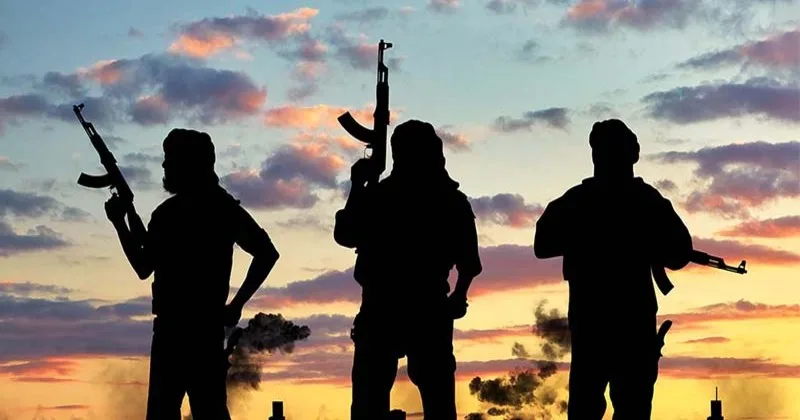
Condemnation should ring out loud and clear against the recent ISIS-K (Khorasan) claimed attack at a concert hall outside of Moscow that killed more than 130 and left over 100 injured. This attack a few months ago is a testimony to the fact that no part of the world including the communist countries are safe from the wrath and daggers of the international monster, the transnational terrorism. Khorasan is a splinter Unit of ISIS which has its roots linked with some parts of Iran, Turkmenistan and Afghanistan. This attack has two main take away to learn: first: taking sides in internal conflicts may create enmity among various actors in international politics. Secondly, the international terror groups were down for sometime but not wiped out, and may attack with gusto. They have also developed clandestine links in Central Asian Republics and a number of new safe heavens are gradually established to carryout their unholy missions.
Thirdly, any hard retaliation from Russia against ISIS should involve coordination and cooperation with neighboring countries as this might spill-over surrounding areas. This is not the first terrorist attack witnessed by Russia but has a close resemblance to the earlier incidents of terror and is a disturbing reminder of an array of issues Russia has grappling with after 1991. During 2002 there was a Hostage taking incident in Moscow theatre that led to loss of more than 90 lives. During 2004 in another hostage incident around Caucasus area more than 250 lost their lives. During December 2013 just before Sochi Olympics Russia witnessed terrorist attack by Chechen Rebles wherein two suicide bombers blew themselves off killing 17 and 14 people in two separate consecutive attacks on.
Chechnya is the North Caucasus of Russia particularly Dagestan and Dagestan became the major dens of separatist activities. Then there was almost a lull in such incidents of terror violence.The latest attack is the worst kind during last one decade. The main purpose of the attack was not only to expose the vulnerability of even the integrated communist regime against terrorists but also let the world know about the ability of modern terrorists to choose place and time of their attack. Therefore, killing is only a mean for terrorists but the ultimate goal is hogging the media highlights. Coming days are certainly going to provide President Putin his defining moments.
The increasing criticism of the attack by India, the US, European Union, France, Spain and Italy and several countries speaks volume about the serious concern over the need to combat rising spectre of international terrorism. It is commendable that the US had already shared the possibility of a terror attack on any mass gathering in Russia about two weeks ago. It is remarkable to see that despite the power game the powerful actors in international politics are involved in, the US has been apparently quite keen on checking the growing tentacles of fundamentalist terror in and around American soil, Europe, Asia and also in Russia and Central Asian Republics for quite sometime.The trust deficit between the two super powers during cold war era responble for their increasing penchant to spread respective hegemonic influence in Afghanistan and later on Central Asia might turned out to be so pernicious no one would have ever imagined.
Now both the countries together can develop intelligence sharing mechanism though the possibility seems like a chimera at least at the moment. Whereas Ukraine has denied any link to this attack as the Federal Security Agency( FSB ) is apprehensive about the involvement of Ukarine as four terrorists involved tried to escape through Russian-Ukranian border. In case it is proved might lead to further complications between the two countries engaged in war. On the other hand power continues unabated. China has already started spreading its power wings all over the region in order to ensure its rising hegemony. Russia and even Central Asia are gradually getting a lot of attention during the last one decade.
Emergence of terrorism and non-state actors in Central Asia
For certain non-state actors operating in Afghanistan, Turkey, Pakistan and Iran the CAR region has great potential much beyond economic and cultural exchanges and that is to misinterpret the link is the common cultural solidarity which is lately, getting culminated in the form of sponsored agents of terror. Most European countries are concerned and worried about the possibility of increasing fundamentalism in the region. If unchecked, fundamentalism nurturing militancy can pose serious challenges to the neighboring countries. This is evident from the chaos in Syria and Afghanistan. On the other hand, Russia continues to be worried about the Chechnya uprising and China more concerned about the presence of Uyghur Ethnic group in Kyrgyzstan & Kazakhstan.
There are roughly about 7.32 million Uyghurs reside in Xinjiang province of China. Recently there has been upsurge in the militant activities of Uyghur in Xinjiang. The interest of these countries in the region is not limited to commerce alone. They want to influence the CAR in Islamic terms. This has brought forward how paramount is the need of a multilayered security cooperation that can deal with the issues related to terror through enhancing the technological innovation and tightening border and maritime security information gathering exercise. Cooperation in aggrandizement towards communication capability and management of security arrangements to deal with any kind of threat is the main credo of relevance in present scenario.
Although more articulate and accurate efforts by intelligence and security agencies can provide more information about such groups of the region, there is still a confusion whether such mechanism is successful in dealing with these terrorists who are driven by misinterpretation of religion. The growing problem of refugees who have fled due to disturbances in Afghanistan, Uzbekistan, Iraq and Syria added new dimensions to the existing problem. Although Russia has always acknowledged the economic and political significance of the region, its policies towards local people have been not been consistent as desired by these groups. These policies wavered from a stress on consideration of the special characteristics of the national minorities to an attempt to persuade them to acquiesce or assimilate into Russian culture and gradually influence.
In such a situation the Troika must ensure that the fundamentalists do not operate from the bases in safe heavens of the terrorist-supported countries. The best way perhaps would be to identify the areas of national and regional resilience and develop capabilities domestically and externally for combating terrorism. After loosening out of the noose of Islamic State, Syria and Iraq have breathed sigh of relief but the growing web of terror network in neighboring regions is gradually providing breeding ground for bigotry driven militancy and inviting Salafi-Jihadist groups to refocus their attention on Russia and Central Asia. Hence, from monitoring the crucial issues of political stability and economic development of the region, Russia and some parts of Central Asian Units should undertake issues related to strategic partnership to handle the rising tide of international monster.
The recent Samarkand concern to fight terrorism through collaboration and people to people contact between Central Asia and India is the beginning of the end for terrorism. The catch here lies in how to generate prudence to anticipate the forebodings about a possible threat from religiously motivated bands of distraught people. The anti terror/combating terror meeting during 2019 between India, Afghanistan and five nations of Central Asia held at Samarkand in Uzbekistan provided a ray of hope in dealing with different forms of threats in the region. During the last few years or so even Central Asian countries were grappling with the security threat on account of new tentacles of international terrorism. There have been a number of incidents of terror attacks links with the people from these nations.
Therefore, there has been tremendous concern as how to nip in the bud this evil genius who are leading the entire region towards disaster. In addition to the question of economic aggrandizement and nation building exercise there have been a number of security related issues in Russia. According to the recent reports many individual wolfs and non –state actors operating from the Central Asian region spelling out reign of terror in surrounding areas. The spreading tentacles of International Islamist terrorist organization Hizb Ut-Tahrir committed to the ideology of Caliphate dominance by way of internationalization of terror has been banned by the governments of Kyrgyzstan Uzbekistan and Tajikistan.
In past its members have been held responsible for rampant use of battery improvised devices, knife and car in individual and group terror attacks. Massacring foreign tourists and hostage takings have been some recent tactics adopted by terrorists operating from this region. These terrorists are operating in Turkey, Norway, Sweden and Uzbekistan. During the last few years the unabated militant activities by Akromiya, an Islamist organization founded by Akrom Yo‘ldoshev compelled the President of Uzbekistan Islam Karimov to take stringent actions against it. As a result it has been declared unlawful. Despite anti-terrorist drive of the governments in Central Asia there were many attempts from these states to export terrorism to Iraq, Afghanistan and Syria.
On account of rapid rise in terror threats Moscow intensified its plan to set up Troika alliance in the past. The need for a common security apparatus has exposed Central Asia’s long painful process of institution building. The recent influx of illegal migrants and sudden influx in terrorist activities, China and Russia have been shaken out of complacency and compelled to seek cooperation for tackling the menace of trans-national terrorism. Rise of fundamentalism in Central Asia is an international reality. The disgruntled groups have constantly expressed their dissatisfaction, many times violently. Thus, riots and bomb blasts occur at regular intermissions. The brands of distraught people have gained tremendous support from refugees who have fled due to ethnic strife in neighbouring countries.
Besides, fundamentalists have acquired sophisticated arms, training and developed a close network with rogue nations around. The sudden disintegration of Soviet Union in December 1991 and emergence of five independent states(Kazakhstan, Kyrgyzstan, Tajikistan, Turkmenistan and Uzbekistan ) made Central Asian Region strategically very vital. Central Asia has many ethnic communities such as the Turkmens, the Uzbeks, the Uighurs and Tajiks. Some of them also live in adjacent countries like Russia, Iran, Afghanistan and China. Soon after the break-up of Soviet Union, new forms of governments took charge of these republics. Former Communist leader Islam Karimov formed his government in Uzbekistan and Sepermurad Niyazov became the President of Turkmenistan. Both these governments were authoritative in nature and very unresponsive to the dissatisfied groups. As a result many splinters emerged within groups started creating vulnerable situation.
There has always been considerable concern in the government to ensure political stability. Sultan Nazerbaev became the President of Kazakhstan and brought about a major transformation from communist form of government to a comparatively free country but security threat still loom large on account of the spill-over of the neighbouring countries and crisis due to refugee influx. The fundamentalist Islamic factions have often lashed out at the governments in their respective countries. Consequently the governments in CAR expressed their concern about the separatist forces and for saw the necessity of using force to keep the lid on the ethnic cauldron. The relatively calm profile of CAR took a beating when Democratic Party, the Rastokhez Front and Islamic Revivalist Party organized the anti -government activities during May 1991.
This exposed simmering discontent among majority community and created background for psychological ambience for the growth of militancy based on bigotry in the region. Besides, frequent activities in Moscow based Islamic Renaissance Party further accelerated new tentacles of fundamentalist terror across the entire CAR. While there is an abundance of oil, natural gas resources, minerals, cotton, textile commodity in the CAR yet the region still have to catch up with advanced countries of the world with regard to providing job facilities, housing, consumer commodities and education. The business investment policies and consumer spending have not remained as high desired placing obvious brakes on the expansion of economies.
Few critiques hold lack of proper economics and political will both responsible for the vulnerability of the region. The people in CAR are expecting governments to accelerate plan formulations and under take prompt measures for improving access to the means of production, economic opportunities such as proper usage of natural resources, income and employability and developing the capability of locals to produce more. Besides, the governments in this region need to cooperate and coordinate with regard to any security challenge posed by modern terrorists. Since service sector is quite impressive in CAR and particularly in Kazakhstan amounting for more than 50 per cent of the total GDP, the key to economic transformation lies in integrating it further.
Although it is difficult to predict what new ideas and strategies could help Russia and CAR to improve economic prowess and develop security capabilities, it is evident that to a large extent economic activities in the coming years will be influenced by the region’s capability to fight inflation and develop anti- terrorist mechanism. Central Asia is of immense value to the world because of its strategic location and very rich oil resources. The US has already declared CAR as very crucial region for strategic purpose.
In addition to the economic importance it attaches to the region, for a permanent solution it is imperative to remember that law and order problem is different from the problem of terrorism. We often make the mistake of treating both as same. In a situation where terrorist violence has become endemic the deployment of special forces in countering terrorist activities need to become a reality as soon as possible. The solution of the problem lies in collaborative efforts by nations of the world to work out strategic mechanism to combat international terrorism head on. In this regard India can providea pivotal role.