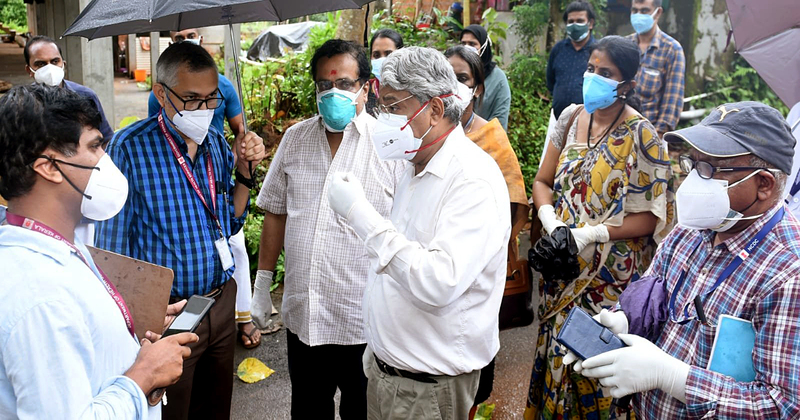
An atmosphere of anxiety has gripped West Bengal after three nurses were admitted as suspected Nipah virus cases, triggering emergency health protocols across the state. Two of the nurses are currently on ventilator support, while the third was admitted late Tuesday night to Beliaghata Infectious Diseases (ID) Hospital in Kolkata, where she has been placed in strict isolation.
State health officials have initiated intensive contact tracing, given the high transmissibility and fatality rate associated with Nipah virus infections, especially in healthcare settings.
According to preliminary findings, Ghoghragachi village in the Krishnaganj block of Nadia district has emerged as the suspected origin of the infection. The village lies close to the India-Bangladesh border, raising concerns about cross-border epidemiological links.
A detailed report submitted by AIIMS Kalyani has flagged the area as a potential hotspot, citing its proximity to Chuadanga and parts of Kushtia in Bangladesh, regions where Nipah cases have reportedly been on the rise in recent months.
Health authorities believe the virus may have spread through raw date palm sap contaminated by fruit bats, which are natural carriers of the Nipah virus. Infrared surveillance in the border areas has reportedly captured fruit bats feeding on date palm sap, a known route of transmission.
Sources revealed that on December 15, a nurse from a private hospital in Barasat attended a family wedding in Ghoghragachi village. It is suspected that she consumed raw date palm sap during the visit. Experts say that during the winter season, bats are particularly attracted to date palm sap and often contaminate it with saliva, urine or faeces, which can transmit the virus to humans.
Chief Secretary Nandini Chakraborty, addressing a press conference, confirmed that the suspected cases were being closely monitored.
“This virus comes from bats. People must be careful about what bats eat and what humans consume,” she said.
She also disclosed that both critically ill nurses had travelled to East Bardhaman, prompting health authorities to expand the scope of contact tracing beyond Nadia district.
In response to the developing situation, the state government has activated emergency helplines, 03323330180 and 9874708858, to assist the public and facilitate reporting of suspected symptoms.
Chief Minister Mamata Banerjee spoke to Union Health Minister JP Nadda, who assured full support from the Centre. Subsequently, a team of expert doctors from Delhi has been dispatched to assist West Bengal’s health machinery in managing the crisis.
Nipah virus is a zoonotic infection, meaning it spreads from animals to humans. Fruit bats are its natural reservoir, shedding the virus through urine, saliva and faeces. Humans can become infected by consuming contaminated food, such as raw date palm sap or fruits partially eaten by bats, or through direct contact with infected animals like bats or pigs.
Once a human infection occurs, the virus can spread through close contact with bodily fluids, putting family members and healthcare workers at particularly high risk.
The incubation period for the Nipah virus typically ranges from 4 to 14 days. Early symptoms include fever, headache, cough, sore throat and breathing difficulties. Patients may also experience vomiting, diarrhoea, muscle pain and extreme weakness.
In severe cases, the infection can lead to encephalitis, or inflammation of the brain, which can be fatal. The mortality rate of Nipah virus is estimated to be between 40 and 75 per cent, making it one of the most lethal viral infections known.