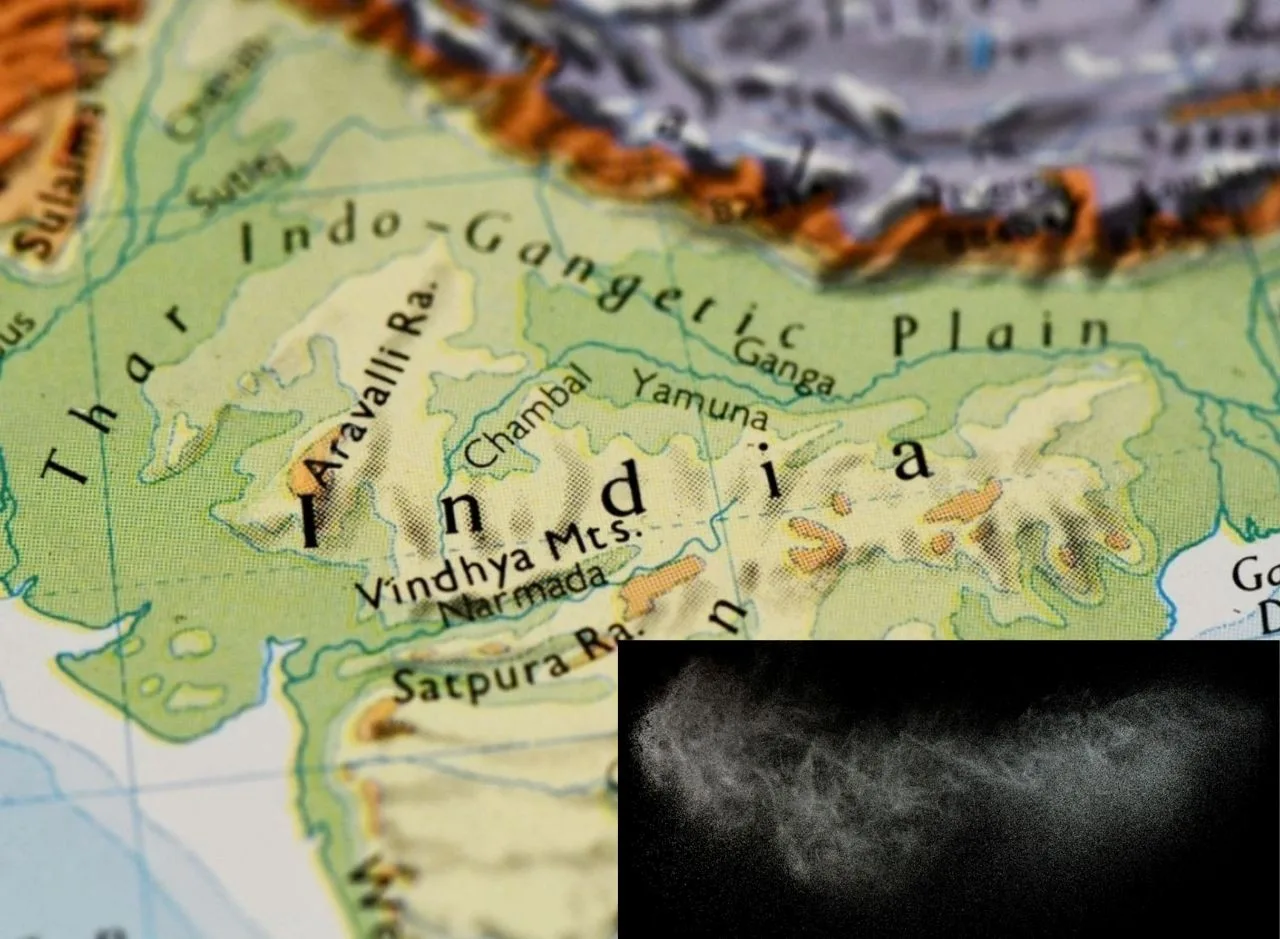
NEW DELHI: The Indo-Gangetic Plain (IGP) is among the most densely populated and polluted regions in the world. Stretching from Punjab through Uttar Pradesh, Bihar and into West Bengal, this region experiences extreme seasonal variations in both aerosol loading and atmospheric moisture. Till date aerosols the tiny particles are suspended in the air were widely considered the dominant regional climate influencers because of their ability to scatter and absorb solar radiation.
The new study demonstrates that water vapour plays a much stronger role in heating the atmosphere than aerosols, particularly when the atmosphere is relatively clean. This finding is important for India, where climate models generally have difficulty adequately simulating the variability of monsoons, heat stress, and regional trends in warming.
This research was led by scientists from ARIES, Nainital and the Indian Institute of Astrophysics (IIA), Bengaluru, both autonomous institutions under the Department of Science and Technology. International collaborators included the University of Western Macedonia, Greece and Soka University.
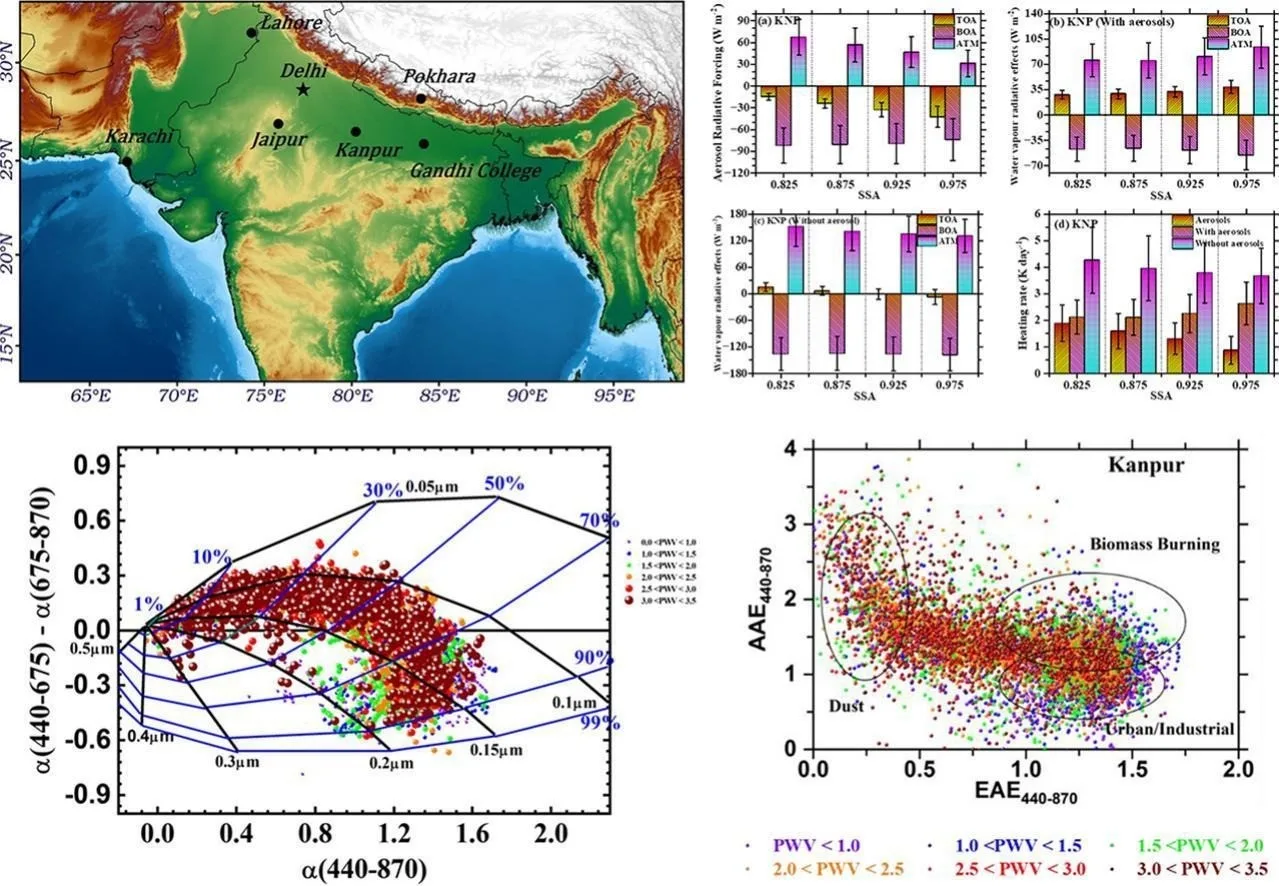
The team analysed long-term observations from six AERONET (Aerosol Robotic Network) stations across the IGP, combining ground-based measurements with advanced radiative transfer simulations using the SBDART model.
Understanding aerosols versus water vapour
Aerosols affect climate directly by either reflecting sunlight back into space, cooling the planet, or absorbing sunlight, warming the planet, depending on aerosol type. Black carbon absorbs sulphates and strongly reflects sunlight. Water vapour is the most prevalent greenhouse gas in the atmosphere. It absorbs outgoing terrestrial radiation and traps heat. Its role in amplifying warming is referred to as a positive feedback mechanism.
This study shows that although aerosols alter the Earth’s radiation balance, the resulting heating effect is much smaller than that of water vapour. In fact, WVRE dominates atmospheric heating over the IGP throughout the year, but more so during high-humidity conditions during the Indian summer monsoon.
A surprising finding: Cleaner air and stronger heating
One of the most striking conclusions of the research is that water vapour warms the atmosphere more strongly under aerosol-free or cleaner conditions. When aerosol concentrations are low, water vapour’s ability to absorb and re-emit radiation becomes more pronounced, leading to stronger atmospheric heating both at the surface and within the lower atmosphere.
The heavily aerosol conditions which is having common over the IGP during winter and post-harvest burning period has partially water vapour’s heating effect. Aerosols scatter and absorb incoming solar radiation, reducing the amount of energy available for water vapour to trap near the surface. This study also notes that under polluted conditions, the water vapour effect becomes more visible at the top of the atmosphere.
Implications for the Indian monsoon
Complex land-ocean atmosphere radiation interactions drive the Indian summer monsoon. Any factor that modifies atmospheric heating can affect monsoon circulation. The presented study highlights the dominant role of water vapour in atmospheric heating, thereby underscoring the importance of accurate humidity representation in monsoon forecast models.
In the IGP, in spite of the fact that even a small discrepancy in the simulation of water vapour leads to an enormous discrepancy in rainfall simulation. It occurs due to the combined effects of high arid and humid flows entering through the Bay of Bengal and the Arabian Sea. A climate model that emphasises aerosols and water vapour may overlook another part of the puzzle, as suggested by the present research.
Rethinking Climate Projections
The implications of the results go beyond monsoon research. Climate model projections for South Asia indicate substantial variability in temperature and rainfall trends. By demonstrating the combined and interacting roles of aerosols and water vapour, the study calls for a more integrated approach to climate modelling.
According to the researchers, reliable climate projections for the IGP and India more broadly must consider not only aerosol loading. It also shows how aerosols interact with water vapour under different atmospheric conditions. Ignoring these interactions could lead to flawed assessments of future heatwaves, rainfall extremes and climate resilience strategies.
Policy relevance for India
Policymakers are presented with a rather complex message. On the one hand, it remains important to cut aerosol pollutants to improve public health and visibility. Cleaner air does not necessarily mean less heating of the atmosphere; on the other hand, as the relative role of water vapour becomes even more apparent as the influence of aerosols declines with their reduction in concentration.
This illustrates the call for a climate strategy that goes beyond addressing GHG emissions. It also needs to address weather forecasting, land use and water management practices. This further underscores the importance of investing in high-quality atmospheric observations and indigenous climate research. ARIES, together with the India Institute of Astronomy, has already established a strong presence.
A step forward in climate understanding
This study offers a new perspective on the story of the Indo-Gangetic Plain. This is because the study demonstrates that the intangible, that is, water vapour, has the potential to be stronger than the visible, namely the haze. The study provides crucial missing information on the extent to which water vapour has a greater capacity to warm the atmosphere than aerosols.
In the context of India’s current challenges with rising temperatures, irregular monsoons, and intensifying climate change risks, it is invaluable to have scientific findings such as those presented in the paper.
This research, published in the Atmospheric Research Journal, found that the radiative effects of water vapour are strongly influenced by the presence of aerosols and that aerosol-water vapour interactions highly modulate the radiation budget in the atmosphere, with the WVRE being much more intense in aerosol-free atmospheres compared to aerosol-laden conditions.
These effects are stronger over both the Earth’s surface and in the atmosphere when the air is clean. When aerosols are present, the water vapour effect becomes more noticeable at the top of the atmosphere, highlighting a significant interrelation between aerosols and water vapour.
The experiment has also revealed that water vapour warms the atmosphere much more effectively than aerosols. The importance of water vapour in shaping the climate pattern over the Indo-Gangetic Basin has again come to light in these experimental results. The dependence on solar position and on atmospheric factors associated with aerosol absorption has been revealed by these experimental findings.