
One of the first significant Hindu festivals, Makar Sankranti, is observed with great enthusiasm in several regions of Bharat. The new harvest season officially begins on this day. However, Makar Sankranti’s cultural significance varies by region; different states celebrate it under different names but with the same affection. The Hindu festival of Makar Sankranti is based on an astronomical event: the Sun’s apparent shift from the southern to the northern hemisphere along the ecliptic. According to science, this signifies the Sun’s crossing of the celestial equator, the astronomical event in which the Sun moves northward (increasing its declination) after the winter solstice. Sanatanis worship and express gratitude to the sun, viewing it as both a celestial body and a cognizant deity.
From dawn until dusk on Makar Sankranti, Chaitanya permeates the surroundings. Therefore, the greatest benefit of the greater Chaitanya can be obtained by a seeker engaging in sadhana (spiritual practice). The Absolute Fire Principle, or tejtattva, also increases in seekers as a result of the Chaitanya. Makar Sankranti is an excellent day for sadhana.
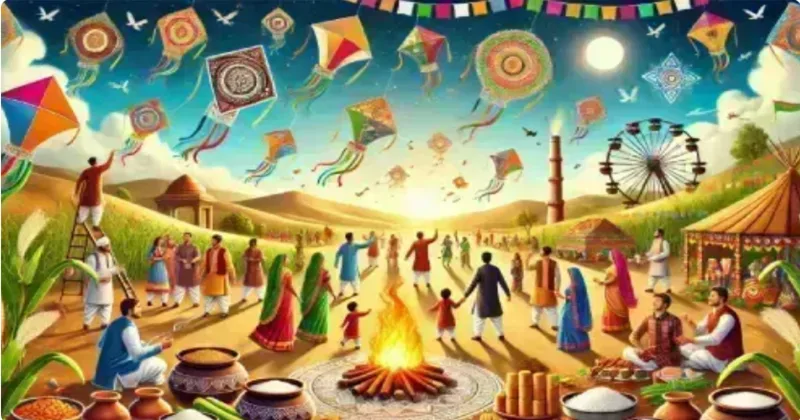
The Sun’s northward migration heralds the eventual end of winter and more daylight in the Northern Hemisphere. In the past, this happened at the same time as agricultural cycles: harvests were finished, crops were stored, and new farming preparations began. Bonfires, kite flying, and river swimming are examples of cultural customs with pragmatic origins, such as providing warmth, commemorating longer days, and ceremonial purification linked to seasonal river flows and to leisure time after harvest. An essential component of the Makar Sankranti festivities is gathering on the rooftop to fly kites in the sun. This ancient custom has scientific value because, after a long winter, the Sun finally replenishes its energy and purifies our bodies of bacteria and illnesses while we create joyful flying kites.
Universal festival
Different regions of the country refer to the day’s celebrations by different names: Sukarat in central Bharat, Bhogali Bihu among Assamese Hindus, Pongal among Tamil and other south Bharatiya Hindus, and Lohri among north Bharatiya Hindus and Sikhs. As many sections of Bharat commemorate the Makar Sankranti festival, other parts of Asia also celebrate it under different names and for similar reasons. For instance, the Makar Sankranti celebration is known as Songkran in Thailand and Moha Sangkranta in Cambodia. Additionally, people from all around the world, mostly of Bharatiya descent, commemorate Makar Sankranti to demonstrate their ties to their heritage.
To create unique laddoos that genuinely elevate the event, a specific preparation of sesame and jaggery is blended. The reason for consuming these laddoos is that each sesame grain includes components derived from oil. Skin becomes flaky and dry throughout the winter and needs hydration to be protected and smooth. Therefore, eating sesame laddoos—a crucial component of the celebration—provides this moisturising effect. Often referred to as til-gul, these sweets are associated with the customs of the Makar Sankranti celebration and are thought to foster harmony within the community.
Why RSS celebrates Makar Sankranti?
The RSS is attempting to address the gaps in society caused by caste, wealth, and social injustice. Makar Sankranti is a celebration that seeks to eradicate untouchability and antiquated traditions in society to promote harmony and self-respect. The goal of this event is to awaken inner awareness and to decide to bring Bharat back to its previous splendour. The diverse castes that make up Hindu civilisation must come together. According to Dr Hedgewar ji, Bharat Mata’s existence would be in jeopardy as long as Hindu society is divided. The celebrations were organised by Dr Keshavrao Baliram Hedgewar ji in accordance with the characteristics of social equanimity and Hindu unity that he believed were essential for society. Every celebration honours a certain virtue. RSS never functions at a superficial level. Every decision made by the leadership and Swayamsevaks is done with compassion and love for every member of the community. After a century of commitment and work for social harmony, the benefits of Hindu unity are becoming apparent. Efforts to raise the social and economic status of oppressed and marginalised societies have increased public confidence in RSS.
In addition to honouring nature without endangering the environment, celebrating Makar Sankranti helps them stay faithful to Indian tradition and preserve its essence. Flying biodegradable kites is one of the few unique, eco-friendly customs that are now an integral part of the Makar Sankranti celebration. For them, participating in various social campaigns to improve living conditions and communal benefits, without sacrificing traditional values and the essence of Makar Sankranti, is another aspect of the festivities.
To encourage harmony in society and reverence for the natural world, you can replenish your energy, fill your mind and soul with happiness, and spread the spirit to others. This helps honour Makar Sankranti’s true significance and purpose.