Shastri’s death and the silence that followed
June 12, 2026
  • Read Ecopy
  • Circulation
  • Advertise
  • Careers
  • About Us
  • Contact Us
Android AppiPhone AppArattai
Organiser
  • ‌
  • Bharat
    • Assam
    • Bihar
    • Chhattisgarh
    • Jharkhand
    • Maharashtra
    • View All States
  • World
    • Asia
    • Europe
    • North America
    • South America
    • Africa
    • Australia
  • Editorial
  • International
  • Opinion
  • RSS @ 100
  • More
    • Op Sindoor
    • Analysis
    • Sports
    • Defence
    • Politics
    • Business
    • Economy
    • Culture
    • Special Report
    • Sci & Tech
    • Entertainment
    • G20
    • Azadi Ka Amrit Mahotsav
    • Vocal4Local
    • Web Stories
    • Education
    • Employment
    • Books
    • Interviews
    • Travel
    • Law
    • Health
    • Obituary
  • Subscribe
    • Subscribe Print Edition
    • Subscribe Ecopy
    • Read Ecopy
  • ‌
  • Bharat
    • Assam
    • Bihar
    • Chhattisgarh
    • Jharkhand
    • Maharashtra
    • View All States
  • World
    • Asia
    • Europe
    • North America
    • South America
    • Africa
    • Australia
  • Editorial
  • International
  • Opinion
  • RSS @ 100
  • More
    • Op Sindoor
    • Analysis
    • Sports
    • Defence
    • Politics
    • Business
    • Economy
    • Culture
    • Special Report
    • Sci & Tech
    • Entertainment
    • G20
    • Azadi Ka Amrit Mahotsav
    • Vocal4Local
    • Web Stories
    • Education
    • Employment
    • Books
    • Interviews
    • Travel
    • Law
    • Health
    • Obituary
  • Subscribe
    • Subscribe Print Edition
    • Subscribe Ecopy
    • Read Ecopy
Organiser
  • Home
  • Bharat
  • World
  • Operation Sindoor
  • Editorial
  • Analysis
  • Opinion
  • Culture
  • Defence
  • International Edition
  • RSS @ 100
  • Magazine
  • Read Ecopy
Home Bharat

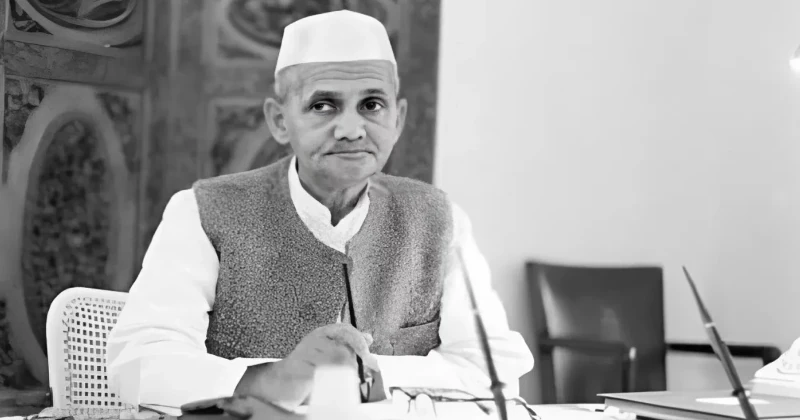
When Shastri Died: A Prime Minister’s passing, and the questions India never fully answered

Lal Bahadur Shastri’s sudden death in Tashkent in 1966 was officially attributed to a heart attack, but the absence of an independent post-mortem and full transparency left lingering doubts

Debika DuttaDebika Dutta
Jan 11, 2026, 07:00 am IST
in Bharat, Opinion
Follow on Google News
FacebookTwitterWhatsAppTelegramEmail

TASHKENT: On the night of January 10 1966, Lal Bahadur Shastri returned to his room in Tashkent after signing the agreement that ended the 1965 war with Pakistan. He was tired, drained, carrying the weight of a nation quietly on his shoulders. Those who saw him remembered a man relieved, perhaps, but far from triumphant.

A few hours later, he was gone.

The official explanation was a heart attack. India accepted it, informed Parliament, and brought his mortal remains home with full state honours. The nation mourned with dignity. Yet even as the ceremonies ended, unease lingered.

Nearly six decades on, Shastri’s death remains an unsettled story. Not because foul play has been proved, but because the explanation was never complete. It was not the absence of evidence that troubled people; it was the absence of process. A Prime Minister dies abroad; the nation waits for clarity. Silence in such moments invites suspicion.

Shastri had lived under enormous pressure. The 1965 war had tested India’s economy, its military, and its spirit. He worked relentlessly, rarely letting illness or exhaustion interfere with duty. Fatigue and high blood pressure were real, and a sudden cardiac event was entirely plausible. Yet that very plausibility makes the absence of independent verification troubling.

No post-mortem was conducted in Tashkent. India relied on the Soviet medical certificate, a standard diplomatic practice of the time. But could the state not have done more to remove doubt? That procedural gap, not a conspiracy, has kept the matter alive in public memory.

Shastri’s family quietly sought answers. Marks on the body, questions about treatment, unanswered concerns. These were not political accusations they were the natural demands of a family seeking closure. And the nation, in its own way, shared that unease.

Over the years, curiosity turned to speculation. Tales of poisoning, foreign intrigue, and domestic plots surfaced from time to time. None proved. Yet their very circulation reflects a truth: secrecy breeds suspicion. Transparency builds trust. History is unforgiving of silence.

Responsible governance is measured not only by conclusions but by openness. The question is not whether Shastri was assassinated. The question is whether the Indian state did enough to remove doubt when it was foreseeable. Defenders argue that 1960s protocols differed, and reliance on host-country certification was standard. True. But democratic trust rests not merely on procedure it rests on honesty.

Shastri was a man of simplicity, restraint, and moral seriousness. He believed that public office carried responsibility, not privilege. His death should have been remembered with clarity, not shadowed by ambiguity. That it is remembered less for certainty than for questions is a quiet irony of history.

Closure today need not be dramatic. It demands honesty: the systematic release of documents relating to Shastri’s final days, with redactions applied only where necessary. Even if the records confirm the original conclusion of natural death, transparency itself would honour his legacy.

The revival of public interest in Shastri’s death through books, investigative accounts, and cinema reflects more than curiosity. It reflects the sense that honest closure was never fully attempted. Popular narratives may dramatise, but they echo a truth: the nation has a right to clarity when it comes to a Prime Minister’s death.

The circumstances of his final hours deserve reflection, not for scandal, but for accountability. A leader who guided the country through war and into peace deserved that much. And the citizens he served, then and now, deserved it as well.

Shastri’s life stood for moral discipline, quiet courage, and ethical governance. He did not govern for applause. He did not seek grandeur. That his death remains a source of unanswered questions is a reminder that responsibility is not only about leadership, but about the state’s duty to preserve public trust.

History remembers not just what happened, but what was never explained. When silence replaces clarity, suspicion grows. Over time, that silence can erode confidence in institutions. The death of a Prime Minister abroad, under ordinary circumstances, would already have raised concern; compounded by procedural gaps, it became a lingering question for generations.

Also Read: Bangladesh police arrest Mohammad Yasin, key suspect in lynching of Dipu Chandra Das, amid rising attacks on Hindus

Every anniversary of Shastri’s death is a moment for remembrance and reflection. It is a chance to ask whether India has been as honest with its memory as it was with the people it served. Would the release of files, medical records, and diplomatic correspondence change conclusions? Perhaps not. But it would strengthen trust in the very institutions he upheld.

We honour Shastri not only by recalling his words or deeds, but by committing to the values he embodied: integrity, service, and moral responsibility. Transparency in how he dealt with his death would be a fitting tribute. It would affirm that the nation he served continues to measure itself not by convenience, but by conscience.

When a Prime Minister died in Tashkent, a question was born. Nearly sixty years later, it remains unanswered. How we confront that question is a measure of our democracy. And it is a reflection on us all, our courage, our accountability, and our respect for history.
 

Topics: Lal Bahadur ShastriTashkentLal Bahadur Shastri deathPM in Tashkent
ShareTweetSendShareSend
✮ Subscribe Organiser YouTube Channel. ✮
✮ Join Organiser's WhatsApp channel for Nationalist views beyond the news. ✮
Previous News

Tamil Nadu: Thirupparankundram row, Madras HC asks why no trespass case over Dargah flag at Bhagwan Murugan site

Next News

Somnath Swabhiman Parv: “Feeling blessed to be in Somnath, a proud symbol of our civilisational courage,” says PM Modi

Related News

Beyond the wheat-paddy monoculture, an urgent blueprint for Punjab’s second green revolution

RSS at 100: Shri Guruji, cultural awakening and the voice of a Nation in crisis

RSS at 100 | Remain vigilant, develop security capabilities while maintaining a spirit of friendship: Dr Mohan Bhagwat

(Left) Mahatma Gandhi (Right) Former PM Lal Bahadur Shastri

PM Modi hails Gandhi’s ‘Viksit Bharat’ Path, Lal Bahadur Shastri’s ‘extraordinary’ statesmanship on birth anniversary

On His Birth Anniversary: Remembering Lal Bahadur Shastri’s quiet revolution in Indian agriculture

Lal Bahadur Shastri Death Anniversary: Humble statesman who gave Bharat the iconic slogan ‘Jai Jawan, Jai Kisan’

Load More

Latest News

US: Anshul Kuncha’s death exposes anti-India racist racket; Assaulting the community that powers American economy!

Security forces undertake anti-Maoist campaign in Odisha in Kandhamal and Malkangiri and seize huge cache of arms

Odisha: Security forces recover caches of weapons of Maoists in Kandhamal and Malkangiri in last three days

Kashmiri Pandits at Kheer Bhawani Temple(File Photo)

J&K: Exiled Kashmiri Pandits throng temples amid enhanced security; Crowd peaks on Jyestha Ashtami at Kheer Bhawani

Global Peace Index Farce: Does the GPI penalise democracies fighting terrorism? India’s case explained

Five Ayush hospitals cum medical colleges to come up in Uttar Pradesh (This is an AI generated image)

Uttar Pradesh plans five integrated AYUSH Colleges and Hospitals to expand traditional healthcare and medical education

(Left) Site of the protest (Right) NIA team in JNIMS hospital

Manipur: NIA starts forensic probe of abduction and killings of 6 Naga civilians by Kuki militants

Prime Minister Narendra Modi

The MODI Era: Legacy of 4399 days of Transformation

Late Laxmananda Saraswati (File Photo)

Missing Swami Laxmananda murder judicial inquiry report triggers FIR in Odisha; BJP targets Naveen Patnaik

4,399 days of Prime Minister Narendra Modi

The Meaning of 4,399 Days: Why Even the Opposition Must Now Play by the New Rules Set in the Modi Era

Keralam: Audit finds gold and silver ornaments missing from nearly 20 temples under Neyyattinkara Devaswom sub group

Load More
  • Privacy
  • Terms
  • Cookie Policy
  • Refund and Cancellation
  • Delivery and Shipping

© Bharat Prakashan (Delhi) Limited.
Tech-enabled by Ananthapuri Technologies

  • Home
  • Search Organiser
  • Bharat
    • Assam
    • Bihar
    • Chhattisgarh
    • Jharkhand
    • Maharashtra
    • View All States
  • World
    • Asia
    • Africa
    • North America
    • South America
    • Europe
    • Australia
  • Editorial
  • Operation Sindoor
  • Opinion
  • Analysis
  • Defence
  • Culture
  • Sports
  • Business
  • RSS @ 100
  • Entertainment
  • More ..
    • Sci & Tech
    • Vocal4Local
    • Special Report
    • Education
    • Employment
    • Books
    • Interviews
    • Travel
    • Health
    • Politics
    • Law
    • Economy
    • Obituary
  • Subscribe Magazine
  • Read Ecopy
  • Advertise
  • Circulation
  • Careers
  • About Us
  • Contact Us
  • Policies & Terms
    • Privacy Policy
    • Cookie Policy
    • Refund and Cancellation
    • Terms of Use

© Bharat Prakashan (Delhi) Limited.
Tech-enabled by Ananthapuri Technologies