Pokhran-II: How India shocked the CIA and changed history
June 9, 2026
  • Read Ecopy
  • Circulation
  • Advertise
  • Careers
  • About Us
  • Contact Us
Android AppiPhone AppArattai
Organiser
  • ‌
  • Bharat
    • Assam
    • Bihar
    • Chhattisgarh
    • Jharkhand
    • Maharashtra
    • View All States
  • World
    • Asia
    • Europe
    • North America
    • South America
    • Africa
    • Australia
  • Editorial
  • International
  • Opinion
  • RSS @ 100
  • More
    • Op Sindoor
    • Analysis
    • Sports
    • Defence
    • Politics
    • Business
    • Economy
    • Culture
    • Special Report
    • Sci & Tech
    • Entertainment
    • G20
    • Azadi Ka Amrit Mahotsav
    • Vocal4Local
    • Web Stories
    • Education
    • Employment
    • Books
    • Interviews
    • Travel
    • Law
    • Health
    • Obituary
  • Subscribe
    • Subscribe Print Edition
    • Subscribe Ecopy
    • Read Ecopy
  • ‌
  • Bharat
    • Assam
    • Bihar
    • Chhattisgarh
    • Jharkhand
    • Maharashtra
    • View All States
  • World
    • Asia
    • Europe
    • North America
    • South America
    • Africa
    • Australia
  • Editorial
  • International
  • Opinion
  • RSS @ 100
  • More
    • Op Sindoor
    • Analysis
    • Sports
    • Defence
    • Politics
    • Business
    • Economy
    • Culture
    • Special Report
    • Sci & Tech
    • Entertainment
    • G20
    • Azadi Ka Amrit Mahotsav
    • Vocal4Local
    • Web Stories
    • Education
    • Employment
    • Books
    • Interviews
    • Travel
    • Law
    • Health
    • Obituary
  • Subscribe
    • Subscribe Print Edition
    • Subscribe Ecopy
    • Read Ecopy
Organiser
  • Home
  • Bharat
  • World
  • Operation Sindoor
  • Editorial
  • Analysis
  • Opinion
  • Culture
  • Defence
  • International Edition
  • RSS @ 100
  • Magazine
  • Read Ecopy
Home Bharat

Pokhran-II: How India secretly conducted nuclear tests, outsmarted the CIA, and redefined global power in 1998

In 1998, India stunned the world by conducting secret nuclear tests at Pokhran, exposing a rare intelligence failure by the CIA. Pokhran-II was not just a scientific triumph, but a bold assertion of India’s strategic sovereignty

WEBDESKWEBDESK
Jan 10, 2026, 03:00 pm IST
in Bharat, World, Defence, Sci & Tech, International Edition
Follow on Google News
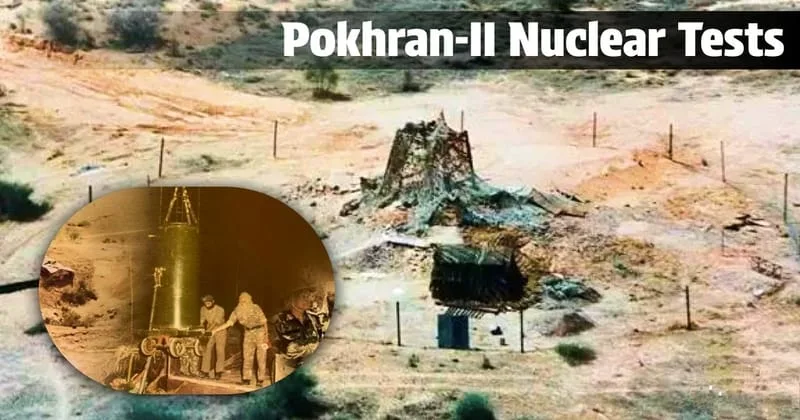
Representative image

Representative image

FacebookTwitterWhatsAppTelegramEmail

In May 1998, India quietly altered the global balance of power. Without prior warning, without satellite alerts, and without intelligence leaks, India conducted a series of underground nuclear tests at Pokhran in Rajasthan. Known as Pokhran-II, these tests stunned the world, and exposed one of the most significant intelligence failures in modern history. Even the CIA, widely regarded as the world’s most sophisticated intelligence agency, failed to detect them.

How India Outsmarted the CIA… And Made History in 1998 🇮🇳🔥

> In his book, former CIA Director George Tenet admitted a rare failure.
> The US intelligence completely missed India’s nuclear tests… a mistake he says still haunts him.

📌 How Pokhran-II fooled the world’s best… pic.twitter.com/5aWm8G5mrd

— The Tathya (@_TheTathya) January 6, 2026

Years later, former CIA Director George Tenet admitted this lapse in his memoir, describing it as a mistake that continued to haunt him. For India, however, Pokhran-II was far more than a scientific breakthrough. It was a triumph of planning, secrecy, and national resolve.

A masterclass in strategic deception

The success of Pokhran-II lay not only in nuclear physics but also in operational discipline. Indian scientists and military planners understood that satellite surveillance posed the greatest risk. Every step was therefore designed to appear ordinary, routine, and unremarkable from space.

Work at the test site was carried out exclusively at night or in the early hours before dawn, when spy satellites were least effective. Heavy equipment was moved carefully and then returned to its original position before sunrise. Disturbed sand was reshaped to match natural wind patterns, erasing signs of human activity. Even sand heaps were aligned with prevailing wind directions to avoid drawing attention.

Also Read: Bangladesh: Hindu man Rana Pratap shot multiple times and throat slit in Jashore amid growing attacks on minorities

Advanced camouflaging techniques blended the site seamlessly into the desert landscape. From above, Pokhran looked unchanged, deceptively calm. The hydrogen bomb test shaft itself was code-named “White House” (Whisky), a quiet irony that underscored India’s confidence and discretion.

Five tests, zero warnings

On May 11 and 13, 1998, India conducted five underground nuclear tests, including a thermonuclear device. The world only learned of them after Prime Minister Atal Bihari Vajpayee announced the achievement. There had been:
No satellite warnings
No intelligence alerts
No diplomatic leaks

For global intelligence agencies, especially the CIA, it was a complete surprise. Pokhran-II was possible because of political courage at the highest level. Atal Bihari Vajpayee ji demonstrated rare resolve, fully aware that sanctions, pressure, and international criticism would follow. Yet he chose long-term national security over short-term approval. That decision fundamentally transformed India’s strategic position. India declared itself a nuclear weapons state, not through rhetoric, but through capability. The tests established credible deterrence and ensured that India could never again be coerced or threatened with impunity.

A silent victory beyond science

While Pokhran-II is often remembered as a nuclear milestone, it was equally an intelligence victory, a moment when meticulous planning and national unity outwitted the world’s most powerful surveillance systems. It demonstrated that discipline, secrecy, and determination can rival even the most advanced technology. Above all, it reaffirmed India’s sovereignty and strategic independence.

More than two decades later, the legacy of Pokhran-II endures. India stands stronger, more confident, and secure in the knowledge that its leadership once made a choice that forever safeguarded the nation.


Topics: India RisingPokhran-IIIndia Nuclear TestsNuclear HistoryCIA FailureAtal Bihari VajpayeeNational SecurityIndian Intelligence
ShareTweetSendShareSend
✮ Subscribe Organiser YouTube Channel. ✮
✮ Join Organiser's WhatsApp channel for Nationalist views beyond the news. ✮
Previous News

Delhi: State police arrest 3 more accused in Turkman Gate stone-pelting case, total arrests rise to 16

Next News

Karnataka: Public funds or party patronage? Congress under fire over National Herald advertisement windfall

Related News

Kurla resident Huzaifa Ansari held by Delhi police and ATS in alleged ISI-linked terror recruitment case

Delhi Police and Thane ATS arrest Kurla mechanic Huzaifa for alleged role in ISI-linked terror recruitment network

Demographic changes in Bharat’s border districts have raised concerns about migration, security, and social cohesion

Demographic Shift in Border Areas of Bharat: The dangerous design

Sacrilege, state interference and the Sikh question in Punjab

Myanmar President U Min Aung Hlaing and Prime Minister Narendra Modi

PM Modi pushes for democracy in Myanmar; Naypyidaw vows action against insurgents threatening India’s national security

General Raja Subramani assumes charge as the Chief of Defence Staff(CDS)

General Raja Subramani assumes charge as CDS: Outlines vision for defence indigenisation & modernisation

Suvendu Adhikari government aims for border security

Strengthening Siliguri for National Security: West Bengal govt gives 75 hectares to BSF for border fencing

Load More

Latest News

Banda Singh Bahadur

Banda Singh Bahadur Martyrdom Day: Betrayal of Guru Gobind Singh Ji by Mughals and the rise of Madho Das

12 years of Modi Govt: Meaningful philosophy or manufactured phenomenon; Bharat’s tryst with democracy

Prime Minister Narendra Modi during an overseas visit, greeting members of the Indian diplomatic and community delegation upon arrival. (File Photo)

Trade, Defence and Diaspora: PM Modi eyes Indo-Pacific reset with three-nation tour

Accused Nida Khan reportedly admits taking victim for religious instruction, teaching Islamic rituals

Nashik TCS Corporate Jihad: ‘I taught her how to do namaz,’ says Nida Khan; victim pressured to observe 30 ramzan roza

Germany: Sri Ganesha temple opens in Berlin: Europe’s largest Hindu Mandir reflects India’s cultural & dharmic spirit

Rajasthn | RSS centenary journey embodies dedication to nation-building: Dr Ramesh Agrawal

Decades of illegal infiltration from Bangladesh have driven profound demographic shifts in Assam, fundamentally altering its religious, linguistic, and political landscape

Unnatural demographic change: The termite threat

The Rs 200-crore MAHA Water Mission seeks to boost water security and democratise research funding in India

From Rigveda to Research Labs: How ANRF’s Rs 200 crore water mission is securing India’s future

(Right) Prakhar Shrivastava, Senior Consulting Editor and Anchor at Delhi Doordarshan Kendra at a Narada Jayanti programme in Guwahati (Left) Prakahar Srivastava addressing the gathering

Narada Jayanti by VSK Assam: “Half-truths more dangerous than lies,” says senior journalist Prakhar Shrivastava

Everest Survivor being taken to the hospital on a stretcher

Everest Survivor ICU Interview: BBC under fire for interviewing Sherpa without family’s consent

Load More
  • Privacy
  • Terms
  • Cookie Policy
  • Refund and Cancellation
  • Delivery and Shipping

© Bharat Prakashan (Delhi) Limited.
Tech-enabled by Ananthapuri Technologies

  • Home
  • Search Organiser
  • Bharat
    • Assam
    • Bihar
    • Chhattisgarh
    • Jharkhand
    • Maharashtra
    • View All States
  • World
    • Asia
    • Africa
    • North America
    • South America
    • Europe
    • Australia
  • Editorial
  • Operation Sindoor
  • Opinion
  • Analysis
  • Defence
  • Culture
  • Sports
  • Business
  • RSS @ 100
  • Entertainment
  • More ..
    • Sci & Tech
    • Vocal4Local
    • Special Report
    • Education
    • Employment
    • Books
    • Interviews
    • Travel
    • Health
    • Politics
    • Law
    • Economy
    • Obituary
  • Subscribe Magazine
  • Read Ecopy
  • Advertise
  • Circulation
  • Careers
  • About Us
  • Contact Us
  • Policies & Terms
    • Privacy Policy
    • Cookie Policy
    • Refund and Cancellation
    • Terms of Use

© Bharat Prakashan (Delhi) Limited.
Tech-enabled by Ananthapuri Technologies