Tamil Nadu: Thiruparankundram dispute questions Jain-Hindu link
June 6, 2026
  • Read Ecopy
  • Circulation
  • Advertise
  • Careers
  • About Us
  • Contact Us
Android AppiPhone AppArattai
Organiser
  • ‌
  • Bharat
    • Assam
    • Bihar
    • Chhattisgarh
    • Jharkhand
    • Maharashtra
    • View All States
  • World
    • Asia
    • Europe
    • North America
    • South America
    • Africa
    • Australia
  • Editorial
  • International
  • Opinion
  • RSS @ 100
  • More
    • Op Sindoor
    • Analysis
    • Sports
    • Defence
    • Politics
    • Business
    • Economy
    • Culture
    • Special Report
    • Sci & Tech
    • Entertainment
    • G20
    • Azadi Ka Amrit Mahotsav
    • Vocal4Local
    • Web Stories
    • Education
    • Employment
    • Books
    • Interviews
    • Travel
    • Law
    • Health
    • Obituary
  • Subscribe
    • Subscribe Print Edition
    • Subscribe Ecopy
    • Read Ecopy
  • ‌
  • Bharat
    • Assam
    • Bihar
    • Chhattisgarh
    • Jharkhand
    • Maharashtra
    • View All States
  • World
    • Asia
    • Europe
    • North America
    • South America
    • Africa
    • Australia
  • Editorial
  • International
  • Opinion
  • RSS @ 100
  • More
    • Op Sindoor
    • Analysis
    • Sports
    • Defence
    • Politics
    • Business
    • Economy
    • Culture
    • Special Report
    • Sci & Tech
    • Entertainment
    • G20
    • Azadi Ka Amrit Mahotsav
    • Vocal4Local
    • Web Stories
    • Education
    • Employment
    • Books
    • Interviews
    • Travel
    • Law
    • Health
    • Obituary
  • Subscribe
    • Subscribe Print Edition
    • Subscribe Ecopy
    • Read Ecopy
Organiser
  • Home
  • Bharat
  • World
  • Operation Sindoor
  • Editorial
  • Analysis
  • Opinion
  • Culture
  • Defence
  • International Edition
  • RSS @ 100
  • Magazine
  • Read Ecopy
Home Bharat

Jain Monks Were Hindus: Thiruparankundram Deepathoon dispute shatters the colonial narrative of separation

The Thiruparankundram Deepathoon dispute in Tamil Nadu erupted when a routine Sanatana observance was dragged into a legal and historical controversy. The flashpoint came after the DMK-led Tamil Nadu government informed the Madurai Bench of the Madras High Court that the ancient deepathoon atop the hill belonged to Jains and not Hindus, triggering a wider debate on history, tradition, and religious continuity

MP Ajith KumarMP Ajith Kumar
Jan 9, 2026, 01:00 pm IST
in Bharat, Culture, Tamil Nadu
Follow on Google News
The Deepathoon sits on Thiruparankundram, home to one of the six sacred abodes of Murugan, a temple with layers of history, inscriptions, and devotional practice stretching back centuries

The Deepathoon sits on Thiruparankundram, home to one of the six sacred abodes of Murugan, a temple with layers of history, inscriptions, and devotional practice stretching back centuries

FacebookTwitterWhatsAppTelegramEmail

Chennai: ‘Isms’, alien to Indian tradition, are the imports of European academics. British, eyeing through the spectacle of rigidities and fixed boundaries, coined ‘isms’ in India’s historical research and hence the Hinduism, Jainism, Buddhism and many such minor and major ones, each exaggerated as entirely different from the other.

‘Divide and rule’ having been the basis of their political and economic policy, they would never, even inadvertently, present India as a coherent whole. The British political policy had its takers in abundance even after their quitting India. Post Independence, the political party that ruled the country for more than six decades never sidetracked from the path of double-dealing the British thus far practiced. To a party with no national commitment, only selfishness loomed important. Naturally, the Congress too continued the old policy. Not only to the Congress but to the communal pressure groups too, it became convenient and mercenary academics began to emerge in abundance with concocted arguments that India is a conglomeration of different and mutually warring ethnic groups with their roots lying elsewhere than in India.

According to their description, India was a multi-ethnic people, all migrant foreigners with no common heritage. Even ‘unity in verity’ gave way to conflicts in enmity. The whole aim was to ride roughshod over a people who are the original sons of the soil, the national community, the Hindus. Theories were invented at the social level so as to play the different Hindu sections one against the other.

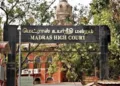
Reports on the argument of the Tamil Nadu government that Hinduism and Jainism are different religions were of great reading. The recent Karthigai Deepam controversy at Tirupramkundram near Madurai was actually provoked by the ruling people of Tamil Nadu, who are the sworn enemies, as they style themselves, of India’s national culture – Sanatana Dharma. Their early leader, the Perior Ramaswamy Naiker, first launched his anti-Hindu campaign by pounding Madurai’s Mother Goddess, Meenakshi. The present generation of God’s enemies now targeted the War-God at Tirupramkundram, all to placate a communal fraternity whose votes they could bank on. When the argument that Hindu lamps cannot be lighted near the Sikender Darga turned untenable, the chameleon flashed the new colour. The state government told the Madurai Bench of the Madras High Court that the ancient stone pillar or ‘deepathoon’ located atop the Thiruparankundram hill belongs to Jains and not Hindus. (TNIE 16 Dec 2025). Of course, the Madras High Court gave its assent to light the lamp on the ‘deepathoon’. But the furore has left behind a question of cardinal importance – do the Hindus and Jains belong to different religions? Do they have different philosophies and tenets? Silly questions indeed, but something to address seriously in the context of national integration.

Also Read: “Death to the Islamic Republic” & “Death to the dictator!” chants shake Iran as unrest spreads nationwide

Tradition has it that the first Tirthankara of the Jaina order of monks was Adinatha Rishabha Deva, the King of Ayodhya. He was connected with the Vedic God Indra, along with whom he was once attending a court ceremony. The audience was all elated at the scintillating performance of the damsel Neelanjana, who died amidst her dance. None knew this except Indra, who mesmerised, removed the dead one and conjured up an exact replica that continued to dance. But Rishabha knew what had happened. Saddened at the world’s transitory nature, he renounced the royal life for good in pursuit of the eternal truth. According to Jain texts like Adinathcharita of Vardhamansuri, he wandered for 400 days without food, at the end of which he got food on one day, the day the Jains began to celebrate annually as Akshaya Tritiya, now celebrated by Hindus the world over without any sectarian differences. His son, Bahubali, too followed the father’s footsteps, came to Sravanabalgola in Karnataka, and meditated for long and attained kevalanjana, the ultimate spiritual knowledge. Many sadhakas preparing for a higher life thus joined the stream, and it became a new monastic order in India, which, from time to time, was home to monks and monasteries. And what later came to be called the Jain sect was thus only one of the monastic orders of ancient Bharat, a part and parcel of the wider Hindu national tradition. The Jain saints, like the monks of all Indian monastic systems, deemed Kaivalya or Moksha, or the deliverance from the mundane world, as life’s ultimate aim. Kaivalya is the state of a living being free of all attachments to the mundane (Jivanmuktya). He is neither attached nor detached, but totally unattached and walks between the two extremities (ubhe sukruta dushkruthe).  The conscious being or Jiva, which corresponds to the soul, which is the miniature of the all-knowing undifferentiated consciousness, pervades everything – a plant, an animal or a human body, and its highest endeavour, the Jains believe, is to free itself from the worldly bondage through meditation and attainment of higher knowledge, a belief common to all Hindu knowledge systems.

And in the ritualistic side, Jains worshipped icons common to the Hindu worshipers. Jain iconography depicts many Hindu deities, such as Sri-Lakshmi, Ganesha, Kubera, Navagrahas, Dikpalakas, Vidyadevis (Goddesses of Learning), etc. It bristles with the Srivatsa symbol, Yakshas and Yakshinis on either side of the Tirthankaras, some of whom, like Nami, Nemi, Parsva and Mahavira, are seated in samadhimudra. Images of the sixty-four Yojinis are interesting, while most of the images of the Tirthankaras are sculpted in a seated Yogic pose. What do all these have in common except their common Hindu background? The Jains worshipped Saraswati, the Goddess of learning, in varied forms. Both the Digambaras and Swetambaras celebrated a special festival – Jnana Panchami – in honour of this four-armed deity seated with a swan and a peacock. The knowledge-Goddess was thus the hallmark of the national culture that helped it strive, through the millennia, to acquire wisdom. The Jains seem to have given importance to the worship of Vishnu too, as revealed by the sculptures of the four-armed God in the Jain temples of Vayanad in north Kerala, just about 170 kilometres southwest of Sravanabalgola. Jains were the monastic order within the wider Hindu system. And the Hindus in general worship Mahavira and other Tirthankaras as belonging to the greater Hindu pantheon. Yet the mosquitoes are after blood in the udder. They want disintegration and destruction. Drive the wedge is their sole motto.

 

Topics: ThiruparankundramDeepathoon controversyIndian monastic traditionsAdinatha Rishabha DevaHinduismSanatana DharmaMaduraiJainism
ShareTweetSendShareSend
✮ Subscribe Organiser YouTube Channel. ✮
✮ Join Organiser's WhatsApp channel for Nationalist views beyond the news. ✮
Previous News

Row over question asked in class 4 examination in Chhattisgarh, education department issues show cause notice to DEO

Next News

Bengal Coal Scam Case: ‘Abuse of power at its worst’, ED slams Mamata govt of obstructing PMLA probe

Related News

Tamil Nadu Governor Rajendra Vishwanath Arlekar

Tamil Nadu Governor calls Thiruvalluvar a ‘sanatani’; says his wisdom matters more than saffron or white robes

An eternal civilization cannot be eradicated! The Sanatana Dharma debate beyond politics and ideology

The extraordinary concept of cosmic time in Hindu scriptures

Time Relativity in Hindu Scriptures: How ancient Indian cosmology explained different flows of time across lokas

The 12 Major Upanishads explained in detail: Complete philosophical guide to Sanatan Dharma and Vedic wisdom

Tamil Nadu CM Joseph Vijay , TVK Madurai Central MLA VMS Mustafa , Udayanidi Stalin, DMK MLA (Left to Right)

Tamil Nadu: Hindus question CM Joseph’s silence after TVK MLA Mustafa endorses Udhayanidhi’s anti-Sanatana remarks

Wellcome Trust returns ancient Jain texts in colonialist’s archive

London’s Wellcome Collection to return 2,000 rare manuscripts taken during Colonial Era to Jain community

Load More

Latest News

Union Home Minister Amit Shah addressing BSF personnel at the Lankamura Border Outpost along the India-Bangladesh border in West Tripura district on June 5, 2026

Amit Shah at Bangladesh Border: “India will have an impregnable security grid soon”

India slams Pakistan’s bid to hold elections in Gilgit-Baltistan, demands end to illegal occupation

Maharashtra government approves central wage structure for Pune Metro Contract Workers; Major victory for BMS

India seals robust 7.7% GDP Growth in FY26: Reflects economic resilience amid West Asia crisis & other global headwinds

A representative image

After TCS, Corporate Jihad allegations reach SBI: Married Hindu employee conversion claims trigger FIR in Mumbai

MEA spokesperson Randhir Jaiswal highlights India's resolve to deport illegal Bangladeshi migrants via bilateral mechanisms

India reiterates strong resolve to deport illegal Bangladeshis; Flags delay of bilateral procedures from Dhaka

Kerala HC rejects CMRL appeal, clears way for ED probe against Pinarayi Vijayan’s daughter in money laundering case

Uttar Pradesh leads in Bharat's green transformation

World Environment Day 2026: On his birthday, Yogi Adityanath’s green vision powers Uttar Pradesh’s transformation

As Khalistani networks seek new platforms beyond the West, Azerbaijan has emerged as a key venue for conferences, campaigns and narratives aligned with the Pakistan-Turkey axis against India.

Khalistan’s New Grazing Ground: Azerbaijan emerges as new hub for Turkey-Pakistan backed anti-India networks

Kochi IPL Mystery: Why Did Sunanda Pushkar Surrender Stake Amid Benami Claims Tied to Shashi Tharoor, Sonia Gandhi?

Kochi IPL Mystery: Why Did Sunanda Pushkar Surrender Stake Amid Benami Claims Tied to Shashi Tharoor, Sonia Gandhi?

Load More
  • Privacy
  • Terms
  • Cookie Policy
  • Refund and Cancellation
  • Delivery and Shipping

© Bharat Prakashan (Delhi) Limited.
Tech-enabled by Ananthapuri Technologies

  • Home
  • Search Organiser
  • Bharat
    • Assam
    • Bihar
    • Chhattisgarh
    • Jharkhand
    • Maharashtra
    • View All States
  • World
    • Asia
    • Africa
    • North America
    • South America
    • Europe
    • Australia
  • Editorial
  • Operation Sindoor
  • Opinion
  • Analysis
  • Defence
  • Culture
  • Sports
  • Business
  • RSS @ 100
  • Entertainment
  • More ..
    • Sci & Tech
    • Vocal4Local
    • Special Report
    • Education
    • Employment
    • Books
    • Interviews
    • Travel
    • Health
    • Politics
    • Law
    • Economy
    • Obituary
  • Subscribe Magazine
  • Read Ecopy
  • Advertise
  • Circulation
  • Careers
  • About Us
  • Contact Us
  • Policies & Terms
    • Privacy Policy
    • Cookie Policy
    • Refund and Cancellation
    • Terms of Use

© Bharat Prakashan (Delhi) Limited.
Tech-enabled by Ananthapuri Technologies