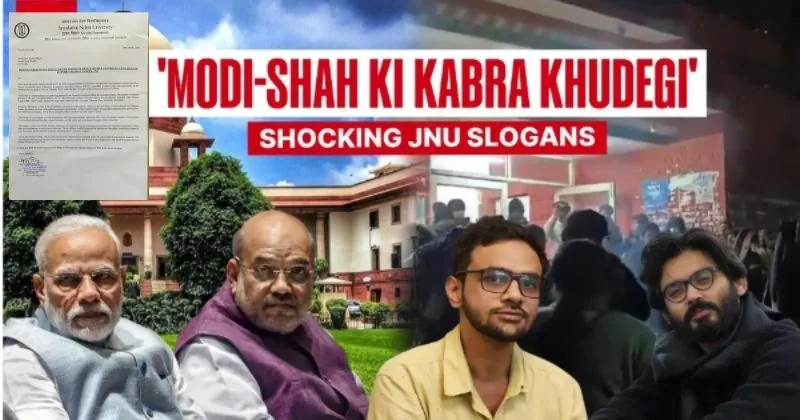
NEW DELHI: On January 5, a group of students at Jawaharlal Nehru University (JNU) in Delhi raised objectionable slogans against Prime Minister Narendra Modi and Union Home Minister Amit Shah on the university campus. The incident followed the Supreme Court’s rejection of bail pleas filed by activists and JNU alumni Umar Khalid and Sharjeel Imam in connection with the 2020 Delhi riots case.
The Delhi Police stated that they are aware of the incident. Officials added that they have requested additional details and that an inquiry into the matter is underway. A video of the protest is circulating widely on social media. In the roughly 35-second clip, students are heard chanting slogans against the Prime Minister and the Home Minister.
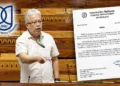
Meanwhile, JNU’s Chief Security Officer has written to the Vasant Kunj Police Station seeking registration of an FIR over objectionable and provocative slogans raised outside Sabarmati Hostel.
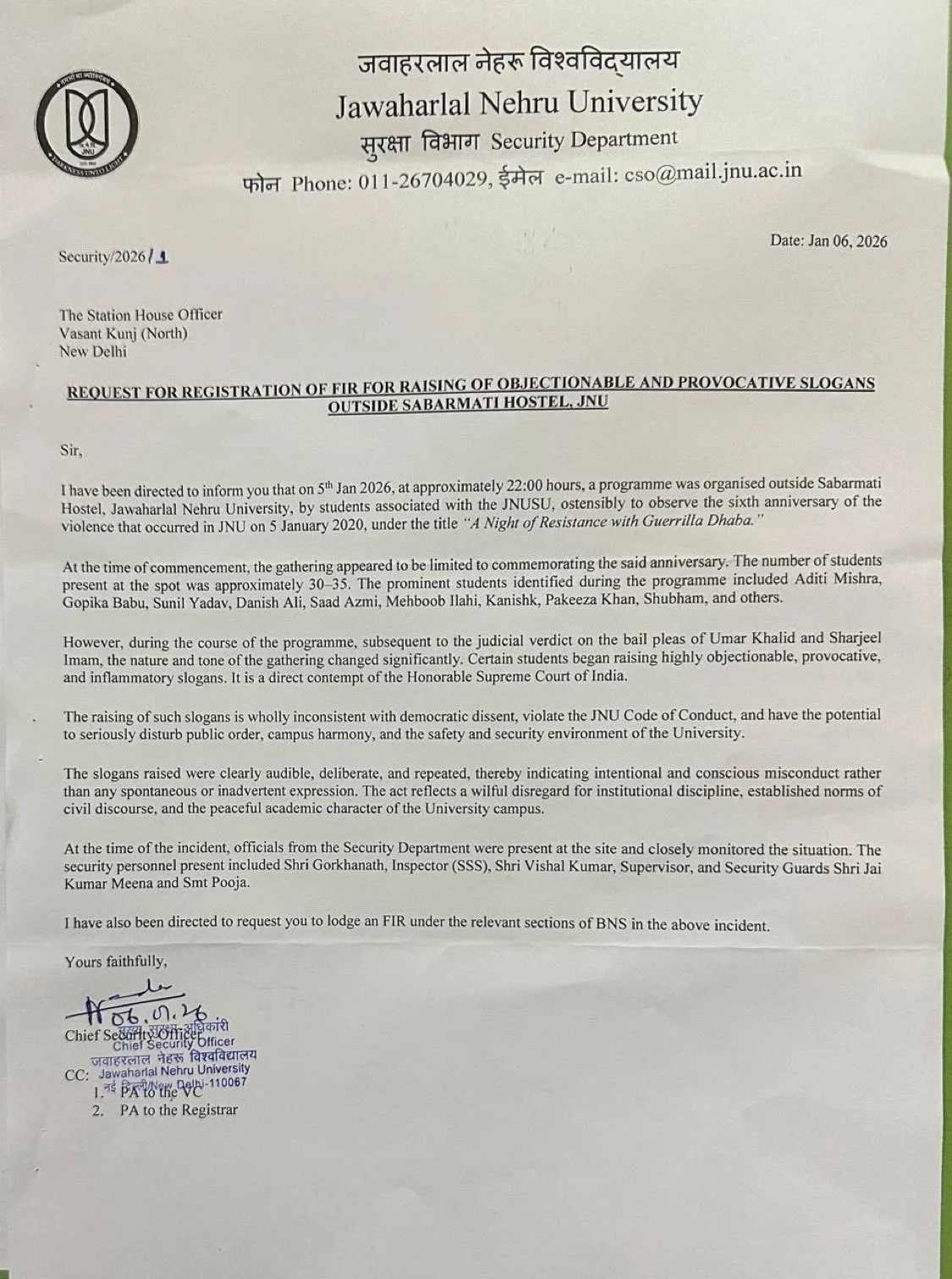
The letter states that slogans calling for the death of PM Narendra Modi and HM Amit Shah, raised yesterday, violated the JNU Code of Conduct and posed a threat to campus harmony, public order, and security, describing them as deliberate and intentional misconduct
The slogans were reportedly raised during an event titled “Godzilla Dhaba”, held on the JNU campus on the night of January 5 near Sabarmati Hostel. According to reports, students at the gathering marked the 2020 attack on JNU students and protested the Supreme Court’s denial of bail to Sharjeel Imam and Umar Khalid.
Sources stated that JNU Students’ Union Joint Secretary Danish Ali and Secretary Sunil were present when the slogans were raised. Several students affiliated with left-wing organisations also reportedly participated in the event.
Aditi Mishra, president of the Jawaharlal Nehru University Students’ Union, said that students hold an annual protest to condemn the violence that occurred on campus on January 5, 2020. “All slogans raised during the protest were ideological and not directed at any individual,” Mishra said.
JNU student Gautam condemned the slogans, describing them as “anti-national” and calling for strict action against those responsible.
ABVP Vice President Manish Choudhary also criticised the event, saying, “After the verdict denying bail to Sharjeel Imam and Umar Khalid, slogans were raised against the Prime Minister, which is not right. They are demanding the release of individuals involved in the Delhi riots. The JNUSU organised the programme near Sabarmati Hostel. We will approach the JNU administration regarding this.”
According to ABVP, the protest did not merely express disagreement with the judicial verdict but escalated into aggressive sloganeering that targeted constitutional institutions and elected leadership. The student organisation alleged that slogans inciting violence, including references to “digging graves” for the Prime Minister, Union Home Minister, Rashtriya Swayamsevak Sangh (RSS), and ABVP members, were raised during the demonstration.
Calling the incident a continuation of a pattern seen at the university over the past decade, ABVP said the events echoed previous controversies linked to JNU, particularly those witnessed in 2016 and during the 2020 period. “This is not an isolated incident but part of a sustained ideological campaign that has repeatedly attempted to undermine India’s unity, glorify accused individuals, and discredit constitutional institutions,” the organisation stated.
ABVP underlined that the Supreme Court’s decision reflects the strength and independence of India’s judiciary, asserting that the verdict was delivered based on facts, evidence, and constitutional principles rather than political pressure or street protests. “Respect for judicial processes is fundamental to democracy. Disagreement cannot become an excuse for intimidation, threats, or anti-national propaganda,” ABVP leaders said.
The organisation further questioned the role of the JNU administration, alleging administrative apathy in dealing with repeated incidents of disruptive and provocative activities on campus. ABVP argued that failure to act decisively emboldens elements that misuse democratic spaces to promote violence and hostility under the guise of dissent.
“Universities are spaces for academic engagement and intellectual debate, not platforms for glorifying violence or attacking the constitutional order,” ABVP said, urging the administration to identify those responsible and initiate immediate disciplinary action.
Sarthak Sharma, State Minister of ABVP Delhi, strongly condemned the protest, calling it a “deliberate attempt to create unrest.”
“The slogans raised during the protest clearly reflect an anti-national mindset. Even after a Supreme Court verdict, the use of violent and derogatory language against constitutional authorities is unacceptable. This is not a student movement but a carefully planned act of anarchy,” Sharma said.
He further expressed concern over what he described as the administration’s inaction, drawing parallels with earlier incidents at the university. “It is unfortunate that once again, as seen in 2016, the JNU administration has failed to act decisively. ABVP demands that all those involved in this incident be identified and strict action be taken to ensure that the campus remains free from anti-national activities,” Sharma added.
BJP leaders also reacted to the incident. Minister Kapil Mishra, responding on X, stated, “Those who raised offensive slogans in support of Naxalites, terrorists, and rioters at JNU are frustrated because Naxalites are being eliminated, terrorists are being dealt with, and the courts have identified the rioters.”
Delhi Minister Kapil Mishra commented on the incident, saying, “Some people raise slogans against the nation, religion, and the Supreme Court’s verdict, and in support of Afzal Guru, terrorists, and Naxals. The Naxals and terrorists are being dealt with, and the Supreme Court has delivered its verdict on those who conspired against Delhi. This is simply their frustration.”
सांपों के फ़न कुचले जा रहें हैं
सपोलें बिलबिला रहें हैंJNU में नक्सलियों, आतंकियों, दंगाइयों के समर्थन में भद्दे नारें लगाने वाले हताश हैं क्योंकि नक्सली खत्म किए जा रहें हैं, आतंकी निपटाए जा रहें हैं और दंगाइयों को कोर्ट पहचान चुका है
— Kapil Mishra (@KapilMishra_IND) January 6, 2026
Union Minister Giriraj Singh said, “JNU has become the office of the ‘Tukde-Tukde Gang’ and people with anti-national mindsets like Rahul Gandhi, whether they belong to the RJD, TMC, or the Left parties. They shouldn’t forget that this is India, this is Narendra Modi’s India of the 21st century. Vivekananda said that saffron will prevail. I want to tell the ‘Tukde-Tukde Gang’ that those who support people like Umar Khalid and Sharjeel Imam, who harboured pro-Pakistan sentiments and talked about separating the Chicken’s Neck corridor, are traitors.”
Jawaharlal Nehru University has faced similar controversies, with objectionable slogans reported multiple times over the years. Umar Khalid and Sharjeel Imam are currently in jail, and the university has often been at the centre of political and ideological disputes. The recent incident near Sabarmati Hostel has once again brought JNU into the national spotlight.
The controversy follows a Supreme Court observation made on January 5, in which the apex court noted that the prosecution’s material suggested Umar Khalid and Sharjeel Imam were allegedly involved in “conspiring, mobilising, and providing strategic direction” during the 2020 Delhi riots. The court subsequently rejected their bail pleas in the larger conspiracy case connected to the violence.