Beneath the Waves: How India’s S-5 is quietly rewriting nuclear deterrence in the indo-pacific
July 2, 2026
  • Read Ecopy
  • Circulation
  • Advertise
  • Careers
  • About Us
  • Contact Us
Android AppiPhone AppArattai
Organiser
  • ‌
  • Bharat
    • Assam
    • Bihar
    • Chhattisgarh
    • Jharkhand
    • Maharashtra
    • View All States
  • World
    • Asia
    • Europe
    • North America
    • South America
    • Africa
    • Australia
  • Editorial
  • International
  • Opinion
  • RSS @ 100
  • More
    • Op Sindoor
    • Analysis
    • Sports
    • Defence
    • Politics
    • Business
    • Economy
    • Culture
    • Special Report
    • Sci & Tech
    • Entertainment
    • G20
    • Azadi Ka Amrit Mahotsav
    • Vocal4Local
    • Web Stories
    • Education
    • Employment
    • Books
    • Interviews
    • Travel
    • Law
    • Health
    • Obituary
  • Subscribe
    • Subscribe Print Edition
    • Subscribe Ecopy
    • Read Ecopy
  • ‌
  • Bharat
    • Assam
    • Bihar
    • Chhattisgarh
    • Jharkhand
    • Maharashtra
    • View All States
  • World
    • Asia
    • Europe
    • North America
    • South America
    • Africa
    • Australia
  • Editorial
  • International
  • Opinion
  • RSS @ 100
  • More
    • Op Sindoor
    • Analysis
    • Sports
    • Defence
    • Politics
    • Business
    • Economy
    • Culture
    • Special Report
    • Sci & Tech
    • Entertainment
    • G20
    • Azadi Ka Amrit Mahotsav
    • Vocal4Local
    • Web Stories
    • Education
    • Employment
    • Books
    • Interviews
    • Travel
    • Law
    • Health
    • Obituary
  • Subscribe
    • Subscribe Print Edition
    • Subscribe Ecopy
    • Read Ecopy
Organiser
  • Home
  • Bharat
  • World
  • Operation Sindoor
  • Editorial
  • Analysis
  • Opinion
  • Culture
  • Defence
  • International Edition
  • RSS @ 100
  • Magazine
  • Read Ecopy
Home Bharat

Beneath the Waves: How India’s S-5 is quietly rewriting nuclear deterrence in the indo-pacific

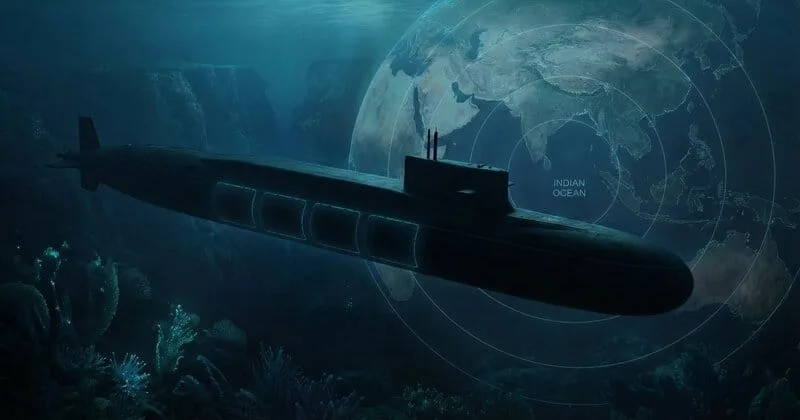
In the silent depths of the Indian Ocean, a strategic revolution is taking shape. With the S-5 class SSBN, India is preparing to reshape nuclear deterrence in Asia—quietly, decisively, and for decades to come

WEBDESKWEBDESK
Jan 2, 2026, 06:00 pm IST
in Bharat, Defence
Follow on Google News
Representative image

Representative image

FacebookTwitterWhatsAppTelegramEmail

New Delhi: In the closing days of 2025, India’s naval-industrial ecosystem grew louder: construction had quietly begun on the S-5 class nuclear ballistic missile submarine. If accurate, the move marks the most consequential evolution of India’s sea-based deterrent since INS Arihant first went to sea. The S-5 is not an incremental upgrade, it represents a generational shift in scale, reach, and strategic intent, with implications that extend well beyond the Indian Ocean.

🇮🇳 The Titan Rises: India Begins Building its Deadliest Predator, the S-5.

The rumors were true. As of late December 2025, India has quietly commenced the construction of its most ambitious naval project to date—the S-5 Class Nuclear Ballistic Missile Submarine.

This isn't just… pic.twitter.com/cOV2GxQEm6

— The Sacred Scroll (@SacredScroll) January 1, 2026

The most striking feature of the S-5 is its size. While the Arihant class displaces roughly 6,000 tonnes submerged, the S-5 is projected at around 13,500 tonnes, more than double. This leap isn’t about prestige. Displacement translates into endurance, acoustic quieting, crew habitability for longer patrols, and, crucially, payload capacity. In practical terms, it allows India to field a submarine designed for sustained blue-water operations, capable of remaining submerged for months while retaining high readiness.

This scale places the S-5 in the same league as the world’s premier SSBNs, signaling that India’s undersea deterrent is maturing from a regional posture to a globally relevant one.

Also Read: Rajasthan: Tonk police seize 150 kg of ammonium nitrate, 200 explosive cartridges from car; Two men arrested

The heart of the S-5’s deterrent value lies in its missiles. The Arihant and Arighaat were optimized for regional deterrence; the S-5 aims higher. Reports suggest a jump from four launch tubes to as many as 12–16 vertical launch tubes, designed to carry the K-6 submarine-launched ballistic missile.

With a projected range of 6,000 to 8,000 kilometers or more, and MIRV capability, the K-6 transforms India’s second-strike calculus. From patrol areas in the Bay of Bengal, an S-5 could hold at risk targets across Asia and beyond, without ever approaching contested chokepoints. That ability credible retaliation from secure bastions, is the cornerstone of survivable nuclear deterrence.

Powering this leap is a new pressurized water reactor reportedly rated at 190 MW or higher. Earlier Indian SSBNs prioritized stealth but faced limitations in sustained high-speed transit. The S-5’s reactor is expected to close that gap, enabling faster repositioning across the Indian Ocean while maintaining low acoustic signatures.

Speed, in this context, is not about chasing adversaries; it’s about survivability. The ability to relocate unpredictably complicates adversary tracking and enhances the submarine’s chances of evading hunter-killer forces, turning the SSBN into what strategists prize most: a ghost.

Strategically, the timing matters. Beginning construction in the mid-2020s sends a clear signal before the next decade unfolds. It underscores that India’s security horizon is not confined to the Himalayas and that the Indian Ocean will not become anyone’s uncontested backyard.

For New Delhi, the S-5 reinforces the third leg of the nuclear triad at a time of intensifying great-power competition in the Indo-Pacific. Sea-based deterrents are the most survivable, and thus the most stabilizing, component of a nuclear posture. By strengthening this leg, India reduces incentives for escalation during crises on land.

If two hulls are indeed under construction at Visakhapatnam, induction timelines around 2030–2032 appear plausible, with additional boats following in the mid-2030s. That trajectory would enable Continuous At-Sea Deterrence, ensuring at least one SSBN is always on patrol.

The broader shift is conceptual. India’s long-stated doctrine of “minimum credible deterrence” appears to be evolving toward assured retaliation backed by robust survivability. The S-5 does not make conflict more likely; it makes catastrophic miscalculation less so. In rising silently beneath the waves, the S-5 signals that India has entered a new strategic era, one defined not by noise or spectacle, but by quiet confidence and enduring deterrence.

 

Topics: Indo-PacificIndian OceanNuclear DeterrenceMilitary TechnologyIndia NavyS-5 SubmarineDefense Analysis
ShareTweetSendShareSend
✮ Subscribe Organiser YouTube Channel. ✮
✮ Join Organiser's WhatsApp channel for Nationalist views beyond the news. ✮
Previous News

US lawmakers vouches bail for Umar Khalid; An attempt to destabilise regime & breach judicial sovereignty in India?

Next News

Indore Water Contamination: ‘Cleanest City’ becomes a death trap as 10 die due to toxic water

Related News

Japanese Prime Minister Sanae Takaichi recieves a ceremonial welcome at Rashtrapathi Bhavan, New Delhi

India-Japan Annual Summit: 150 firms commit $12.5bn investment; Maritime security, economy & tech ties on the agenda

US Ambassador to India Sergio Gor(File Photo)

Sergio Gor hints India-US trade deal; Dismisses Indo-Pacific renaming row, Hails India’s global rise & strong ties

Renaming the Indo-Pacific Command as US Pacific Command: Decoding the strategic calculus of US & stakes for India

PM Modi in Seychelles: Connectivity, climate action to UPI & Indian Ocean security; Bilateral ties gather momentum

PM Modi hands over Made-in-India patrol vessel to Seychelles

PM Modi in Seychelles: Hands over Made-in-India patrol vessel; Bolsters maritime security ties in the Indian Ocean

PM Modi emplanes for Seychelles: Maritime security, tourism ties in focus; Island nation backs India’s UNSC seat

Load More

Latest News

80 Years of Organiser: Celebrating 8 decades as Voice of the Nation; VP Radhakrishnan to join in commemorative event

Tamil Nadu: Madras HC allows temple entry to American woman, says Hindutva cannot be judged by name or nationality

Tamil Nadu CM Joseph Vijay (File Photo)

Tamil Nadu: TVK alleges DMK bid to poach its MLAs; DMK counters with horse-trading complaint against CM Joseph Vijay

Odisha Govt to provide error-free textbooks to students, rejects claim of 1,678 mistakes

Odisha government to provide error-free textbooks to students, rejects claim of 1,678 mistakes

US-Iran Conflict: Beyond the battlefield

Japan’s Domestic Transformation: The silent revolution behind its strategic rise

A section of the vast procession paying homage to Dr Syama Prasad Mookerjee

Dr Shyama Prasad Mookerjee: Exposing the mystery surrounding his death

India-Pak reconciliation appeal in an open letter by a section of Indians draws fire amid cross-border terror concerns

By enabling direct yen-rupee settlements, India and Japan are laying the foundation for a more efficient, resilient and strategically integrated economic partnership

Beyond De-Dollarisation: What India-Japan’s Yen-Rupee trade framework really means

(Left) J&K LG Manoj Sinha performing puja (Right) LG Manoj Sinha flags off the bus carrying pilgrims for the Amarnath Yatra

Amarnath Yatra 2026: LG Manoj Sinha flags off first batch of pilgrims amid tight security

Load More
  • Privacy
  • Terms
  • Cookie Policy
  • Refund and Cancellation
  • Delivery and Shipping

© Bharat Prakashan (Delhi) Limited.
Tech-enabled by Ananthapuri Technologies

  • Home
  • Search Organiser
  • Bharat
    • Assam
    • Bihar
    • Chhattisgarh
    • Jharkhand
    • Maharashtra
    • View All States
  • World
    • Asia
    • Africa
    • North America
    • South America
    • Europe
    • Australia
  • Editorial
  • Operation Sindoor
  • Opinion
  • Analysis
  • Defence
  • Culture
  • Sports
  • Business
  • RSS @ 100
  • Entertainment
  • More ..
    • Sci & Tech
    • Vocal4Local
    • Special Report
    • Education
    • Employment
    • Books
    • Interviews
    • Travel
    • Health
    • Politics
    • Law
    • Economy
    • Obituary
  • Subscribe Magazine
  • Read Ecopy
  • Advertise
  • Circulation
  • Careers
  • About Us
  • Contact Us
  • Policies & Terms
    • Privacy Policy
    • Cookie Policy
    • Refund and Cancellation
    • Terms of Use

© Bharat Prakashan (Delhi) Limited.
Tech-enabled by Ananthapuri Technologies