A Booth Level Officer (BLO), Haradhan Mandal, was found dead on Sunday morning inside a school premises in Ranibandh block of Bankura district, police said. Mandal, a government schoolteacher, was serving as the BLO for Booth Number 206 in the Rajakata area.
Police recovered the body from the school campus where Mandal was reportedly stationed for work related to the ongoing Special Intensive Revision (SIR) of electoral rolls.
According to police officials, a note bearing Mandal’s signature was found at the spot and is being treated as a suicide note. The body has been sent for post-mortem examination, and an unnatural death case has been registered.
“We have seized the note and initiated a detailed investigation. All circumstances leading to the death are being examined,” a senior police officer said.
Officials clarified that no final conclusions will be drawn until forensic and medical reports are available.
While the Trinamool Congress has sought to portray the death as a consequence of administrative pressure from the SIR process, officials point to a far deeper issue of intimidation and political hostility faced by field-level election staff in West Bengal.
Over the past weeks, multiple incidents of gheraos, verbal abuse, obstruction of official duties and aggressive protests targeting election officials have been reported, particularly during voter list verification and revision exercises.
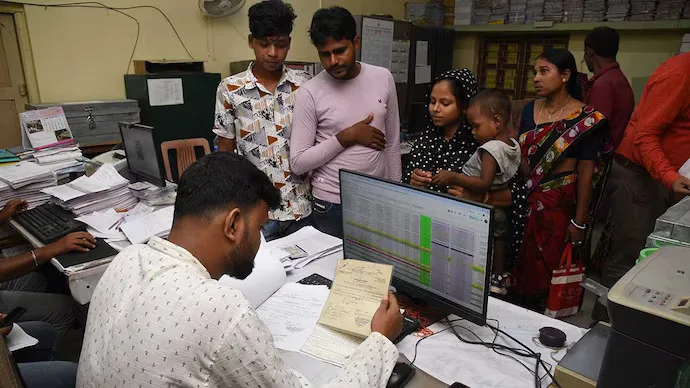
Election officials privately acknowledge that the SIR exercise has been accompanied by organised protests outside offices, obstruction of door-to-door verification, and personal targeting of officials, especially in areas dominated by ruling party influence.
In several districts, BLOs and supervisors have reportedly faced hostility for carrying out statutory duties, including accusations, public shaming and intimidation, actions that many say have made routine electoral work emotionally and psychologically unsafe.
Despite this backdrop, the Trinamool Congress leadership blamed the Election Commission and the BJP, alleging that the SIR process was “hurried” and “inhuman.”
TMC national general secretary Abhishek Banerjee claimed that Mandal’s death was part of a larger toll allegedly caused by the revision exercise, accusing the Election Commission of acting under political influence.
However, many argue that the TMC’s statements seek to deflect attention from the sustained pressure tactics and street-level intimidation employed against election officials in the state.
The incident comes close on the heels of the Centre deploying central forces and Y-plus security for the West Bengal Chief Electoral Officer, citing safety concerns and repeated instances of unrest.
Election Commission officials see Mandal’s death as a grim reminder of why enhanced security and central oversight were deemed necessary in the first place to protect constitutional authorities and grassroots officials from political coercion.
While administrative workload is a reality during electoral revisions, officers familiar with the process say such exercises are conducted nationwide without comparable incidents. What sets West Bengal apart, they argue, is the normalisation of political interference, street pressure and intimidation against officials performing lawful duties.
As the investigation continues, there are growing calls for accountability not just in administrative terms, but for ensuring that political parties are restrained from targeting election machinery.