India’s petrol pump network has nearly doubled over the past decade, crossing the 1,00,000 mark by the end of November 2025, according to data from the Petroleum Planning and Analysis Cell of the Ministry of Petroleum and Natural Gas. The country now has 1,00,266 fuel retail outlets, making it the third-largest petrol pump network in the world after the United States and China.
In 2015, India had 50,451 petrol pumps, highlighting the scale and speed of expansion undertaken primarily by state-run oil marketing companies during the period.
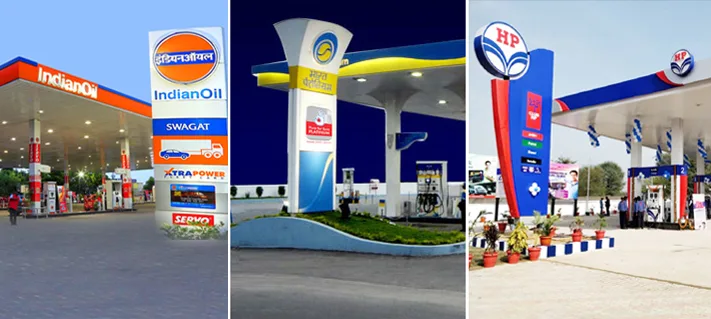
Public sector oil companies continue to dominate India’s fuel retail market, owning more than 90 percent of the country’s petrol pumps. Indian Oil Corporation leads the sector with 41,664 outlets, making it the single largest fuel retailer in India.
Bharat Petroleum Corporation Limited operates the second-largest network with 24,605 petrol pumps, followed closely by Hindustan Petroleum Corporation Limited with 24,418 outlets. Together, the three public sector companies account for the overwhelming majority of fuel retail infrastructure across the country.
The rapid expansion by these companies has been aimed at strengthening market presence, ensuring fuel availability in underserved areas, and maintaining competitiveness amid growing demand.
Among private fuel retailers, Nayara Energy Limited, backed by Russia’s Rosneft, is the largest player with 6,921 outlets. The joint venture between Reliance Industries and BP operates 2,114 petrol pumps, while Shell has a comparatively smaller footprint with 346 outlets.
Overall, private players currently account for about 9.3 percent of India’s fuel retail network, up from nearly 5.9 percent in 2015, when private companies operated 2,967 outlets.
Private sector participation in fuel retailing began in the financial year 2004, starting with just 27 petrol pumps. Despite gradual growth, their expansion has remained constrained compared to public sector companies.
With more than one lakh fuel stations, India now ranks third globally in terms of petrol pump network size. The United States has the world’s largest network, though there is no official count. A 2024 report estimated around 1,96,643 retail gas stations in the US, though industry sources suggest some closures may have occurred since then.
China ranks second, with a report published last year estimating 1,15,228 gas stations across the country. While China’s state-owned energy major Sinopec claims to operate over 30,000 stations, its outlet count is still lower than that of Indian Oil Corporation alone.
A notable trend in the expansion has been the increased focus on rural areas. Rural petrol pumps now account for nearly 29 percent of India’s total fuel retail network, up from 22 percent a decade ago.
The push into rural and semi-urban regions has been driven by improved road connectivity, agricultural mechanisation, and efforts to provide last-mile fuel access in remote areas.
Modern petrol pumps are increasingly offering more than just petrol and diesel. Many outlets now provide alternative fuels such as compressed natural gas, along with electric vehicle charging facilities, reflecting gradual shifts in mobility patterns and energy transition goals.
This diversification is seen as critical for sustaining revenues as fuel consumption patterns evolve over time.
Public sector companies stopped daily price revisions linked to global cost changes in November 2021. Prior to that, there were periods when pump prices were kept below cost, making fuel retailing commercially unviable for private players who lacked the balance sheet support of state-run firms.
The sharp increase in the number of petrol pumps has also led to reduced average fuel sales per outlet. In low-traffic or remote locations, some petrol pumps are reportedly operating at financial losses due to insufficient volumes.