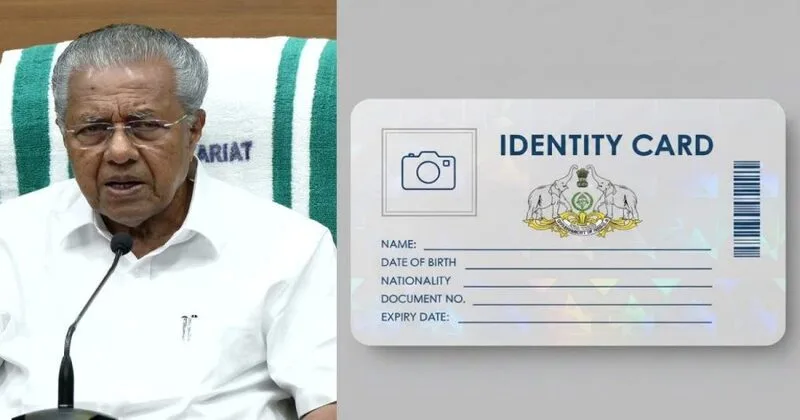
The Kerala Chief Minister issued a press statement that the Government of Kerala will soon introduce legislation providing for the issuance of a Nativity Card as proof of birth in Kerala and of Indian citizenship. Nativity Card, thus, in contemplation of the Government, masquerades as a National Identity Card under S.14A of the Citizenship Act; legal circles are thus sceptical about the move. The Citizenship Act is a complete Code in itself that declares the Central Government as the competent authority to decide the issue of citizenship. How, then, can the State Government decide one’s citizenship and declare it through a Nativity card? This is a curious question that warrants deliberation.
Nativity Certificate
Let us not confuse ourselves with Nativity Card and Nativity Certificates. Nativity certificates gained importance in the administrative realm in the context of quotas for State government employment and admissions to educational institutions. Although the Constitution of India guarantees equality in matters of public employment and admission to educational institutions, a domicile-based preferential treatment is afforded to some extent. Truly, it goes down essentially in breach of fundamental constitutional principles against discrimination on the grounds of place of birth. The federal aspiration to give preference to its own natives from the respective State’s social milieu for better state service is a justifiable classification, as is the equipping of its own natives for future deployment in state services by giving preference in its educational institutions. The requirement of a nativity certificate issued by a State Government to prove domicile is legally valid only for that limited purpose. But can it be a justification for making a law for the purpose of deciding the domicile of a person with the added tag of citizenship? A Nativity Card in proof of domicile and proof of citizenship is constitutionally and conceptually out of reach of the legislative power of States.
Citizenship
Part 2 of the Constitution details various forms of acquisition of citizenship as of the date of the Constitution’s commencement. Article 11 specifically confers exclusive power on the Union Government to make laws concerning citizenship, including its acquisition, termination, and all other related matters, thereby allowing the creation of a separate statutory regime for that purpose. Entries 17 and 19 of the Union List of the Seventh Schedule to the Constitution make citizenship and immigration subjects for Parliament to legislate. Thus the Citizenship Act 1955 is in place which defines, decides and decodes what is citizenship and who are citizens of India. The 2002 amendment to the Citizenship Act enables the Union Government to compulsorily register the citizens of India and issue National Identity Cards to them. The Central Government may maintain a National Register of Indian Citizens and, for that purpose, establish a National Registration Authority; currently, the Registrar General of India under the Registration of Births and Deaths Act is the authority. Thus, a precursor to the National Register of Citizens(NRC), the National Population Register is underway alongside the Census. Given the legislative competence and the preparatory measures undertaken by the Central Government to prepare the NRC and the National Identity Card, it is a forgone conclusion that State Legislation can sustain when constitutional competence is tested.
Nativity Pride and Sub-Nationality
A card showing identity is proof of oneself recognised by an institution, an office, or a nation, but is not typically tied to a place or region. Even in the US, where the federal governments enjoy more autonomy, the Green Card(Permanent Resident Permit) is issued by the US National Administration, and not by the individual states. Even a nativity card, which presupposes a domicile in India, can be a subject matter of legislation by Union Government only, or else even immigration laws of Union Government etc can be nullified by State Nativity laws. Even illegal immigrants in Kerala may stake a claim for a Nativity Card based on long domicile under the proposed legislation. The illegal immigrants may put up this nativity card as proof of citizenship when the preparation of the National Register of Citizens, as contemplated under the Citizenship Act, is undertaken by the National Registering Authority. The recent Supreme Court case to establish citizenship in the Special Intensive Revision of the electoral roll using the Aadhaar card highlights the potential dangers of using Nativity Cards in the future.
A Nativity card can take citizens to sub nationality consciousness which may eventually lead to separatism and subversive tendencies. Whipping up passion based on “belonging to regions” may result in disturbing the feeling of oneness as Bharat, which is proclaimed in the Preamble to the Constitution, which every citizen strives to achieve. The possession of a Nativity Card, though seemingly innocuous, may prove insidious, as its symbolism in the subconscious mind may foster a distinct regional identity. Imagine a scenario in which every State unit in India enacts similar legislation. The requirement of proof of nativity relates to employment and education, is State-specific, and has no utility outside the respective State. A state authority may issue as a Certificate alone in proof of claim of nativity as is presently being done. But a Nativity Card, which stands on a higher legalistic pedestal with its potential constitutional consequences, to show one’s identity as Keralite is something not in alignment with the Constitutional Scheme of “ India,that is Bharat shall be a Union of India”; rather, it is alien and antithetical to the Nation concept of Bharat.