Democracy rarely collapses in dramatic fashion. More often, it is eroded slowly by delegitimisation, by persistent distrust in institutions, and by political leaders who refuse to reconcile themselves to the verdict of the electorate. Rahul Gandhi’s recent statements during his five-day visit to Germany, where he alleged that Indian elections are “not fair” and that democracy in India is under assault, fit squarely into this latter pattern. They reveal far less about the health of India’s democratic institutions and far more about the Congress party leadership’s inability to process political defeat.
One pattern that stands out with uncomfortable clarity: every time the Congress party loses decisively, its leadership, particularly Rahul Gandhi moves the argument from the political arena to the institutional one, and increasingly, to the international stage.
Germany not an aberration, but a pattern
Rahul Gandhi’s speeches in Berlin and at the Hertie School were not spontaneous outbursts. They were carefully calibrated reiterations of a narrative he has been advancing since at least 2019: that the Bharatiya Janata Party does not win elections, but “manages” them; that institutions have been captured; and that India is sliding towards civil strife.
In Germany, Gandhi went so far as to claim that the Congress had actually won the Haryana Assembly elections and that the 2024 Maharashtra Assembly elections were compromised. These reasons were presented as settled truths before foreign audiences unfamiliar with India’s electoral machinery, its verification systems, and its robust often adversarial political ecosystem.
What is striking is not the novelty of these claims, but their stubborn repetition despite having been comprehensively rebutted within India using official data, Election Commission records, and on-ground electoral processes.
Maharashtra Elections: Case study in political misinformation
The Maharashtra Assembly election has become Rahul Gandhi’s preferred exhibit in arguing that Indian democracy is broken. He previously articulated this argument in an opinion piece titled “Match-fixing Maharashtra,” and he revived the same thesis in Germany.
At the heart of his claim was an allegation of “industrial-scale rigging,” supposedly evident from voter registration figures, voter turnout data, and the Election Commission’s appointment process. Yet, when examined sequentially, each pillar of this argument collapses.
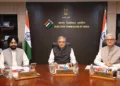
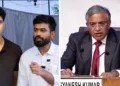
Gandhi alleged that the Modi government “rigged the umpires” by altering the panel responsible for appointing Election Commissioners, specifically by excluding the Chief Justice of India and ensuring a numerical advantage for the ruling party.
What this argument omits, deliberately or otherwise is historical context. From India’s first general election in 1951-52 until March 2023, Election Commissioners were appointed entirely on the recommendation of the Union Cabinet. In other words, the executive of the day had absolute control, including during decades of uninterrupted Congress rule.
The 2023 law, far from increasing executive dominance, diluted it by mandating the inclusion of the Leader of Opposition in the selection committee. Ironically, Rahul Gandhi now benefits from a consultative role that never existed when his own party exercised power. His outrage appears less about institutional integrity and more about the loss of unilateral privilege.
The ‘Inflated voter roll’ Myth
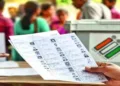
Another central claim was that Maharashtra’s voter registration figures were artificially inflated. Gandhi pointed to an increase from 9.29 crore voters during the 2024 Lok Sabha elections to 9.70 crore voters by the Assembly elections five months later.
This argument collapses when placed against historical data. Across multiple election cycles, the increase in registered voters between parliamentary and assembly elections has consistently hovered around 4-5 per cent. The 4.26 per cent rise in 2024 was not only within this range but lower than the increase recorded in 2004.
More damning for Gandhi’s narrative is the Election Commission’s clarification that all parties, including Congress had uninterrupted access to voter rolls during the revision process. In Maharashtra alone, over 27,000 Booth Level Agents appointed by Congress participated in verification. If inflation occurred, it would imply either systemic incompetence or complicity by the party’s own organisational machinery, an implication Gandhi avoids addressing.
The recycled turnout falsehood
Perhaps the most persistent claim is that voter turnout figures rose suspiciously after polling hours. Gandhi described a rise from 58.22 per cent at 5 pm to a final 66.05 per cent as “unprecedented.”
This claim has been debunked repeatedly. The Maharashtra Chief Electoral Officer clarified that turnout figures during polling hours are provisional, based on oral updates, while final figures are derived from Form 17C, signed by polling agents of all candidates. Similar late-evening increases were recorded in previous elections, including 2019.
Moreover, Maharashtra’s average voting rate makes it mathematically plausible for several crore votes to be cast in the final hours. In 2024, the actual number was well below that average. Persisting with this claim, even abroad, reflects not ignorance but intent.
Gandhi’s Germany speeches also relied on conflating Lok Sabha and Vidhan Sabha results, arguing that the BJP’s improved strike rate in Assembly elections indicated manipulation.
This ignores a basic feature of Indian democracy: voters differentiate between national and state leadership. Divergent outcomes are common, even when elections are held simultaneously. Maharashtra’s elections were separated by five months, making such comparisons analytically indefensible.
Domestic defeat to foreign platforms
What makes Rahul Gandhi’s Germany remarks particularly concerning is not their inaccuracy, but their venue. This is not the first time he has chosen foreign platforms to amplify claims of democratic collapse.
In 2021, during his visit to the United States, Gandhi urged American institutions to “stand up for democracy” in India, language that bordered on an invitation for external pressure. In October 2023, he undertook an unexplained visit to Uzbekistan during crucial state elections, coinciding with high-level international engagements involving figures associated with interventionist human-rights doctrines.
Taken together, these episodes form a pattern: domestic political grievances are increasingly being reframed as international moral emergencies.
Modern regime-change efforts rarely involve tanks or coups. They operate through delegitimization, questioning elections, discrediting institutions, amplifying minority persecution narratives, and repeatedly asserting democratic collapse.
India, particularly in the last decade, has resisted external alignment pressures, maintained strategic autonomy, and refused to subordinate domestic governance to Western ideological frameworks. Unsurprisingly, it has become a frequent target of “democratic backsliding” narratives generated by international NGOs, academic bodies, and policy indices.
Rahul Gandhi’s foreign speeches fit seamlessly into this ecosystem. When India’s Leader of Opposition claims abroad that elections are rigged, those statements do not remain political rhetoric. They are cited, recycled, and weaponised in reports, resolutions, and media commentary, creating a feedback loop of delegitimisation.
Whether intentional or not, Gandhi becomes a validator, an internal voice lending credibility to external pressure campaigns.
The central irony
The greatest irony of Rahul Gandhi’s narrative is that the very system he denounces elevated him to Leader of Opposition, allowed the Congress to govern multiple states, and continues to provide constitutional avenues for dissent, litigation, and reform.
What he describes as an “assault on democracy” is, in reality, the electorate’s repeated refusal to endorse his leadership or his party’s political vision.
Democracy does not erode when leaders lose elections. It erodes when they refuse to accept those losses and instead seek to delegitimise the system itself. Repeating discredited claims in Berlin lecture halls does not strengthen Indian democracy; it weakens trust in institutions for short-term political cover.
Rahul Gandhi’s Germany visit was not about safeguarding democracy. It was about exporting political failure. By carrying a narrative of “vote chori,” institutional collapse, and civil war to foreign audiences, he has chosen international validation over domestic introspection.
India’s democracy remains noisy, competitive, and fiercely contested precisely because it continues to deliver verdicts leaders do not like. The real test of democratic commitment is not how one behaves in victory, but how one responds to defeat. On that count, Rahul Gandhi’s repeated foreign interventions raise serious questions, not about India’s democracy, but about his own faith in it.