The Bharatiya Janata Party (BJP) on December 23, launched a sharp attack on the Trinamool Congress-led West Bengal government, accusing it of unleashing “Bangladesh-style brutality” after police action against Hindu groups protesting the killing of Dipu Chandra Das in neighbouring Bangladesh.
The political flashpoint erupted after demonstrations near the Bangladesh Deputy High Commission in Kolkata turned violent, prompting police intervention to disperse protesters. Several demonstrators were injured, and multiple protest leaders were detained, further escalating tensions in the city.
The protests were organised by several groups to condemn the lynching and burning alive of Dipu Chandra Das in Mymensingh, Bangladesh, on December 20, following accusations of blasphemy. Protesters demanded justice for the victim and stronger diplomatic and political action against what they described as systematic persecution of Hindus in Bangladesh.
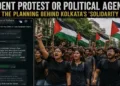
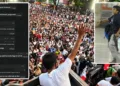
Demonstrators marched through central Kolkata, carrying saffron flags, tridents, and religious symbols, accompanied by conch shell blowing. The procession began from Sealdah and moved towards the Bangladesh Deputy High Commission.
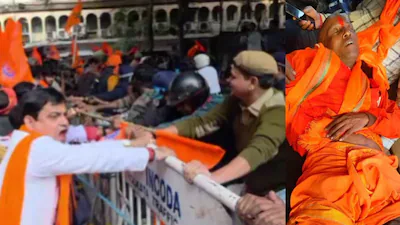
Tensions escalated sharply in the Bak Bagan area when police barricades stopped the procession from advancing towards the diplomatic premises. Protesters attempted to push past the barricades, leading to heated exchanges and physical confrontations with the police.
Eyewitnesses described scenes of chaos as barricades were broken and police resorted to a lathi charge to regain control. Blood stains were reportedly seen on police batons, and small fires were allegedly lit amid the unrest as security forces sought to disperse the crowd.
Several protesters sustained injuries during the clashes. Hindutva leader Lalbaba was among those hurt, while multiple protest organisers were taken into custody as police carried out arrests at the site.
Reacting strongly, BJP IT Cell chief Amit Malviya accused the West Bengal government of using the police machinery to suppress voices demanding justice for persecuted Hindus in Bangladesh. In a sharply worded post on social media platform X, Malviya alleged that protesters, including women and elderly participants, were trapped behind barricades, subjected to lathi charges, manhandled, and dragged on the streets.
“The barbaric assault outside the Bangladesh Deputy High Commission is a calculated act of state-sponsored hooliganism,” Malviya said, accusing the police of behaving like “hired goons” of the ruling Trinamool Congress (TMC).
Drawing parallels with violence against minorities in Bangladesh, he alleged that the West Bengal police were mirroring similar brutality to appease radical elements.
As police detained protesters, others staged sit-ins in front of police vehicles, refusing to disperse and further intensifying the standoff. Protesters shouted slogans accusing the police of bias and targeting religious figures and women.
Injured demonstrators described the police action as “ruthless” and vowed to continue their agitation, warning that such measures would not silence demands for justice and accountability.
The incident has added to the already charged political atmosphere in West Bengal, with the BJP accusing the state government of selectively cracking down on Hindu protests while turning a blind eye to other forms of mobilisation. The TMC, in the past, has defended police actions as necessary to maintain public order and prevent escalation.