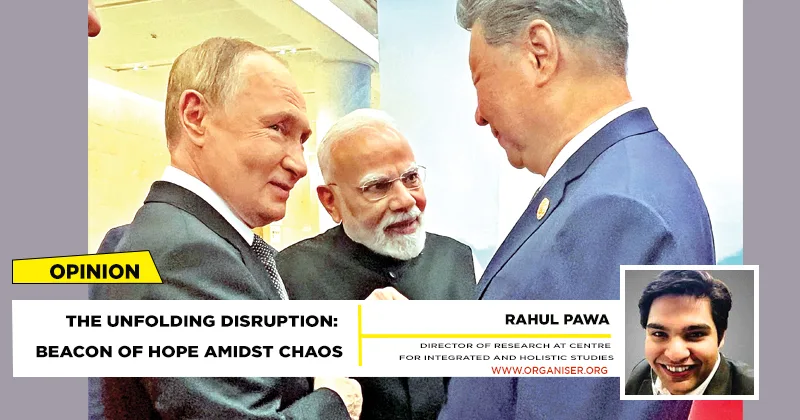
The world today sits precariously between peace and war, grappling with an unprecedented web of interlocking crises. A hot war ravages Ukraine; in West Asia, Israel endures a brutal assault by Hamas terrorists, triggering a global surge in anti-semitic attacks. Bharat, too, has for decades bled from cross-border terror, from the 2008 Mumbai carnage by Pakistan-based Lashkar-e-Tayyiba to ongoing insurgencies.
Meanwhile, the climate is in convulsion. 2024 was Earth’s warmest year on record, bringing apocalyptic heatwaves and floods. Social fabrics are fraying under technological upheaval, radical ideologies and moral confusion. This is a time of twilight struggle, not outright World War, yet far from true peace, as if humanity has stumbled into a dimly lit interlude where old certainties are crumbling and the future order remains unformed.
Bharat Punishes Pak for Pahalgam
The Bharat–Pakistan war aftermath the coward attack by Pakistani terrorists in Pahalgam on April 22, 2025 exposed Pakistan’s strategy of asymmetric warfare using terror proxies under the cover of nuclear blackmail.
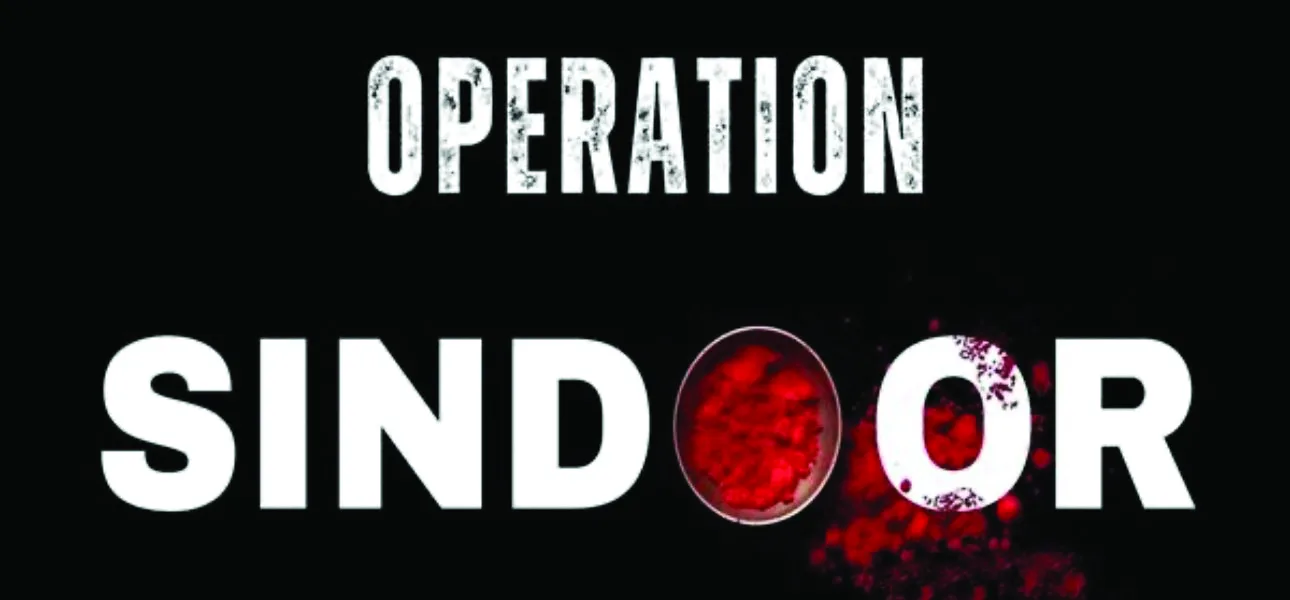
Bharat’s response was firm and decisive. It showed a clear national policy: terrorism and dialogue cannot go together. Bharat asserted its right to act in self-defence and made it clear that national security comes first. The message was simple—Bharat will no longer tolerate terror attacks or wait for international approval.
Through Operation Sindoor, Bharat decisively exposed Pakistan’s terror infrastructure. Precision military strikes destroyed major terror camps across the border, proving Pakistan’s direct role in training, funding, and sheltering terrorists.
The conflict also exposed the failure of Western diplomacy. Once again, global powers tried to treat the attacker and the victim as equals. The reaction of the United Nations and Western countries was selective, and biased. While Bharat was asked to show “restraint,” Pakistan’s role in spreading terrorism was ignored. This war strengthened national unity and restored civilisational confidence. Bharat showed that it will not depend on global opinion to protect its people. Bharat’s controlled military action destroyed major terror camps and exposed Pakistan’s lies denying involvement while training, funding, and sheltering terrorists.
The international response revealed a harsh truth. Nuclear threats are used to protect terror sponsors. At the same time, Pakistan’s internal problems, economic failure, Army’s control over Government, and growing radicalisation became clearly visible. The conflict made it clear that, unless Pakistan dismantles its terror networks and ends its hatred towards Bharat, conflict between the two nations will continue.
This turbulence is not a temporary anomaly but the tumult of an old order dying. For centuries, forces of aggression, oppression and forced assimilation sought to bind the world’s natural course in their grip. Colonial powers imposed legal regimes and cultural dominion that uprooted entire civilisations. In the Americas, European conquest led to the death of up to 90 per cent of native people, erasing ancient cultures on a continental scale. In Europe itself, nation-states pursued the “Norwegianisation” of the Sami tribes, banning native languages and life-ways for over a hundred years. Austro-Hungarian monarchs once tore Romani children from their families to stamp out Roma’s identity. In Bharat, Islamic conquests and cultural invasions coupled with British colonisation interrupted its ether roots. Such episodes of forced conversions and assimilation, whether through the sword, the church or the state were not mere relics of a brutal past. They shaped a global paradigm of domination that still casts its shadow. Even today, market-driven cultural currents push a subtler hegemony: an ethos of consumerism and extreme individualism that dissolves family bonds and community values.
The signs of this moral and spiritual hollowing are stark. In much of the West, society has drifted from a values-based compass to a purely transactional one. As per surveys, 83 per cent of Americans now say the state of moral values is deteriorating. Across Europe, Christianity as a cultural default has all but vanished. In many countries, 70-80 per cent of young adults have no religious affiliations. The new norm, as one report observes, is literally “no religion,” an emptiness where a guiding creed used to be. Atheism or nihilistic secularism may offer a momentary relief from disillusionment, but it cannot nourish the human spirit indefinitely.
Climate Crisis: Western Hypocrisy, Bharatiya Responsibility
2025 saw serious environmental crises across the world, proving that climate change is a reality. Bharat faced extreme heatwaves, with temperatures crossing 50°C in many regions. Flash floods hit Himachal Pradesh, Punjab and Uttarakhand, while irregular monsoons affected farming and food supply.
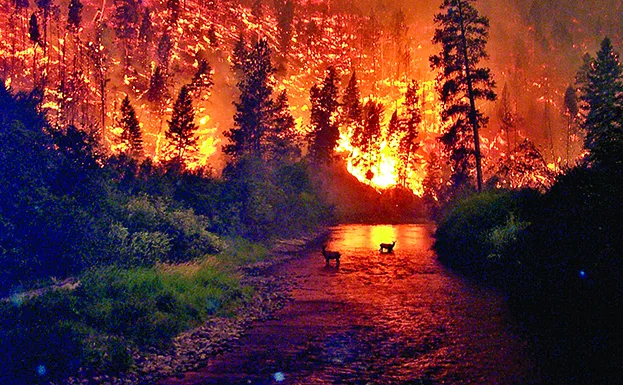
Other parts of the world also suffered. Europe witnessed massive wildfires and floods. The United States faced hurricanes and long droughts.
These events showed that climate change is affecting everyone.
However, global climate discussions continued to unfairly target developing countries. The environmental crises of 2025 exposed the hypocrisy of Western nations. After polluting the planet for centuries during their industrial growth, they now want to control the development of countries like Bharat through strict climate rules.
In contrast, Bharat has promoted practical and balanced solutions. Its focus on renewable energy, lifestyle-based environmentalism (LiFE), and local sustainability models shows a responsible approach. Bharat’s environmental thinking is rooted in balance, discipline, and duty towards nature.
Unchecked refugee invasion of Europe and Left-liberal policies that favoured modern day Islamic conquests of Europe have heightened demographic shifts and security hazards. The result is a generation adrift, alienated by hyper-individualism and yearning for deeper meaning, growing up amidst uncertainty and multicultural guilt. Into this moral void, the eternal values of Bharat are gradually being rediscovered as a beacon of hope.
Long before modern nation-states or ideologies, Bharat’s sages (rishis) preached a vision of profound unity and humanism. A famous verse from the Maha Upanishad implores us to rise above divisions: “This person is mine, that one is another, such thoughts occur only to the narrow-minded. For the generous-hearted, the entire earth is one family.” According to the Sanskrit phrase Vasudhaiva Kutumbakam, “the world is indeed one family.” This ethos, that all humanity (indeed all life) is kin, lies at the heart of Bharatiya civilisation. It is a principle radically opposed to the divisive paradigms afflicting the globe today. When Bharat’s leaders invoked Vasudhaiva Kutumbakam as the theme of the G20 summit in 2023 (“One Earth, One Family, One Future”), they were reviving an ancient civilisational ideal as guidance for a fracturing world.
Rise in Islamic Terrorism
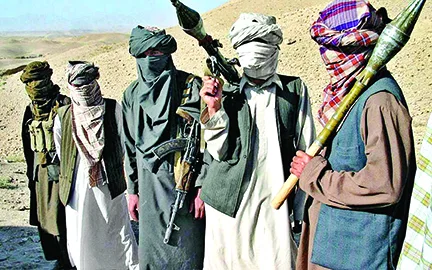
The rise of Islamic terrorism in 2025 across South Asia, West Asia, Europe, Australia and Africa exposed a serious global failure. International institutions continue to avoid addressing the ideological roots of jihadist violence. In Bharat, terror groups linked to Pakistan were uncovered in Jammu and Kashmir and Punjab. Their targets included migrant workers, pilgrims, and security forces. In Europe, Islamist attacks in countries like France and Belgium were carried out by radicalised individuals connected to extremist networks. West Asia saw the return of ISIS-linked groups in Syria and Iraq, taking advantage of instability. In Africa, terror groups like Boko Haram affiliates increased violence in the Sahel region.
The lesson of 2025 is clear. Terrorism cannot be defeated only by military action. Unless extremist ideology, funding networks, and political support for jihadist groups are openly confronted directly, global peace will remain fragile and unstable.
Such timeless wisdom offers an antidote to extremist dogmas and soulless materialism. Bharat’s spiritual heritage is replete with messages of universality and compassion. Hindu prayers often conclude with the mantra “Lokah Samastah Sukhino Bhavantu,” meaning “Let the entire world be happy”. The Vedas teach reverence for nature as well; the Atharva Veda declares, “Mata bhumih putro ’ham prthivyah” i.e. “Earth is my mother, and I am her son”, forging a sacred filial bond between humankind and our planet. This ethos of treating the earth as Mother inculcates a duty of care for the environment, a sensibility desperately needed as climate change accelerates. And where modern ideologies sow conflict, the Rig Veda offers a pluralistic credo: “Ekam sat vipra bahudha vadanti” – “Truth is one; sages call it by many names”. In other words, there are many paths but one divine reality uniting them. This expansive vision nurtures tolerance and dialogue in place of bigotry.
Russia–Ukraine War Continues
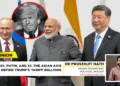
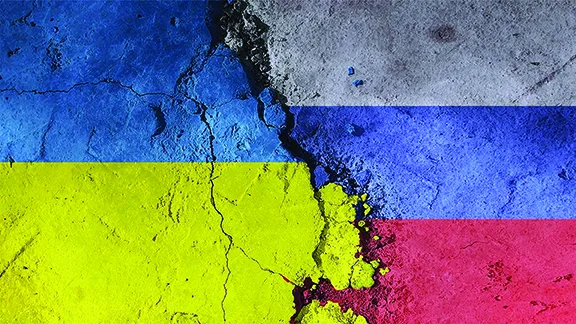
The Russia–Ukraine war completed its third year in 2025, with no clear end in sight. What began as a regional conflict has turned into a long war of exhaustion, damaging global peace and economic stability. Sanctions on Russia did not end the war but hurt global energy and food markets. Europe faced high fuel prices and inflation, while developing countries struggled with food shortages. The promise by Donald Trump that the war would end quickly proved false. The conflict also revealed Western hypocrisy. Wars supported by Western interests are called “defence,” while others are labelled “aggression. In 2025, the lesson is clear for the world. Wars cannot be solved through weapons alone. Dialogue is necessary.
Throughout history, Bharat’s rishis and leaders embodied these principles as living examples. In the 19th century, Swami Vivekananda told a world audience, “I am proud to belong to a faith which has taught the world both tolerance and universal acceptance…” Bharat’s soil has given refuge to persecuted Jews, Parsis, Tibetans, all finding shelter under a culture that sees oneness in diversity. Mahatma Gandhi’s creed of Ahimsa (non violence), born of Hindu thought, became a lodestar for civil rights movements globally. This spiritual abundance of Bharat has always been its true wealth. Even as Bharat suffered colonial subjugation and poverty, it steadfastly held onto its pluralistic, dharmic ethos. Now, as Bharat rises on the world stage, it carries not just economic or military clout, but a treasure of wisdom sorely needed in the current age of angst.
West Asia Boils Again
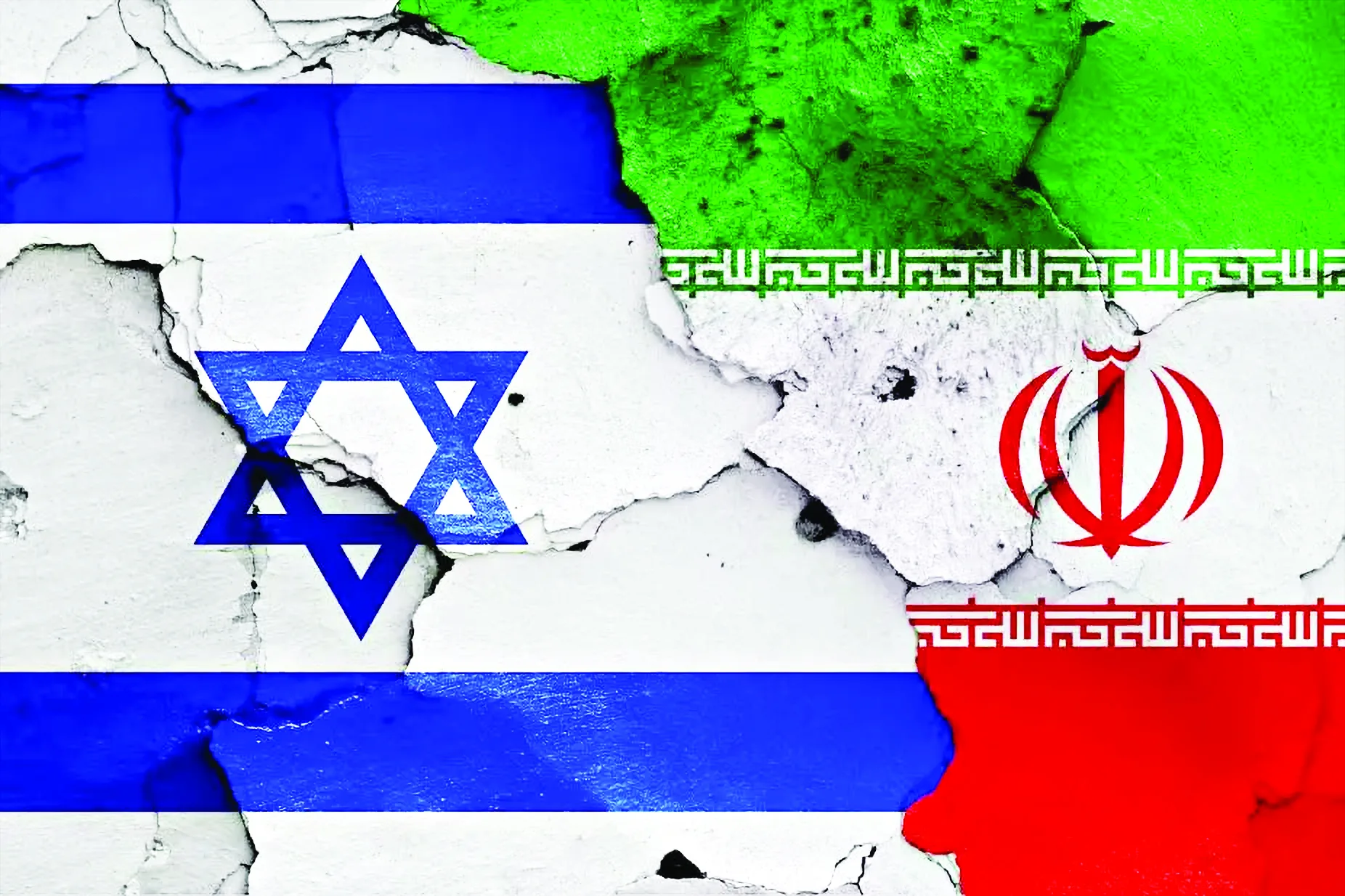
Like 2024, the year 2025 too remained volatile for West Asia as it witnessed a 12-day armed conflict between Israel and Iran. Earlier, it was Israel versus Iran’s proxies and terrorist organisations like Hamas, Houthis and Hezbollah. However, this time it escalated into an all-out war between the two nations. The escalation started when Israel launched attacks at the heart of Iran’s nuclear and military structure on June 12. Israel named it Operation Rising Lion. In this attack, Israel assassinated Iran’s top military generals and scientists involved in Iran’s atomic research. For many years, Israel has claimed that Iran is silently developing nuclear bombs, which is not only dangerous for Israel but also for the whole region, as it can provide these to its proxies fighting against Israel. It was expected that Iran would retaliate as well. On June 13, after massive missile strikes, Iran’s Revolutionary Guards (IRGC) announced that it had launched Operation True Promise 3. As before, this time too, Israel managed to intercept the majority of Iranian missiles and neutralise them in the sky. After several days of escalating exchanges, the United States directly intervened on June 22, using bunker-buster bombs to strike three deeply buried Iranian nuclear facilities (at Fordow, Isfahan, and Natanz). It was not easy for Iran to digest, so Iran retaliated for the US involvement by firing missiles at the Al Udeid Air Base in Qatar, the largest US military installation in the West Asia. However, later on June 24, US President Donald Trump announced a ceasefire had been fully agreed upon by both sides, bringing an end to the active hostilities.
Indeed, a world torn by hatred and fear is looking to ancient wisdom for light. We see it in the global embrace of yoga and meditation, Bharat’s gifts to wellbeing by millions of people seeking peace of mind in turbulent times. We see it as world leaders pepper their speeches with references to Vivekanand and the Bhagavad Gita. We see it in the acknowledgement that Bharat, the Vishwa Guru (teacher to the world), can offer guiding principles for a more harmonious future. The philosophy of “Sarva Loka Sukhino Bhavantu,” may all realms be happy, is no mere spiritual platitude, but a prerequisite for any sustainable global order. Only by rekindling our sense of common humanity can we escape the cycles of violence and vendetta.
The US Weaponised Tariffs
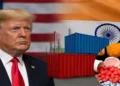
In 2025, the United States used tariffs as a weapon in global trade. While preaching free markets, Washington imposed trade barriers to protect its own industries. These policies disrupted global supply chains and exposed the double standards of Western economic systems.
The US tariffs affected several countries, including emerging economies. However, for Bharat, this challenge also created an opportunity. As Indian companies reduced dependence on foreign countries, Bharat emerged as a strong alternative manufacturing hub, a large market, and skilled manpower. Despite global uncertainty, Bharat’s economy showed resilience. Domestic production, infrastructure growth, and digital expansion helped maintain steady growth. Unlike Western economies burdened by debt and inflation, Bharat focused on long-term development. The tariff war also proved that globalisation is no longer fair. Powerful nations change rules when it suits them. This reality strengthened Bharat’s push for self-reliance through initiatives like Make in India and Aatmanirbhar Bharat.
Regime Change Operation Continues
The year 2025 was similar to 2024, which saw changes in Government in many countries like Bangladesh. This year, violent protests broke out in Nepal, leading to the removal of the KP Sharma Oli Government. The same thing happened in Syria in December 2024, where Syrian President Bashar al-Assad was forced to flee the country. Now in 2025, the country is led by former Al Qaeda member Al-Sharaa. In 2025, military takeovers occurred in several African countries due to economic problems. In Guinea-Bissau, the Army arrested the President in November and shut down parliament. Madagascar’s military removed its president in October after young people protested about poverty. Benin’s attempted military takeover in December failed quickly. Sahel countries like Mali and Niger stayed under military rule with delayed elections, affecting over 112 million people. Tanzania’s disputed election sparked deadly protests, but the Government remained in power. There was no clear worldwide pattern of planned Government changes.
Bharat’s resurgence today is therefore more than a geopolitical or economic story, it is civilisational. In this fraught interlude where old structures are breaking, Bharat’s timeless ideals stand as a unifying glue and moral anchor. The world, exhausted by strife and soulless pragmatism, is glimpsing the profundity of these ideals. An order built on aggression and greed is giving way to the possibility of an order shaped by Dharma, the natural ethic of justice and virtue. The shift is evident in global discourse, from climate summits to peace negotiations, where the language of interconnectedness and compassion is gaining ground. It is as if humanity is rediscovering a forgotten vocabulary. And that lexicon has long been preserved in Bharat’s cultural memory.
Bharat Playing key role in changing world order
In recent decades, the Global South has seen a big change in economic and political power. The World Bank has noted a “shift in wealth” from the North Atlantic to the Asia-Pacific region. By 2030, three of the world’s four largest economies are expected to be from the Global South.
The total GDP of BRICS countries is now higher than that of the G-7, showing their growing economic strength. This change has started debates about the “Asian Century” and the rise of a world less controlled by the West. By 2025, the Global South has become more active in world decision-making on issues like climate fairness, development funding, energy safety, and staying neutral in world politics. Problems like the Russia-Ukraine war showed the weaknesses of developing countries, making their calls for a fairer world system stronger. It is important to mention that Bharat has become a leading voice for the Global South, especially through meetings like the Voice of Global South Summits, support for climate fairness, and pushing for more equal international cooperation during its G-20 leadership. Bharat sees itself as a link between rich and developing countries, speaking up for the Global South in 2025 and beyond.
In the end, the human family may yet heal its fractures by embracing the wisdom that Bharat has championed for millennia. The eternal messages of unity, love and respect for all life can help enlighten our technology, humanise our politics, and spiritualise our pursuit of progress. As darkness looms in many corners, a venerable light from the East has begun to glow brighter, a beacon to guide this broken world towards wholeness. In the words of the Upanishads, “Lead me from untruth to truth, from darkness to light, from death to immortality.” The task of our times is to heed that call. Guided by the rishis and sages of Bharat, humanity can transcend its current twilight of despair and step into a new dawn, one Earth, one family, united by the luminous thread of eternal values.