In response to intensifying geopolitical pressures, Israel is undertaking a fundamental restructuring of its defence supply chains, with the explicit aim of reducing dependence on European markets. This strategic recalibration follows a series of restrictive measures imposed by several European countries, including Spain, Belgium, and the Netherlands, which have tightened controls or imposed outright bans on the export of military sub-systems to Israel, citing concerns linked to the ongoing conflict in Gaza. While these countries are not major suppliers of complete weapons platforms, they have long played a critical role in providing essential components, specialised electronic systems, and niche defence technologies. The tightening of export regulations has therefore emerged as a significant strategic concern for Israeli defence planners.
A striking paradox now defines Israel’s defence relationship with Europe. Even as European governments restrict or debate curbs on defence exports to Israel, the same countries are simultaneously increasing their purchases of Israeli military equipment at unprecedented levels. Germany’s recent decision to proceed with a landmark procurement of the Arrow-3 missile defence system exemplifies this contradiction. While political debates over arms embargoes continue across the continent, European states facing heightened security threats are increasingly reliant on Israeli systems to strengthen their own defence postures. For Israel, which operates under constant security pressures and requires uninterrupted access to spare parts and sub-systems, this disconnect exposes a critical vulnerability. The growing risk of supply chain disruption has compelled Israeli defence firms to actively seek more stable, long-term industrial partners beyond Europe.
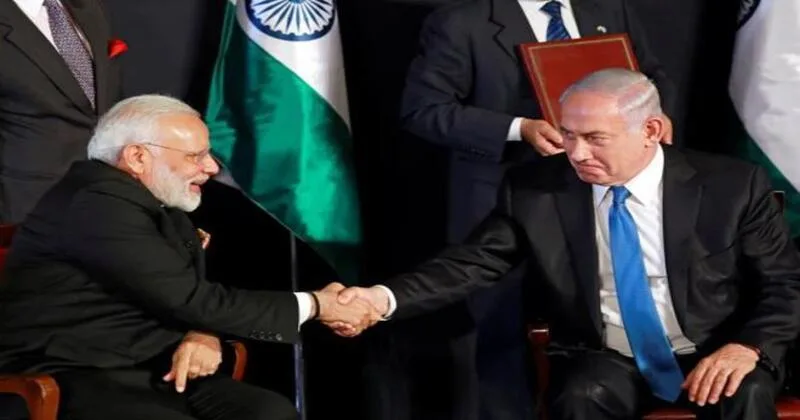
India has rapidly emerged as the central pillar of this strategic realignment. According to senior officials in Tel Aviv and defence industry sources, Israel is no longer viewing India merely as a lucrative export market but as a potential global manufacturing base for its defence ecosystem. This shift dovetails neatly with New Delhi’s “Make in India” initiative, which aims to expand domestic defence production and reduce reliance on imports. Recent high-level engagements have reinforced this trajectory, including the visit of India’s Defence Secretary to Israel in late 2025, during which discussions focused on co-production, technology transfer, and long-term sustainment of critical weapons systems.
The push to offshore defence manufacturing is also shaped by Israel’s unique geographic and security realities. With a small territorial footprint and industrial facilities often located within the reach of adversarial missile and rocket fire, the concentration of defence production within Israel is increasingly seen as a strategic liability. Establishing redundant manufacturing lines in trusted partner countries offers an additional layer of resilience, ensuring continuity of supply even during periods of high-intensity conflict. From this perspective, overseas production is not merely an economic decision but a core element of Israel’s national security strategy.
Industry sources indicate that India stands out as the most viable alternative for such diversification. The country offers a rare combination of large-scale industrial capacity, a cost-effective and skilled workforce, and a rapidly maturing private defence sector. Indian companies such as Adani Defence and Aerospace and Bharat Forge have already entered into joint ventures with Israeli firms, manufacturing products ranging from small arms to unmanned aerial vehicles (UAVs). These partnerships are widely seen as proof of concept for deeper collaboration. Looking ahead, Israeli and Indian stakeholders anticipate a significant expansion of this cooperation into more sophisticated domains, including missile sub-systems, advanced sensors, precision-guided munitions, and electronic warfare technologies.
Despite the evident momentum, Israeli defence firms are adopting a measured approach as they align their long-term investment plans with India’s evolving regulatory landscape. Industry executives note that India has already made substantial progress in reforming its defence policy framework, particularly through progressive adjustments to Foreign Direct Investment (FDI) norms and the Defence Acquisition Procedure (DAP). These reforms have significantly improved transparency, enhanced ease of doing business, and created a more predictable environment for joint ventures, technology transfer, and procurement. Stakeholders emphasise that India’s policy direction is firmly oriented toward attracting high-value defence manufacturing and fostering trusted international partnerships. Ongoing consultations between the government and industry are expected to further streamline approval processes and provide the regulatory certainty needed to accelerate large-scale investments. As these refinements take effect, they are likely to unlock the next phase of deep industrial integration between Indian and Israeli defence sectors.
For India, it would mean access to cutting-edge defence technologies, the creation of high-value manufacturing jobs, and deeper integration into the global supply chains of one of the world’s most advanced defence exporters. For Israel, the partnership offers strategic depth, industrial redundancy, and supply chain resilience at a time when the global arms market is becoming increasingly fragmented and politically volatile. Together, the two countries stand to reshape the contours of defence manufacturing and cooperation in an era defined by uncertainty and strategic competition.