The Yogi Adityanath-led Uttar Pradesh government’s sustained campaign against the illegal drug trade has uncovered what officials describe as one of the largest codeine cough syrup syndicates in recent years, stretching across multiple Indian states and several foreign countries. The crackdown, initiated in 2024 and intensified through 2025, has so far resulted in the registration of 128 FIRs, the arrest of 32 accused, the cancellation of 280 drug licences, and the seizure of more than 3.5 lakh vials of codeine-based cough syrup. Investigating agencies estimate the illegal trade to be worth at least ₹425 crore, with the possibility of the figure rising significantly as financial probes continue.
According to officials, the racket involved the diversion of legally manufactured cough syrups containing codeine, an opioid derivative, into the black market, where they were sold as a cheap intoxicant. While codeine is permitted in limited quantities for medicinal use, its misuse as a narcotic has emerged as a serious public health and law enforcement concern.
What is Codeine and why is it misused
Codeine is derived from opium and is commonly used in prescription cough syrups to suppress severe cough. However, when consumed in excess, it produces mind-altering effects and carries a high risk of addiction, comparable to heroin or opium. Investigators note that syrups containing around 10 ml of codeine per 100 ml can become addictive when abused, making them attractive as a low-cost substitute for illicit drugs.
The first major breakthrough came in February 2024, when the Uttar Pradesh Special Task Force (STF) conducted a raid in Lucknow’s Sushant Golf City area following intelligence inputs about illegal storage of Phensedyl, a codeine-based cough syrup. The raid uncovered suspicious documentation and discrepancies in supply records, prompting the registration of an FIR under provisions of the Narcotic Drugs and Psychotropic Substances (NDPS) Act, 1985, and the Indian Penal Code.
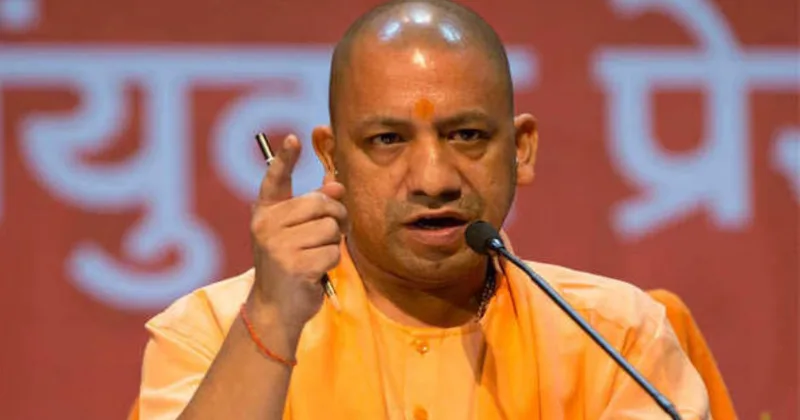
Chief Minister Yogi Adityanath subsequently directed enforcement agencies to show “zero tolerance” and ensure that no individual involved in the syndicate escaped scrutiny. Acting on these instructions, the STF and the Food Safety and Drug Administration (FSDA) launched a coordinated, year-long investigation to trace the entire supply chain.
Super-Stockists, Shell Firms, and Fake Billing
Investigators revealed that the syndicate exploited licensed “super-stockist” firms authorised to purchase large quantities of medicines. These firms allegedly procured codeine-based syrups legally and then diverted them using fake firms and forged billing records. The syrup was sold illegally as an intoxicant rather than a medicinal product.
The supply network spanned 28 districts of Uttar Pradesh, including Lucknow, Varanasi, Bahraich, Jaunpur, Saharanpur, and Lakhimpur Kheri, and extended through Bihar, Jharkhand, and West Bengal, before being smuggled into Nepal and Bangladesh. From there, consignments allegedly moved further to destinations such as Dubai and Pakistan.
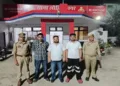
A major turning point came on October 18, 2025, when STF teams seized a truck in Sonbhadra district. The vehicle, ostensibly carrying cartons of snack chips, was found to be concealing large quantities of codeine cough syrup bottles worth approximately Rs 3 crore. Three smugglers from Madhya Pradesh, Hemant Pal, Brijmohan Shivhare, and Ramgopal Dhakad, were arrested.
Subsequent intelligence suggested the consignment was bound for Pakistan via Nepal. Within weeks, similar seizures were reported from Jharkhand and Ranchi, helping investigators connect previously scattered dots.
Dubai Link and the alleged Kingpin
As the probe widened, investigators zeroed in on Shubham Jaiswal, a native of Varanasi currently based in Dubai, whom agencies describe as the alleged mastermind. On November 27, 2025, STF arrested Amit Kumar Singh alias Amit Tata in Lucknow, who allegedly operated as a key conduit for the syndicate. Digital evidence recovered from him reportedly revealed transaction routes, supply chains, and communication links tied to Dubai-based operations.
Shubham Jaiswal’s father, Bhola Prasad Jaiswal, was arrested at Kolkata airport while allegedly attempting to flee to Thailand. Agencies also found that the syndicate allegedly used supply chains of major pharmaceutical manufacturers, a claim that is under further verification.
The Enforcement Directorate (ED) entered the case following indications of large-scale money laundering. On December 3, 2025, the ED registered an Enforcement Case Information Report (ECIR) against 67 accused and conducted searches at 25 locations across Uttar Pradesh, Jharkhand, and Gujarat. Officials claimed to have uncovered around 700 shell firms registered in the names of 220 individuals, allegedly created solely to launder proceeds of crime.
Authorities estimate that the money trail could run into thousands of crores, prompting action under the Prevention of Money Laundering Act (PMLA), 2002.
Political Ripples and Allegations
The investigation has triggered political controversy after photographs surfaced on social media showing some accused individuals with leaders of the Samajwadi Party, including former chief minister Akhilesh Yadav. One of the names under scrutiny is Alok Kumar Singh, a dismissed UP police constable, whose assets reportedly drew the attention of ED officials. Agencies have maintained that investigations are evidence-based and ongoing, while political parties have exchanged sharp accusations.
The Samajwadi Party has criticised the government’s actions, alleging political vendetta, even as the Yogi government insists that the crackdown is purely against organised crime and narcotics networks.
Officials have also flagged a possible terror funding angle, citing intelligence inputs and ED findings suggesting that proceeds from the illegal syrup trade may have been routed through hawala channels. Names of alleged smugglers from western Uttar Pradesh have surfaced, with claims that funds were transferred via Bangladesh to Gulf countries. Security agencies are examining whether these routes were exploited to finance extremist activities.
On December 8, senior officials including UP DGP Rajiv Krishna and Home Department Principal Secretary Sanjay Prasad stated that the operation is far from over. A Special Investigation Team (SIT) continues to probe financial links, political connections, and international routes.
The Yogi Adityanath government has reiterated its zero-tolerance stance, asserting that no individual, regardless of influence, will be spared if found involved. As enforcement tightens and agencies follow the money trail, the case is expected to expand further, potentially exposing deeper networks operating under the guise of legal pharmaceutical trade.