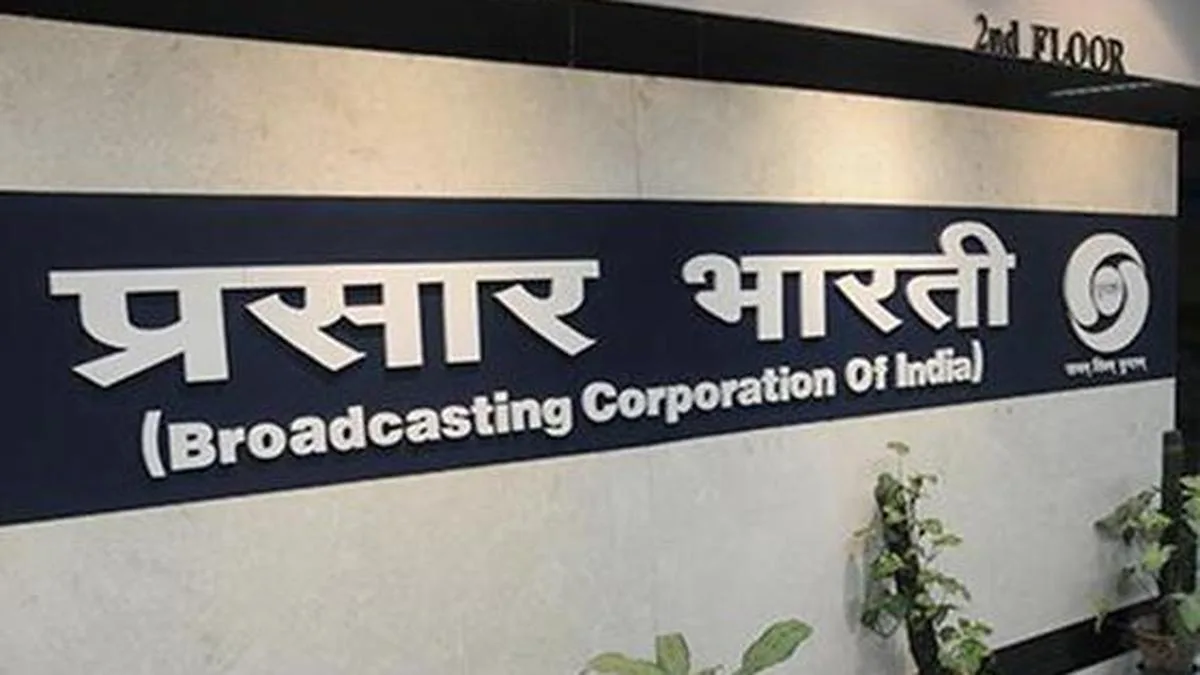
Public broadcaster Prasar Bharati has taken a significant step towards restructuring the commercial use of its content by issuing a draft Content Syndication Policy, 2025, aimed at creating a transparent and systematic framework for content monetisation. The draft policy has been uploaded on the official Prasar Bharati website to invite public feedback, marking a shift towards greater institutional clarity in how public broadcasting content is shared, licensed and monetised across platforms.
According to official information, the proposed policy is designed to expand the reach of Prasar Bharati’s content while ensuring that its constitutional mandate of public service broadcasting remains intact. The move reflects the broadcaster’s attempt to adapt to a rapidly evolving media landscape, where digital platforms, on-demand consumption and content aggregation have become central to audience engagement.
Structured Consultations with Media Stakeholders
As part of the policy formulation process, Prasar Bharati conducted structured consultations with a wide range of stakeholders across the media and telecom ecosystem. These consultations included representatives from over-the-top (OTT) platforms, linear television broadcasters, radio networks, telecom service providers, IPTV operators and content aggregators. Officials said the feedback received during these engagements helped shape a more inclusive and industry-aligned framework.
The consultations were aimed at understanding market practices, licensing expectations, technological requirements and revenue models prevalent in the private media sector, while ensuring that public broadcasting values are safeguarded.
The draft policy proposes monetisation of a broad range of content produced and owned by Prasar Bharati. This includes programmes created by Doordarshan and Akashvani, covering both national and regional content. Archived programming, spanning decades of cultural, educational and informational broadcasts, forms a key component of the proposed syndication framework.
In addition to archival material, the policy covers live coverage of government events, national festivals, cultural programmes and sports events. Digital-first content produced for Prasar Bharati’s OTT platform is also included, signalling the broadcaster’s intent to align traditional public broadcasting with contemporary digital distribution models.
The policy further provides for monetisation of commissioned content, co-produced programmes, licensed material and other content assets for which Prasar Bharati holds ownership or exploitation rights.
Flexible Licensing and Revenue Models
One of the central features of the draft Content Syndication Policy is the introduction of flexible licensing models. The proposed framework allows for flat-fee licensing arrangements, revenue-sharing mechanisms, and hybrid models that combine minimum guarantees with revenue share. Officials noted that this flexibility is intended to accommodate varying platform sizes, audience reach and commercial capabilities.
By offering multiple licensing options, Prasar Bharati aims to make its content accessible to a wider range of domestic and international partners while ensuring fair valuation of public broadcasting assets.
Beyond revenue generation, the policy places strong emphasis on cultural outreach. The framework envisages fostering strategic collaborations with both Indian and international platforms to enhance the visibility of Indian public broadcasting content globally. Officials said such partnerships could help strengthen India’s cultural presence abroad by showcasing diverse regional traditions, languages and narratives through Prasar Bharati’s content library.
The broadcaster has reiterated that monetisation efforts will not compromise editorial independence or the public interest character of its programming.
Parliamentary Disclosure
The details of the draft Content Syndication Policy were shared by Minister of State for Information and Broadcasting Dr L. Murugan in a written reply to a question in the Lok Sabha. The government clarified that the policy is still at the consultation stage and that stakeholder feedback will be considered before finalisation.
The release of the draft policy signals Prasar Bharati’s attempt to modernise its operational framework while navigating the twin objectives of public service and financial sustainability. As the consultation process unfolds, the policy is expected to draw attention from broadcasters, digital platforms and policy observers alike, given its potential to redefine how public broadcasting content is distributed and monetised in India.