





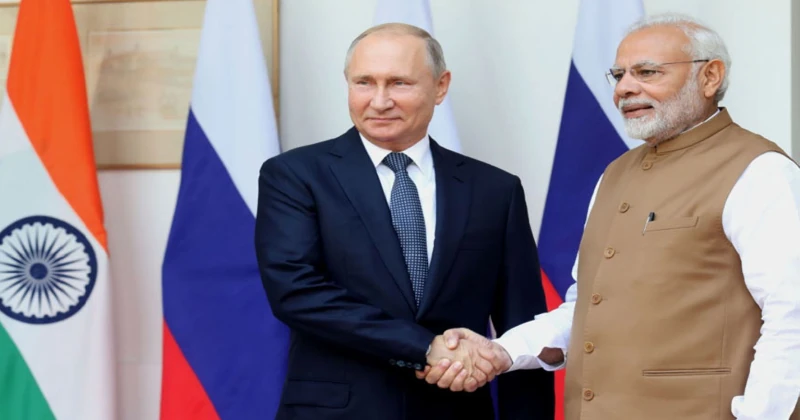
NEW DELHI: India has reacted with rare, unified anger to a coordinated UK–France–Germany joint op-ed seen as a deliberate, protocol-breaking attempt to pressure New Delhi ahead of Putin’s visit
India has reacted with sharp displeasure to a coordinated joint op-ed authored by the UK, French, and German envoys, published just days before President Vladimir Putin’s high-profile state visit. The unusually timed article openly attacking Russia’s conduct in Ukraine has been widely condemned by senior Indian officials, former diplomats, and strategic observers as a calculated and improper attempt to pressure New Delhi and undermine a friendly state visit.
The fallout has triggered a rare moment of unity among India’s foreign policy establishment: that the three Western powers crossed a diplomatic red line and engaged in public coercive diplomacy a blatant departure from expected protocol under the Vienna Convention.
This vicious article against Russia just before Putin’s state visit to India breaches diplomatic norms, is a diplomatic insult to India as it questions India’s close ties with a very friendly third country.
It is interference in our internal affairs as the purpose is to fuel… https://t.co/oN5E2iLqT5
— Kanwal Sibal (@KanwalSibal) December 1, 2025
According to highly placed government sources, the MEA views the op-ed as a planned political act, not an editorial exercise. Officials describe it as:
- “Very unusual”
- “Not an acceptable diplomatic practice”
- “An unnecessary and provocative gesture”
- “A deliberate attempt to interfere in India’s bilateral diplomacy with Russia”
The op-ed framed Russia as obstructing peace efforts and accused Moscow of indiscriminate violence in Ukraine charges that, Indian officials note, the three countries are free to convey privately through diplomatic channels, but not in the Indian public sphere in the middle of a crucial bilateral visit.
Really? That India has invited him on state visit has nothing to do with Indian foreign policy?
Why are ambassadors accredited to India writing about the impending visit to India of Putin and castigating him if this is unconnected with India’s foreign policy ?
Or was it… https://t.co/ovypeBCJyp
— Kanwal Sibal (@KanwalSibal) December 3, 2025
One senior official summed up the sentiment bluntly, “Foreign envoys are not authorised to lecture India publicly on what our Russia policy should be. The timing speaks for itself.”
Another added:
“This was a message not to Russia, but to India.” Former Foreign Secretary Kanwal Sibal led the public pushback with a devastating critique across multiple posts on X. He called the joint op-ed:
- “A diplomatic insult to India”
- “A violation of diplomatic norms”
- “An overt attempt to fuel anti-Russia sentiment inside India”
- “Trade-unionism style diplomacy”
Sibal argued that the envoys, failing to influence India through official channels, resorted to “public grandstanding with a propagandist intent”. He questioned the European explanation that the op-ed was unrelated to India’s foreign policy:
“Are we to believe Putin’s state visit to India has nothing to do with India’s foreign policy? Then why write this article here, now?” He emphasised that the ambassadors knew their public messaging would be seen as a provocation and yet chose to proceed indicating intent.
The strategy behind the joint Op-Ed: Why the timing was no accident
Indian analysts describe the joint article as a synchronised Western pressure signal, designed with several objectives:
1. Undermine the optics of Putin’s India visit: The visit includes defence, nuclear energy, and oil cooperation areas where Western countries have been pressuring India to scale back engagement with Moscow.
2. Project Western moral authority over India’s foreign policy decisions: By invoking PM Modi’s own words, “This is not an era of war” the op-ed attempted to corner the Indian government using its own public statements.
3. Influence Indian public opinion: By publishing in mass-circulation media, the envoys attempted to bypass the Indian state and appeal directly to:
- Editorial circles
- Civil society
- Pro-West foreign policy lobbies
- Urban English-speaking elite opinion-makers
4. Reassert Western discomfort with India’s strategic autonomy
India has refused to join Western sanctions, declined to condemn Moscow outright, and massively increased its crude oil imports from Russia. The coordinated nature of the article three ambassadors, three major European powers was seen by MEA insiders as a way to shield individual countries from direct diplomatic pushback by cloaking criticism under a collective identity.
Even as the op-ed drew criticism, the German Ambassador, Dr Philipp Ackermann, doubled down, telling the press that Europe would “closely watch” Putin’s visit and that he was confident Prime Minister Modi would “mention” that the war “will not be won on the battlefield.”
This remark, Indian diplomats say, was another unsolicited instruction on how India should conduct its diplomacy.
Kanwal Sibal slammed ANI for giving him the platform, “Why ANI sought to provide the German ambassador an opportunity to do the usual Russia-bashing before Putin’s visit is puzzling. Our press behaves as if we are a banana republic.”
Why ANI expressly sought to give the German ambassador an opportunity to do the usual Russia bashing just before Putin’s visit is puzzling.
Our press has the mindset of belonging to a banana republic.
German ambassador does not need to tell our leaders what they should say to… https://t.co/5FgMytVZae
— Kanwal Sibal (@KanwalSibal) December 2, 2025
The Polish Deputy Foreign Minister’s remarks created additional anger:
He called Putin a “war criminal.”
Suggested the visit to India was “not appropriate.”
Gave “advice” on what PM Modi should tell Putin, “Listen, president, maybe you should sign the peace deal with Ukraine…”. This tone was described by Indian observers as presumptuous, patronising, and deeply disrespectful to India’s sovereign decision-making.
Sibal expressed disbelief, “Now even visiting bureaucrats think they can tutor India on its major foreign policy relationships? This is unacceptable.” Though the MEA has not issued a formal demarche, the language used by senior officials indicates serious displeasure.
If ToI comes can IE be far behind.
IE today interviews visiting Deputy FM of Poland.
Knowing Poland’s inveterate hatred of Russia , IE asks him how he views Putin’s visit to India and what he expected India to convey to Putin.
These questions were intended to give the Polish…
— Kanwal Sibal (@KanwalSibal) December 2, 2025
India’s message is clear:
- Foreign envoys are guests, not commentators on Indian diplomacy.
- India will not tolerate third-country interference in its Russia ties.
- Strategic autonomy is non-negotiable.
Western capitals are now fully aware that the episode has left a sour taste in New Delhi precisely at a moment when they are courting India geopolitically.
- Violation of Diplomatic Convention: Under the Vienna Convention, envoys must avoid actions that interfere in the internal affairs of the host nation.
- Attempt to influence India’s sovereign foreign policy: The op-ed, strategically placed before a state visit, is seen as an attempt to shape India’s Russia engagement.
- Public pressure instead of private communication: Foreign envoys always have access to the MEA they did not need to publish an article.
- Coordinated signalling by three major European powers: India interprets this as a purposeful diplomatic messaging operation.
As Western envoys lecture India, Russia has, ironically, maintained a far more measured posture even during moments when India expected stronger backing.
For example, during Operation Sindoor:
- Russia issued a neutral, calibrated response
- Urged India and Pakistan to exercise restraint
- Reiterated the Simla Agreement and Lahore Declaration
Analysts note that Moscow’s need to balance India, China, Afghanistan, and global optics shapes its restraint. But even this nuance does not justify Western ambassadors attempting to influence India’s choices through Indian newspapers.









Comments