PM VIKAS Scheme: Centre unveils major push for skills and livelihoods in minority communities
August 26, 2026
  • Read Ecopy
  • Circulation
  • Advertise
  • Careers
  • About Us
  • Contact Us
Android AppiPhone AppArattai
Organiser
  • ‌
  • Bharat
    • Assam
    • Bihar
    • Chhattisgarh
    • Jharkhand
    • Maharashtra
    • View All States
  • World
    • Asia
    • Europe
    • North America
    • South America
    • Africa
    • Australia
  • Editorial
  • International
  • Opinion
  • RSS @ 100
  • More
    • Op Sindoor
    • Analysis
    • Sports
    • Defence
    • Politics
    • Business
    • Economy
    • Culture
    • Special Report
    • Sci & Tech
    • Entertainment
    • G20
    • Azadi Ka Amrit Mahotsav
    • Vocal4Local
    • Web Stories
    • Education
    • Employment
    • Books
    • Interviews
    • Travel
    • Law
    • Health
    • Obituary
  • Subscribe
    • Subscribe Print Edition
    • Subscribe Ecopy
    • Read Ecopy
  • ‌
  • Bharat
    • Assam
    • Bihar
    • Chhattisgarh
    • Jharkhand
    • Maharashtra
    • View All States
  • World
    • Asia
    • Europe
    • North America
    • South America
    • Africa
    • Australia
  • Editorial
  • International
  • Opinion
  • RSS @ 100
  • More
    • Op Sindoor
    • Analysis
    • Sports
    • Defence
    • Politics
    • Business
    • Economy
    • Culture
    • Special Report
    • Sci & Tech
    • Entertainment
    • G20
    • Azadi Ka Amrit Mahotsav
    • Vocal4Local
    • Web Stories
    • Education
    • Employment
    • Books
    • Interviews
    • Travel
    • Law
    • Health
    • Obituary
  • Subscribe
    • Subscribe Print Edition
    • Subscribe Ecopy
    • Read Ecopy
Organiser
  • Home
  • Bharat
  • World
  • Operation Sindoor
  • Editorial
  • Analysis
  • Opinion
  • Culture
  • Defence
  • International Edition
  • RSS @ 100
  • Magazine
  • Read Ecopy
Home Bharat

PM VIKAS Scheme: Centre unveils major push for skills and livelihoods in minority communities

The Union Government has outlined a comprehensive roadmap under the Pradhan Mantri Virasat Ka Samvardhan (PM VIKAS) scheme to uplift six notified minority communities through skill development, women’s entrepreneurship, and cultural preservation. Union Minority Affairs Minister Kiren Rijiju detailed the scheme’s objectives in the Rajya Sabha, emphasising its role in enhancing employability, income and socio-economic empowerment

Shashank Kumar DwivediShashank Kumar Dwivedi
Dec 4, 2025, 06:00 pm IST
inBharat
Follow on Google News
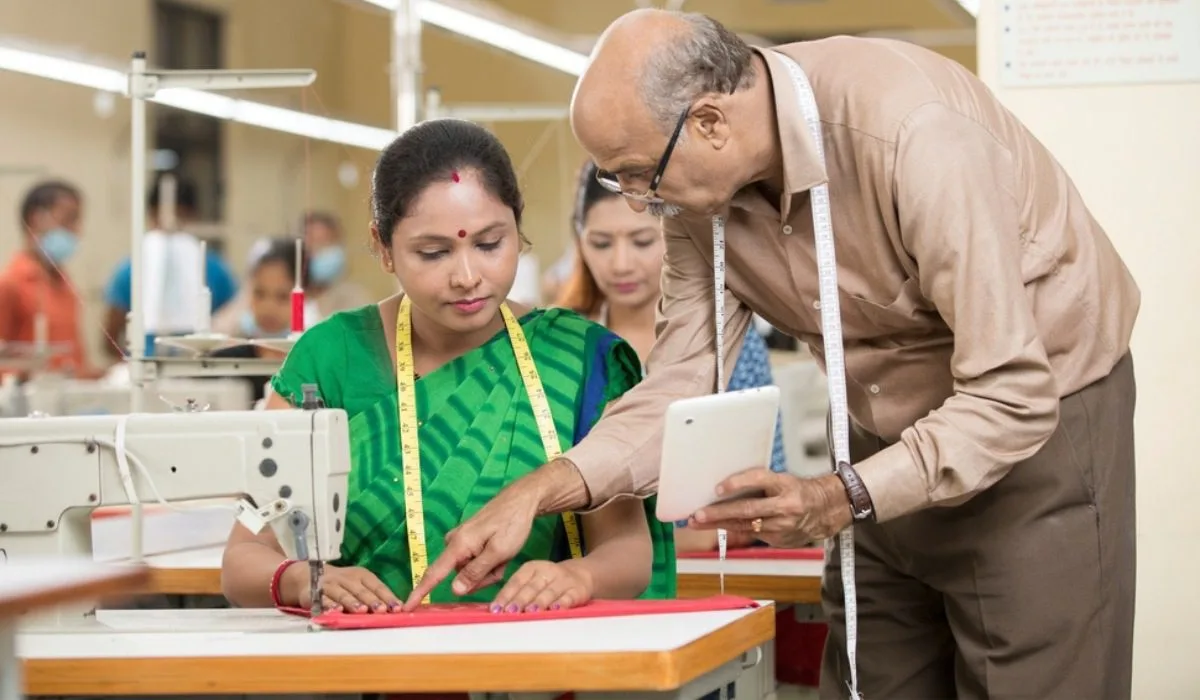
A representative image

A representative image

Facebook
Twitter
WhatsAppTelegramEmail

The Union Government has reiterated its commitment to empowering India’s minority communities through the Pradhan Mantri Virasat Ka Samvardhan (PM VIKAS) scheme, a flagship programme aimed at enhancing skills, preserving traditional culture, and widening livelihood opportunities. In a written reply to the Rajya Sabha, Union Minister for Minority Affairs Kiren Rijiju presented detailed insights into the vision and early implementation of the scheme, highlighting its multi-layered approach to socio-economic upliftment.

PM VIKAS has been conceptualised as a holistic intervention for six notified minority communities, Muslims, Christians, Sikhs, Buddhists, Parsis, and Jains. The scheme targets these communities through an integrated framework of modern skill training, entrepreneurship promotion, education support and the revival of traditional arts and crafts. The government has stressed that the scheme is not merely an employment initiative but a broader socio-cultural development model meant to provide dignity, stability, and identity to marginalised groups.

According to the Ministry of Minority Affairs, one of the core pillars of PM VIKAS is the provision of actionable, market-driven skill development opportunities. Implementing agencies are required to conduct skill training in need-based, locally relevant and industry-linked courses that can help beneficiaries secure sustainable livelihoods. These courses span a wide range of sectors, from modern trades like IT and electronics to conventional skills that continue to hold employment potential.

To ensure real and measurable outcomes, the Ministry has set stringent placement guidelines for implementing agencies. For non-traditional and modern skill courses, agencies are mandated to place at least 75 per cent of all trained candidates into employment, self-employment or apprenticeships. Additionally, at least 50 per cent of these placements must be in the organised sector, fulfilling national skill standards under the National Skill Qualification Framework (NSQF) and Common Cost Norms (CCN).

These conditions, as highlighted by Kiren Rijiju, are intended to block tokenistic training practices and push for high-impact results. They also align the scheme with the wider national skilling ecosystem, ensuring uniformity, quality assurance and integration with industry needs.

A significant component of PM VIKAS focuses on economic empowerment for women from minority communities. The government recognises that women often face multiple barriers, social, cultural and financial, that limit their participation in the workforce. To address this gap, PM VIKAS includes targeted interventions such as leadership training, entrepreneurship development sessions, and handholding support for women-led enterprises.

These programmes aim to equip women with the confidence, entrepreneurial mindset and business skills required to navigate and participate in the economic landscape. By supporting women in turning their skills, traditional or modern, into sustainable business ventures, the government hopes to bolster their financial independence and create multiplier effects within their families and communities.

While the scheme has a strong modern employment focus, it equally emphasises the preservation of intangible cultural heritage that belongs to minority communities. Many traditional art forms, handicrafts, and indigenous knowledge systems are on the brink of fading due to a lack of documentation, recognition and commercialisation.

PM VIKAS seeks to revive these traditions by supporting artisans, mapping traditional crafts, documenting dying art forms, and creating platforms to showcase them before national and global audiences. This cultural preservation effort is expected to achieve two purposes: sustaining India’s diverse heritage and creating livelihood opportunities for artisans who have depended on these crafts for generations.

In a bid to make the scheme inclusive and equitable, the Ministry has mandated that 3 per cent of all seats across components be reserved for persons with disabilities. This ensures that the scheme reaches some of the most marginalised sections within minority groups, enabling them to access specialised training and income opportunities suited to their abilities.

The government has already initiated the rollout of PM VIKAS, with allocation letters issued to agencies responsible for implementing different components of the scheme. These agencies have been assigned a target of training nearly 1.40 lakh beneficiaries across multiple sectors. A detailed component-wise and sector-wise breakup has been communicated to ensure systematic execution.

This early phase of implementation is expected to set the foundation for a wider impact in the coming years as more agencies come on board, more courses open up, and more communities begin to benefit from structured training and livelihood support.

In essence, the PM VIKAS scheme marks a significant shift toward capacity-building-based development for minority communities. By blending modern skills with cultural preservation, and by placing special emphasis on women’s empowerment and job placements, the government aims to create a self-reliant ecosystem for communities that have often remained on the fringes of economic growth.

Kiren Rijiju noted that the programme is designed to uplift individuals not only through employment but also through dignity, heritage preservation and social mobility. As implementation expands and more success stories emerge, PM VIKAS may evolve into one of the cornerstone schemes driving inclusive and sustainable development for India’s minority populations.


Topics: Minority AffairsTraditional CraftsPM VIKASWomen EntrepreneurshipKiren RijijuSkill Development
Share
Tweet
SendShareSend
✮ Subscribe Organiser YouTube Channel. ✮
✮ Join Organiser's WhatsApp channel for Nationalist views beyond the news. ✮
Previous News

India blasts UK, French, German Envoys as they target Russia in Op-ED ahead of Putin’s visit 

Next News

Chhattisgarh Encounter: Wreath-laying ceremony held for fallen heroes, bodies of 18 Maoists recovered

Related News

PM Modi unveils 23-point roadmap for Viksit Bharat

PM Modi’s 23-point Viksit Bharat Blueprint: Sports, skilling, agriculture, governance reforms form key pillars

Union Home Minister Amit Shah

‘Let public decide who is running away’ from NEET debate in Parliament: HM Amit Shah’s jibe at opposition

Centre's SMILE scheme to cover 295 cities by 2030-31, aims to rehabilitate 35,000 persons engaged in begging

SMILE Scheme Expansion: Government plans to make 295 cities begging-free, over 10,200 already rehabilitated

Centre seeks explanation from Keralam Waqf Board on Munambam land entry into Umeed Portal

PIB debunks viral claim that Kiren Rijiju, Arjun Ram Meghwal and Judges attended Badminton event in London

Fact Check: PIB busts viral London claim, says Rijiju-Meghwal photos are from New Delhi Judges’ Badminton Championship

Dr Surendra Jain, Joint General secretary, VHP

VHP Demands Audit of Waqf Properties Amid Encroachment Claims: “Land should go to rightful owner,” says Surendra Jain

Load More

Latest News

4 members of the Hindu family murdered in Bangladesh

Rangpur Massacre: Four Hindus murdered, two Hindus Arrested—But does the evidence add up?

23 weapons, 492 live rounds recovered from Maoist dump in Chhattisgarh's Sukma

Chhattisgarh: Large Maoist arms and explosives cache recovered from Sukma forests

Kakinada family suicide case: Sadiq Khan arrested; Sowjanya note alleges torture and forced Islamic conversion

Mohammed Wajid (inset)

Hyderabad: Police book Wajid for harassing women, accused of collecting Hindu women’s numbers, making late-night calls

Islamist insurgency in Southern Thailand

Thailand: Islamists torch Buddhist homes in Narathiwat, demand Sharia rule; Insurgency fuels cultural & security crisis

IN-SPACe supporting New Era of Innovation with private sector to carry out space activities

India’s Space Boom: 440 Startups, 113 IN-SPACe Authorisations and Rs 1,000 Crore VC Push

RSS Akhil Bharatiya Prachar Pramukh Sunil Ambekar ji addressing the gathering

“Languages, traditions may be different, but we are all part of same cultural consciousness”: Sunil Ambekar ji

80th Independence Day: Energising self-sufficiency

Dimagi Naxals: Weaponing Victimhood – The cognitive front of warfare

RSS Akhil Bharatiya Prachar Parmukh Sunil Ambekar ji addressing the gathering

Youth of Bharat should move forward with new thinking: RSS Akhil Bharatiya Prachar Parmukh Sunil Ambekar ji at Kanpur

Load More
  • Privacy
  • Terms
  • Cookie Policy
  • Refund and Cancellation
  • Delivery and Shipping

© Bharat Prakashan (Delhi) Limited.
Tech-enabled by Ananthapuri Technologies

  • Home
  • Search Organiser
  • Bharat
    • Assam
    • Bihar
    • Chhattisgarh
    • Jharkhand
    • Maharashtra
    • View All States
  • World
    • Asia
    • Africa
    • North America
    • South America
    • Europe
    • Australia
  • Editorial
  • Operation Sindoor
  • Opinion
  • Analysis
  • Defence
  • Culture
  • Sports
  • Business
  • RSS @ 100
  • Entertainment
  • More ..
    • Sci & Tech
    • Vocal4Local
    • Special Report
    • Education
    • Employment
    • Books
    • Interviews
    • Travel
    • Health
    • Politics
    • Law
    • Economy
    • Obituary
  • Subscribe Magazine
  • Read Ecopy
  • Advertise
  • Circulation
  • Careers
  • About Us
  • Contact Us
  • Policies & Terms
    • Privacy Policy
    • Cookie Policy
    • Refund and Cancellation
    • Terms of Use

© Bharat Prakashan (Delhi) Limited.
Tech-enabled by Ananthapuri Technologies