





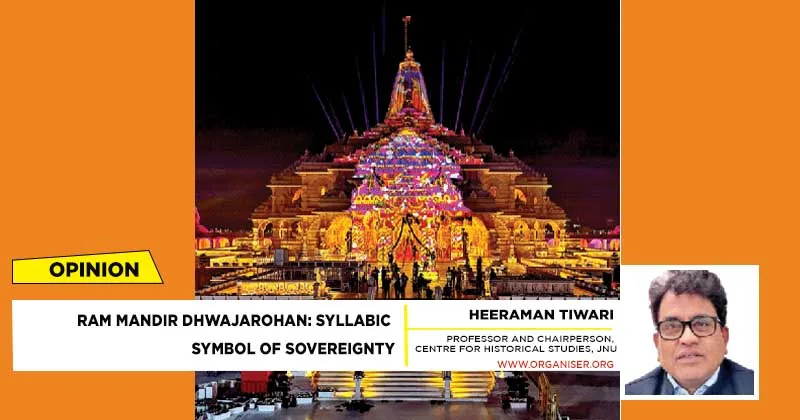
The Pataka, also known as Dhwaj, or the sacred triangular flag represents the unstained glory (keerti) of Bhagwan Sri Ram and his most beloved disciple Hanuman makes it flutter unfettered as its flagstaff (danda). This is how Tulsi, the 16th century teller of the life story of Bhagwan Ram, describes the significance of Dhwaj in a most lyrical language. He wrote in his magnum opus, the Ramcharitamanas, “raghupati keerati bimala pataka, danda samaana bhayau jas jaka”. Therefore, the Dhwajarohan or the planting ritual of the flag-hoisting on the cupola, the pinnacle, of the garbhagriha, the sanctum sanctorum, of Ram Mandir at Ayodhya signifies the architectural completion of the sacred abode of Ram, which was torn away by the barbaric Mughal invaders in the 16th century.
The ritual ceremony to install the flag on November 25, 2025 marks the beginning of a new era where transition from the lament and torment of a cruel wound inflicted on the devotees of Bhagwan Sri Ram to a reparation or restoration of the belief that Ram’s abode has now returned to its full glory. The flag has thus always stood for sovereignty and living principles of Sri Ram, whom millions and millions of Bharatiyas consider as the presiding deity of Hindu civilisation. Ram is not only the righteous ruler of the kingdom of Ayodhya, but the God who descended on this land as a human, a prince, to teach by his actions, ethical values and his life how a rule seeped in truth can be established.
Living Ideal of Dharma and Kingship
Ram has been described by almost all the poets, writers, who wrote moving works in the many great languages of Bharat, as an ideal human ruler, a Maryada Purushottam, one who stood for Dharma or righteousness. So the flag at the Ram Mandir in Ayodhya is a Dharma Dhwaj, a symbol of truth and human virtues. Even those who had issues with him, acknowledged generously, that Ram is the personification of Dharma, signified by his flag. The words or the message on the emblem of Sri Ram Janmabhoomi Teertha Kshetra (the board that carries the responsibility of the construction and management of the Ram Mandir in Ayodhya) communicate this powerful symbol, ramo vigrahavan dharmah — Ram is Truth personified. This moving analysis of Ram is communicated to Ravan by his relative Marich from whom Ravan sought help to initiate fight with Ram.
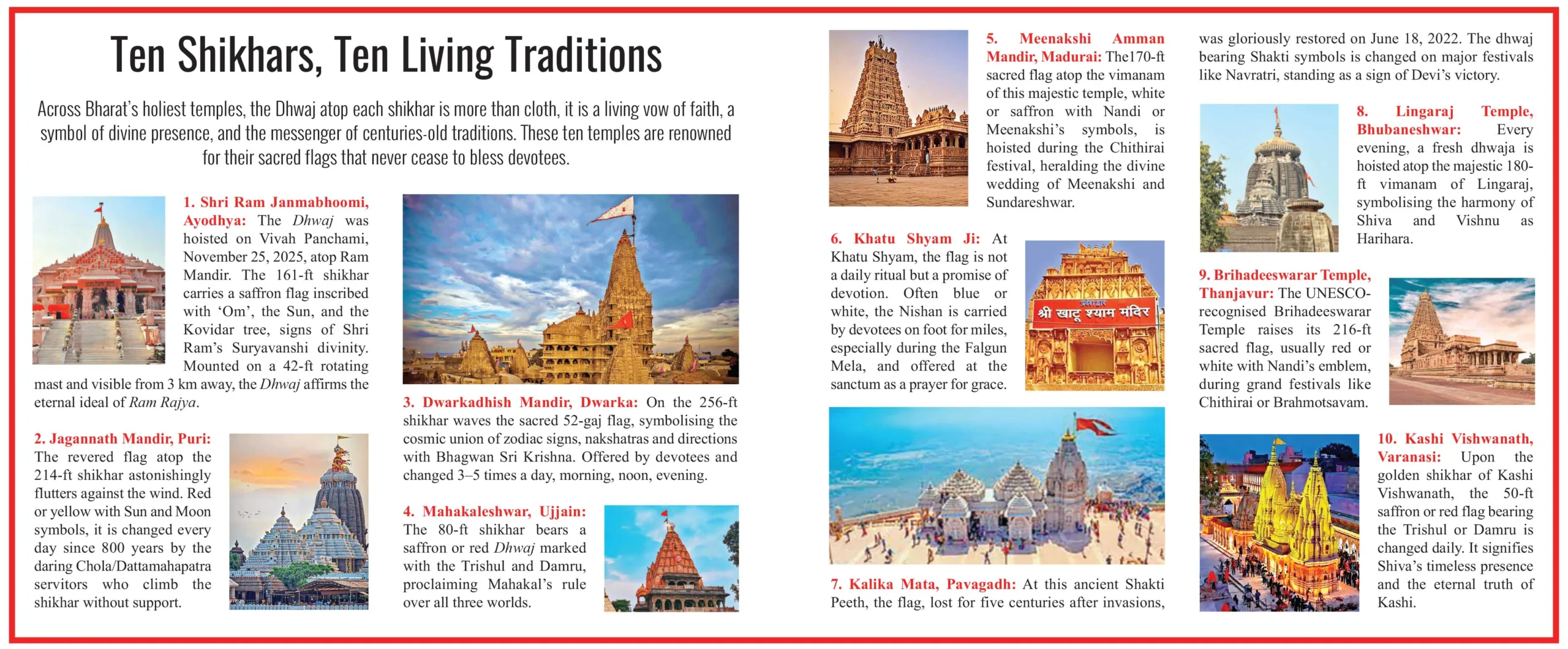
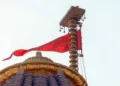
The Dhwaj hoisted on the Mandir carries on it the three civilisational motifs as the signet of the family to which Ram is born, the Suryavansh or the Solar Dynasty: the dazzling disk of the Sun represents the inexhaustible and pure energy, accompanied by the sacred syllables of Om, which reverberates as the eternal and spiritual sound, Shabda, under the calming and fragrant shade of Kovidara tree. This primordial tree has been celebrated over the millennia by hundreds of sages and poets of Bharat as the flowering of pure and prosperous rule of Ram, the order of a society or people which even became the envy of the heavenly order, if there is one.
This gigantic saffron flag, designed and made in right-angle triangular shape, 22 feet in horizontal length and 10 feet in vertical height, scales the top, Shikhara, of the main temple, symbolising renunciation, sacrifice, and the banner of Dharma. The tip of the Dhwaj, in consonance with the pinnacle Kalash or the cupola of the temple, touches the 191th feet from the ground and can be seen from a considerable distance. Thus, the elevation of this Dharma Dhwaj at the Ramjanmabhoomi Mandir dominates the skyline of the sacred city. This ceremony also culminates into a collective emotion of generations of people of the Hindu civilisation, who have waited in silence of torment to see the restoration of the glory of the Ram Mandir in Ayodhya, and reparation of their cultural value, which was sought to have been mutilated.
The journey and struggle of over five centuries, at least, of the people who considered Ram as their Dharma vigraha, the ideal idol, to worship has been wounding and torturous. Revered sage Valmiki describes in his Ramayan the order, the danda of Rama, known as Ram Rajya, “each person under the rule of Ram was contented and all submitted themselves to truth (Dharma); the emotions of the people were becalmed as soon as they though that Ram was their ruler; the climate of Ram Rajya was conducive to living happily; the rains would come only when they were needed and the gentle draft of the breeze tickled delight in the people.”
This ceremony has thus served as the catharsis, the realisation of aspiration and the dream of millions of devotees of Ram.











Comments