Digital technology — Boon or Bane?
September 13, 2026
  • Read Ecopy
  • Circulation
  • Advertise
  • Careers
  • About Us
  • Contact Us
Android AppiPhone AppArattai
Organiser
  • ‌
  • Bharat
    • Assam
    • Bihar
    • Chhattisgarh
    • Jharkhand
    • Maharashtra
    • View All States
  • World
    • Asia
    • Europe
    • North America
    • South America
    • Africa
    • Australia
  • Editorial
  • International
  • Opinion
  • RSS @ 100
  • More
    • World Hindu Congress 2026
    • Op Sindoor
    • Analysis
    • Sports
    • Defence
    • Politics
    • Business
    • Economy
    • Culture
    • Special Report
    • Sci & Tech
    • Entertainment
    • G20
    • Azadi Ka Amrit Mahotsav
    • Vocal4Local
    • Web Stories
    • Education
    • Employment
    • Books
    • Interviews
    • Travel
    • Law
    • Health
    • Obituary
  • Subscribe
    • Subscribe Print Edition
    • Subscribe Ecopy
    • Read Ecopy
  • ‌
  • Bharat
    • Assam
    • Bihar
    • Chhattisgarh
    • Jharkhand
    • Maharashtra
    • View All States
  • World
    • Asia
    • Europe
    • North America
    • South America
    • Africa
    • Australia
  • Editorial
  • International
  • Opinion
  • RSS @ 100
  • More
    • World Hindu Congress 2026
    • Op Sindoor
    • Analysis
    • Sports
    • Defence
    • Politics
    • Business
    • Economy
    • Culture
    • Special Report
    • Sci & Tech
    • Entertainment
    • G20
    • Azadi Ka Amrit Mahotsav
    • Vocal4Local
    • Web Stories
    • Education
    • Employment
    • Books
    • Interviews
    • Travel
    • Law
    • Health
    • Obituary
  • Subscribe
    • Subscribe Print Edition
    • Subscribe Ecopy
    • Read Ecopy
Organiser
  • Home
  • Bharat
  • World
  • Operation Sindoor
  • Editorial
  • Analysis
  • Opinion
  • Culture
  • Defence
  • International Edition
  • RSS @ 100
  • Magazine
  • Read Ecopy
Home Bharat

Digital technology — Boon or Bane?

Digital technology is neither pure boon nor unalloyed bane. It has delivered enormous efficiencies and broadened access to information, but it has also introduced new harms and amplified existing inequalities and risks. The challenge is to steer its development with foresight and moral seriousness — to harness its benefits while actively mitigating its social, health and environmental costs

Atul SehgalAtul Sehgal
Nov 30, 2025, 03:00 pm IST
inBharat, World, Analysis, Sci & Tech
Follow on Google News
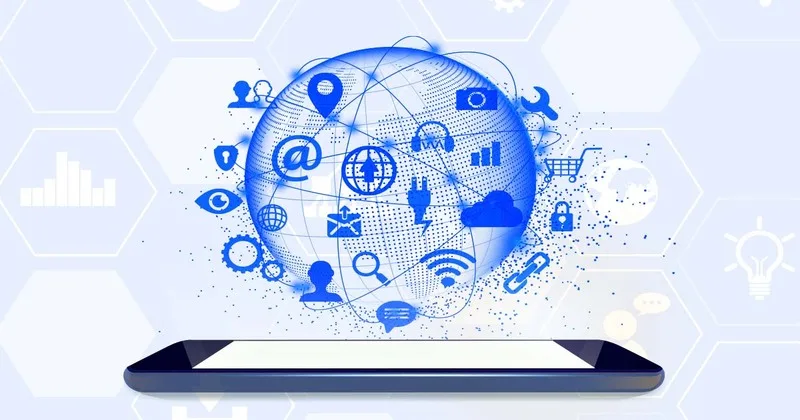
Computers, the internet, mobile phones and related devices have reshaped how we work, learn and live

Computers, the internet, mobile phones and related devices have reshaped how we work, learn and live

Facebook
Twitter
WhatsAppTelegramEmail

The contemporary world is dominated by digital technology. Computers, the internet, mobile phones and related devices have reshaped how we work, learn and live. They were originally developed to save labour and perform repetitive numerical tasks and later to store, edit and retrieve vast amounts of text and data. The fusion of computers and the internet produced mobile phones that today function as offices, cameras, libraries, marketplaces, wallets and social arenas — a single device fulfilling dozens of roles.

Specialized programs and software have dramatically reduced computational time and effort across every field. In achieving their original objectives — conserving manual labour and boosting computational efficiency — digital systems have been highly successful. But the larger question is whether these achievements translate into real, overall gains for humanity. To answer that, we must examine what digital technologies have actually delivered in human terms.

Key questions to ask include: Have digital devices made life substantially more comfortable and productive? Have they improved health, nutrition and longevity? Do they reduce cultural divides, strengthen social bonds, improve governance and foster scientific progress without environmental harm? Have they increased knowledge, rationality and happiness?

An objective look reveals mixed results and worrisome trends. On the positive side, digitization has democratized the distribution of information, made facts harder to conceal and empowered individuals and movements with unprecedented reach. Many tasks are easier, markets are more accessible and scientific collaboration has accelerated in some areas.

Yet a number of adverse consequences are evident:

  1. Information overload and confusion: We live in an age of information onslaught: an overwhelming flow of data that is often fragmented, inconsistent and partial. Rather than clarifying understanding, this torrent can muddle thinking and impede true knowledge.
  2. Erosion of originality and creativity: Heavy reliance on digital tools and readily available content can crowd out original thought and slow genuine innovation, as mechanical reuse and aggregation replace deep reflection.
  3. Virtual life displacing real life: The real world is increasingly ceded to virtual spaces — Facebook, Google, WhatsApp, Instagram, Twitter and similar platforms — altering social interaction and public discourse.
  4. Weaker personal relationships: Interpersonal ties can become temporary, shallow and self-centred when mediated primarily through screens and curated online personas.
  5. New forms of crime and insecurity: Economic and other crimes persist and have diversified into cybercrime: hacking, identity theft and online fraud create fresh vulnerabilities.
  6. Rising materialism and spiritual detachment: Increased material focus and a diminished inclination toward spiritual or community values are observable in many societies.
  7. Growing inequality: The wealth gap has widened in many places, with digital gains often accruing to those already advantaged, exacerbating social and economic disparities.
  8. Geopolitical strain, not harmony: The arms race and national domination tendencies continue; digital power can intensify strategic competition rather than reduce it.
  9. Job displacement from automation and AI: Robotics and AI threaten to make large segments of the workforce redundant, posing risks of unemployment and social dislocation.
  10. Environmental and health concerns: Mobile networks and wireless communication rely on microwave radiation saturating the lower troposphere. Some traditions — for example, the ancient panchbhut doctrine — view this as contamination of the ether (akash tatva) with potentially adverse biological effects. These claims require rigorous scientific investigation but raise worries about long-term environmental and health impacts.

These trends suggest several concrete harms: ideological confusion from information overload, deterioration of intellectual quality (possibly linked to ethereal contamination), increase in nervous and mental disorders, erosion of family and community relationships, rising rates of conflict and divorce, widening trade and wealth disparities and potential new epidemics. A famous quotation from a distraught user of modern digital devices is worth citing.

“When I got the mobile in my hand, I forgot how to write letter. When the computer arrived, I forgot spellings. While dealing with cards and banks, I forgot the worth of money”. This statement amply captures the personal sense of loss that can accompany the technological convenience.

The digital revolution is deeply entangled with economic systems, chiefly capitalism — that generate and amplify inequality and insecurity. From a critical perspective, digitization and automation perpetuate structural imbalances, concentrating wealth and power and provoking social tensions that history often resolves through struggle.

What should be done? First, scientists, economists, sociologists, policymakers and technologists must undertake comprehensive, multidisciplinary investigations into the social, health and environmental effects of the digital systems. Questions that merit urgent research include the long-term biological effects of pervasive wireless radiation, the societal impact of AI-driven automation and the cognitive consequences of persistent information overload.

Also Read: India set for strong rise as growth forecast stays firm despite harsh 50 per cent US tariff hit

Second, technology design should be reoriented toward sustainability and human well-being. Whether framed in terms of “Vedic Physics” or mainstream environmental science, the principle is the same: refine, modify or redesign technologies to eliminate secondary harms. This means creating tools and platforms that preserve privacy, reduce distraction, promote meaningful connection, protect ecological systems and distribute economic benefits more equitably.

Third, governance and regulation must catch up. Policies are needed to safeguard jobs, rein in abusive corporate practices, prevent cybercrime, ensure fair distribution of digital dividends and encourage ethical AI deployment. Education systems should teach digital literacy, critical thinking and resilience so people can navigate information responsibly and preserve humane values in the digital age.

In closing, digital technology is neither pure boon nor unalloyed bane. It has delivered enormous efficiencies and broadened access to information, but it has also introduced new harms and amplified existing inequalities and risks. The challenge is to steer its development with foresight and moral seriousness — to harness its benefits while actively mitigating its social, health and environmental costs. This requires research, redesign, regulation and a renewed commitment to human-centered values so that digitization serves the common good rather than undermining it.


Topics: TechnologyArtificial IntelligenceDigital technologyCybercrimeMobile Phones
Share
Tweet
SendShareSend
✮ Subscribe Organiser YouTube Channel. ✮
✮ Join Organiser's WhatsApp channel for Nationalist views beyond the news. ✮
Previous News

‘Pakistan treated it as war’: BSF reveals intense cross-border clash during Operation Sindoor

Next News

EC appoints retired IAS officer Subrata Gupta as special observer for SIR in West Bengal amid escalating TMC-EC clash

Related News

Prime Minister Narendra Modi arrives at Bharat Mandapam on Day 2 of the BRICS Summit 2026

BRICS Summit: PM Modi warns against weaponisation of critical minerals; Pushes early warning system amid global risks

AI Safety Alarm: Anthropic Researcher Jacob Coxon Quits, Warns of Superintelligence Risks

Anthropic Researcher Jacob Coxon resigns with stark warning; says AI Race ‘Gambling With Our Lives’

Critical Minerals: The new oil of the 21st century

Minister Piyush Goyal in Japan

Piyush Goyal Concludes Japan Visit: Powers next-gen economic ties as India aims resilient supply chain in frontier tech

Strengthening India’s digital ecosystem through robust cybersecurity through IC4

India’s Digital Shield: How I4C is winning the war against cybercrime

Dimagi Naxals: Weaponing Victimhood – The cognitive front of warfare

Load More

Latest News

RSS Akhil Bharatiya Sah-Bauddhik Shikshan Pramukh Deepak Vispute addressing the gathering

‘Nation First’ should be the guiding principle for every individual, regardless of their Field: Deepak Vispute

‘India was not poor; it was made poor’: The truth re-emerges through Jema Ferrer’s perspective

Six years after talent manager Disha Salian was found dead, her father Satish Salian on September 11 recorded a detailed statement with the Central Bureau of Investigation (CBI), naming Shiv Sena (UBT) leader Aaditya Thackeray, actors Dino Morea and Sooraj Pancholi, and others.

Disha Salian Murder Case: Father names Aaditya Thackeray in CBI statement; Lawyer claims gang rape, murder cover-up

Release of a book at Vishwa Bandhutva Diwas programme that was organised in Ujjain

Bharat’s youth rooted in sacrifice, service & discipline can give new direction to World: Parag Abhyankar

AI Generated Representative Image

“Let Go” — But only when it suits you? Exposing the double standards of Kashmir’s political leadership

Bharatiya Kisan Sangh distributed free school uniforms, notebooks, pen bundles, bags to 7,000 students in flood-affected areas of Assam

Assam: Bharatiya Kisan Sangh distributes free school uniforms, notebooks & bags to 7,000 flood-affected students

Chinmoy Prabhu

When a Bengali Hindu suffers in Bangladesh, where does ‘Bangali-Prem’ go?

AI Generated Representative Image

BRICS Summit: Not de-dollarisation, but derisking from dollar; India scripts pragmatic shield against external shocks

RSS Sarsanghchalak Dr Mohan Bhagwat, attended the 37th annual prize distribution ceremony ‘Swaraj’ at L.K. Singhania Education Centre

Education must go beyond livelihood and focus on holistic human development: Dr Mohan Bhagwat

(Left) Prime Minister Narendra Modi and Russian President Vladimir Putin (Right) Prime Minister Narendra Modi and Chinese President Xi Jinping in the backdrop of the Rameshwaram temple corridor in the backdrop of the BRICS 2026 summit

Bharat’s civilisational pride at BRICS 2026: Rameswaram temple corridor frames world leaders

Load More
  • Privacy
  • Terms
  • Cookie Policy
  • Refund and Cancellation
  • Delivery and Shipping

© Bharat Prakashan (Delhi) Limited.
Tech-enabled by Ananthapuri Technologies

  • Home
  • Search Organiser
  • Bharat
    • Assam
    • Bihar
    • Chhattisgarh
    • Jharkhand
    • Maharashtra
    • View All States
  • World
    • Asia
    • Africa
    • North America
    • South America
    • Europe
    • Australia
  • Editorial
  • Operation Sindoor
  • Opinion
  • Analysis
  • Defence
  • Culture
  • Sports
  • Business
  • RSS @ 100
  • Entertainment
  • More ..
    • Sci & Tech
    • Vocal4Local
    • Special Report
    • Education
    • Employment
    • Books
    • Interviews
    • Travel
    • Health
    • Politics
    • Law
    • Economy
    • Obituary
  • Subscribe Magazine
  • Read Ecopy
  • Advertise
  • Circulation
  • Careers
  • About Us
  • Contact Us
  • Policies & Terms
    • Privacy Policy
    • Cookie Policy
    • Refund and Cancellation
    • Terms of Use

© Bharat Prakashan (Delhi) Limited.
Tech-enabled by Ananthapuri Technologies