Supreme Court sounds alarm over rising trend of reopening its own verdicts, warns of threat to judicial authority
July 5, 2026
  • Read Ecopy
  • Circulation
  • Advertise
  • Careers
  • About Us
  • Contact Us
Android AppiPhone AppArattai
Organiser
  • ‌
  • Bharat
    • Assam
    • Bihar
    • Chhattisgarh
    • Jharkhand
    • Maharashtra
    • View All States
  • World
    • Asia
    • Europe
    • North America
    • South America
    • Africa
    • Australia
  • Editorial
  • International
  • Opinion
  • RSS @ 100
  • More
    • Op Sindoor
    • Analysis
    • Sports
    • Defence
    • Politics
    • Business
    • Economy
    • Culture
    • Special Report
    • Sci & Tech
    • Entertainment
    • G20
    • Azadi Ka Amrit Mahotsav
    • Vocal4Local
    • Web Stories
    • Education
    • Employment
    • Books
    • Interviews
    • Travel
    • Law
    • Health
    • Obituary
  • Subscribe
    • Subscribe Print Edition
    • Subscribe Ecopy
    • Read Ecopy
  • ‌
  • Bharat
    • Assam
    • Bihar
    • Chhattisgarh
    • Jharkhand
    • Maharashtra
    • View All States
  • World
    • Asia
    • Europe
    • North America
    • South America
    • Africa
    • Australia
  • Editorial
  • International
  • Opinion
  • RSS @ 100
  • More
    • Op Sindoor
    • Analysis
    • Sports
    • Defence
    • Politics
    • Business
    • Economy
    • Culture
    • Special Report
    • Sci & Tech
    • Entertainment
    • G20
    • Azadi Ka Amrit Mahotsav
    • Vocal4Local
    • Web Stories
    • Education
    • Employment
    • Books
    • Interviews
    • Travel
    • Law
    • Health
    • Obituary
  • Subscribe
    • Subscribe Print Edition
    • Subscribe Ecopy
    • Read Ecopy
Organiser
  • Home
  • Bharat
  • World
  • Operation Sindoor
  • Editorial
  • Analysis
  • Opinion
  • Culture
  • Defence
  • International Edition
  • RSS @ 100
  • Magazine
  • Read Ecopy
Home Bharat

Supreme Court sounds alarm over rising trend of reopening its own verdicts, warns of threat to judicial authority

In a sharp and unprecedented caution, the Supreme Court has expressed deep concern over a growing pattern of litigants attempting to overturn the Court’s own settled judgments before newly constituted benches. The bench warned that such practices strike at the core of judicial finality, risk destabilising the rule of law, and undermine the authority of the apex court

WEBDESKWEBDESK
Nov 27, 2025, 09:30 am IST
in Bharat, Law
Follow on Google News
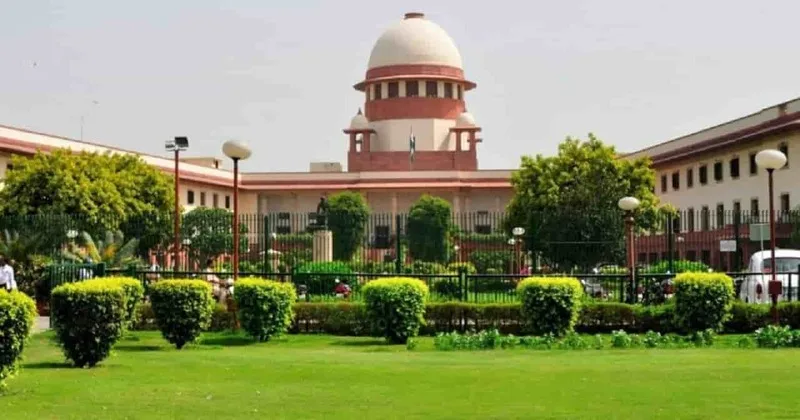
A representative image- Supreme Court of India

A representative image- Supreme Court of India

FacebookTwitterWhatsAppTelegramEmail

The Supreme Court on Thursday (Nov 27) issued a strong and cautionary note against an emerging pattern it described as both “troubling” and “dangerous” to the integrity of India’s judicial system. According to the Court, an increasing number of litigants have been approaching differently constituted benches of the apex court to reopen or overturn judgments that were previously settled, regardless of the time that has passed or the composition of the bench that originally delivered the ruling.

The warning came from a bench comprising Justices Dipankar Datta and AG Masih, which was hearing a plea seeking modification of a bail condition imposed in a 2019 murder case. The judges used the occasion to reflect on a broader and growing institutional concern: that successive benches are being urged to revisit matters that should have attained finality under the Constitution.

During the hearing, the bench made clear that judicial legitimacy does not rest solely on arriving at what litigants believe to be “perfect” judgments. Instead, it stressed that the strength of the judiciary lies in certainty, consistency, and finality, all of which are compromised when settled matters are casually reopened.

The Court noted that a troubling tendency has emerged where litigants seek a fresh interpretation or outcome simply because another bench might have a “better view.” This, the judges said, defeats the basic purpose of adjudication and could erode public faith in the judiciary if left unchecked.

“Once a verdict is pronounced, the controversy must come to an end,” the bench observed, underscoring that reopening cases based on bench composition changes risks setting a dangerous precedent.

Reiterating the force of Article 141 of the Constitution, which mandates that the law declared by the Supreme Court is binding on all courts across the country, the bench asserted that the authority of the Court’s pronouncements must not be diluted by repeated attempts to challenge them.

The judges expressed particular concern over what they described as “bench hunting,” the practice of deliberately seeking a differently constituted bench in the hope of securing a new or favourable verdict. Such practices not only compromise judicial consistency, they warned, but also threaten the integrity of the judicial institution itself.

If litigants begin believing that a new bench may disregard a previous view simply because of personal judicial preference, the Court noted, the entire system of precedent and stability collapses.

In light of these concerns, the bench dismissed the plea seeking modification of the bail condition in the 2019 murder case, observing that entertaining such a request would amount to overriding a prior order of the Court. Doing so, it warned, would send an improper message that the Court is willing to dilute the principle of finality whenever pressed.


Topics: Dipankar DattaAG MasihSupreme Court Of Indiajudicial finalitybench huntingauthority of judiciaryArticle 141
ShareTweetSendShareSend
✮ Subscribe Organiser YouTube Channel. ✮
✮ Join Organiser's WhatsApp channel for Nationalist views beyond the news. ✮
Previous News

Karnataka Congress in Turmoil: Rahul Gandhi sends message to DCM D K Shivakumar, asks him to wait for some time

Next News

Bharat secures 2030 Commonwealth Games: PM Modi says nation ‘Eager to celebrate these historic games’

Related News

Supreme Court of India bench hears Sabarimala review pleas as Justice B. V. Nagarathna questions non-devotee challenges to rituals

Sabarimala Case: “Believers don’t question rituals; non-believers can’t challenge them,” says Justice B. V. Nagarathna

During Sabarimala review hearings, Supreme Court underscores limits of reform and cautions against diluting core religious beliefs

Religion cannot be “Hollowed Out” in the name of social reform, says Supreme Court in Sabarimala case

Supreme Court hearing focuses on mandir customs, faith practices, and the balance between rights and religious traditions

Sabarimala Women Entry Case: Supreme Court says Mandir rituals must be followed, stresses limits of judicial role

SIR process happening across Bharat (Representative image)

‘Won’t tolerate’: CJI warns against questioning judicial officers during Bengal SIR

Representative image

Beyond Religious Freedom: How the Chhattisgarh burial case has become a test of Vanvasi land rights & village autonomy

Meta, WhatsApp undertake to comply with data privacy directions by March 16, Supreme Court told

Load More

Latest News

RSS Sarkaryavah Dattatreya Hosabale

Theft in donation boxes at Ram Mandir in Ayodhya has hurt sentiments of devotees of Ram: Dattatreya Hosabale

Eleven Years of Digital Innovation Transforming everyday life across India

A Decade of Digital India: Revolutionising payment & healthcare ecosystem; Making everyday life easier for Indians

EPF gets its biggest overhaul in 74 years: What the new rules mean for salaried employees

PFI weapon trainer Ayoob - RSS leader Sreenivasan (Left to Right)

Keralam: PFI weapon trainer Ayoob surrenders before Kochi NIA Court in RSS leader Sreenivasan murder case

Meenakshi Amman Mandir

Top 10 Tallest Gopurams in India: Exploring the magnificent Mandir towers of Dravidian architecture

Andhra Pradesh: NHRC orders probe into Kurnool Diocese-linked St Anthony’s orphanage over FCRA violations

RSS Sarsanghchalak Dr Mohan Bhagwat

“India will show the way and humanity must follow the path”: RSS Sarsanghchalak Mohan Bhagwat

Hindu-Americans raise concern about spiking Hinduphobia on 250th US Independence Day; Highlight centuries of relations

India's MANAS platform enables anonymous drug reporting and access to counselling and rehabilitation

MANAS: How India’s digital anti-drug platform is empowering citizens against substance abuse and trafficking

British chemical warfare experiments involving Indian Army soldiers remain a debated part of colonial history

Beyond the Battlefield: How British laboratories conducted chemical experiments on Indian Army troops in colonial India

Load More
  • Privacy
  • Terms
  • Cookie Policy
  • Refund and Cancellation
  • Delivery and Shipping

© Bharat Prakashan (Delhi) Limited.
Tech-enabled by Ananthapuri Technologies

  • Home
  • Search Organiser
  • Bharat
    • Assam
    • Bihar
    • Chhattisgarh
    • Jharkhand
    • Maharashtra
    • View All States
  • World
    • Asia
    • Africa
    • North America
    • South America
    • Europe
    • Australia
  • Editorial
  • Operation Sindoor
  • Opinion
  • Analysis
  • Defence
  • Culture
  • Sports
  • Business
  • RSS @ 100
  • Entertainment
  • More ..
    • Sci & Tech
    • Vocal4Local
    • Special Report
    • Education
    • Employment
    • Books
    • Interviews
    • Travel
    • Health
    • Politics
    • Law
    • Economy
    • Obituary
  • Subscribe Magazine
  • Read Ecopy
  • Advertise
  • Circulation
  • Careers
  • About Us
  • Contact Us
  • Policies & Terms
    • Privacy Policy
    • Cookie Policy
    • Refund and Cancellation
    • Terms of Use

© Bharat Prakashan (Delhi) Limited.
Tech-enabled by Ananthapuri Technologies