





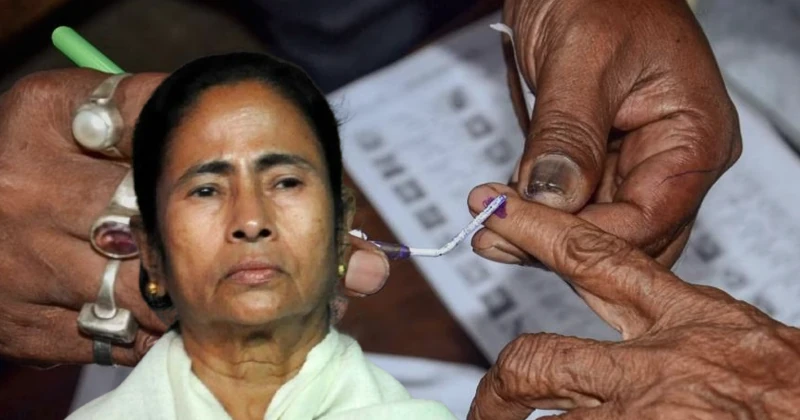
A sweeping voter-list purge underway in West Bengal has exposed what officials describe as an unprecedented level of decay in the state’s electoral rolls, with the Election Commission of India (ECI) estimating that over 10 lakh names will be deleted once the Special Intensive Revision (SIR) concludes. Early assessments indicate that 6.5 lakh of these entries belong to deceased individuals a staggering figure that raises serious questions about the integrity of electoral rolls maintained during the Mamata Banerjee government’s tenure.
According to reports accessed by media, the preliminary numbers have emerged with 99.75 per cent of enumeration forms already distributed, and the verification still ongoing. The deletions will span dead voters, duplicate entries, voters who have shifted out of state permanently, and those who are simply “untraceable.”
The ECI’s insider bluntly noted, “The maximum deletions will be in the category of dead voters… around 6.5 lakh.” These revelations have triggered an intense political storm in the state one that the Trinamool Congress (TMC) has reacted to with visible alarm.
🚨HUGE. Bengal’s SIR is exposing a staggering rot, an estimated 10 Lakh names already flagged for DELETION, including 6.5 lakh dead voters.
~ And this is only the preliminary count; the verification is still underway with 99.75% forms already distributed. (Source: Dainik… pic.twitter.com/gegneL8Wqz
— The Analyzer (News Updates🗞️) (@Indian_Analyzer) November 25, 2025
Chief Minister Mamata Banerjee has reportedly sent multiple letters to the Election Commission in recent days, objecting to the pace and scale of the voter-list cleanup. Her government has accused the ECI of conducting the exercise with undue haste claims the Commission has not only rejected, but countered by urging voters to promptly submit their forms before the December 4 deadline.
Sources within the CEO’s office say the deletion process follows the “strictest legal standards” and that claims of excessive pressure on field officers are being monitored district-wise.
Unusually high number of dead voters on the rolls has long fueled allegations of poll manipulation and rigging, especially in states where the ruling dispensation wields significant control over local administrative machinery. Dead or duplicate voter entries are routinely cited as the easiest targets for electoral fraud through impersonation.
The exercise has not been without tragedy. Three Booth Level Officers (BLOs) have died during the ongoing SIR work, prompting inquiries from district magistrates.
CEO Manoj Kumar Agarwal acknowledged the strain on officials, calling BLOs “the real heroes” of the revision effort”.
Despite these incidents, he reaffirmed that the December 4 submission deadline will not be extended, and that the draft voter list will be published on December 9.
Reports from the ground indicate that many beneficiaries of inflated or fraudulent voter entries have already “run away” from scrutiny, according to local sources quoted in Jagran. Officers say that door-to-door verification has exposed numerous instances where entire sequences of voters listed at one address simply do not exist.
While political parties have not been officially named, analysts argue that such large-scale discrepancies overwhelmingly benefit whichever group controls the local administrative structure. In West Bengal, that has been the TMC for over a decade.
In a separate development highlighting the broader national security landscape, security forces in Manipur recovered a massive cache of arms and explosives from Churachandpur and Kangpokpi districts this week. Seizures included a German rifle, multiple bolt-action weapons, a rocket containing 40 kg of explosives, mortars, grenades, detonators, and a rocket-launch stand.
Authorities did not disclose the intended use of these weapons, but confirmed that operations were part of ongoing counter-insurgency and anti-militant efforts.
The ongoing SIR exercise in Bengal one of the most aggressive voter-list audits in recent memory has opened a Pandora’s box of systemic failures. The identification of 10 lakh invalid entries, including 6.5 lakh dead voters, points to not just negligence but an underlying structural collapse in the maintenance of the state’s electoral framework.















Comments