AYODHYA: The Ram Janmabhoomi Mandir is set for a defining moment in its spiritual and cultural journey as a monumental saffron flag will be hoisted atop its 191-foot shikhara on Vivah Panchami. The Dhwajarohan, facilitated by the Indian Army, marks the first time in the country that a flag is being elevated to such a height from the ground—symbolising a historic ascent toward national pride and the ideals of Ram Rajya.
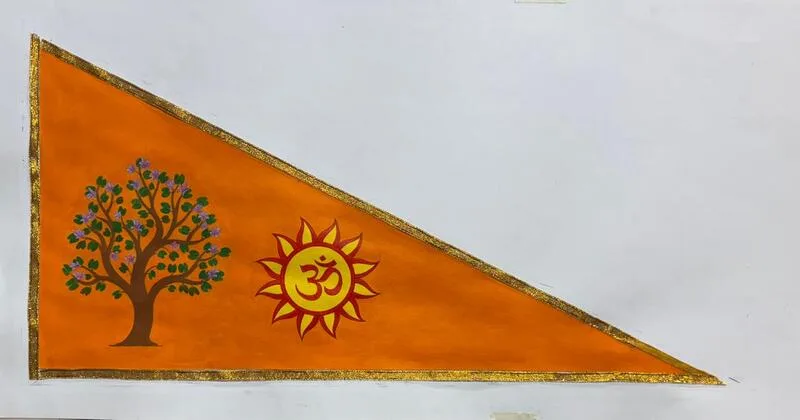
The saffron flag, measuring 10 feet in height and 20 feet in length, carries deep symbolism rooted in India’s civilisational heritage. Saffron, long associated with sacrifice, purity, and dharma, represents the dawn of righteousness—much like the rising sun whose hue it reflects. The flag bears the image of the Sun, honouring the lineage of the Suryavansh in which Shri Ram was born, with ‘Om’ inscribed at its centre, signifying the primordial sound of creation.
Another powerful emblem featured on the flag is the Kovidara tree, historically regarded as a symbol of King Dashrath’s kingdom. Its reference in ancient texts underscores the deep cultural continuity between the epic era and present-day Ayodhya. The significance of these symbols is also embedded in the accounts of Valmiki Ramayan—particularly the moment when Lakshman recognizes the royal presence of Bharat through the emblem on his chariot.
According to Champat Rai, General Secretary of Shri Ram Janmabhoomi Teerth Kshetra, the ceremony signifies the spiritual return of Ram Rajya and India’s unity. As the flag rises to its towering height, it will not only adorn the temple but also serve as a reminder of the values that define Sanatan civilisation.