





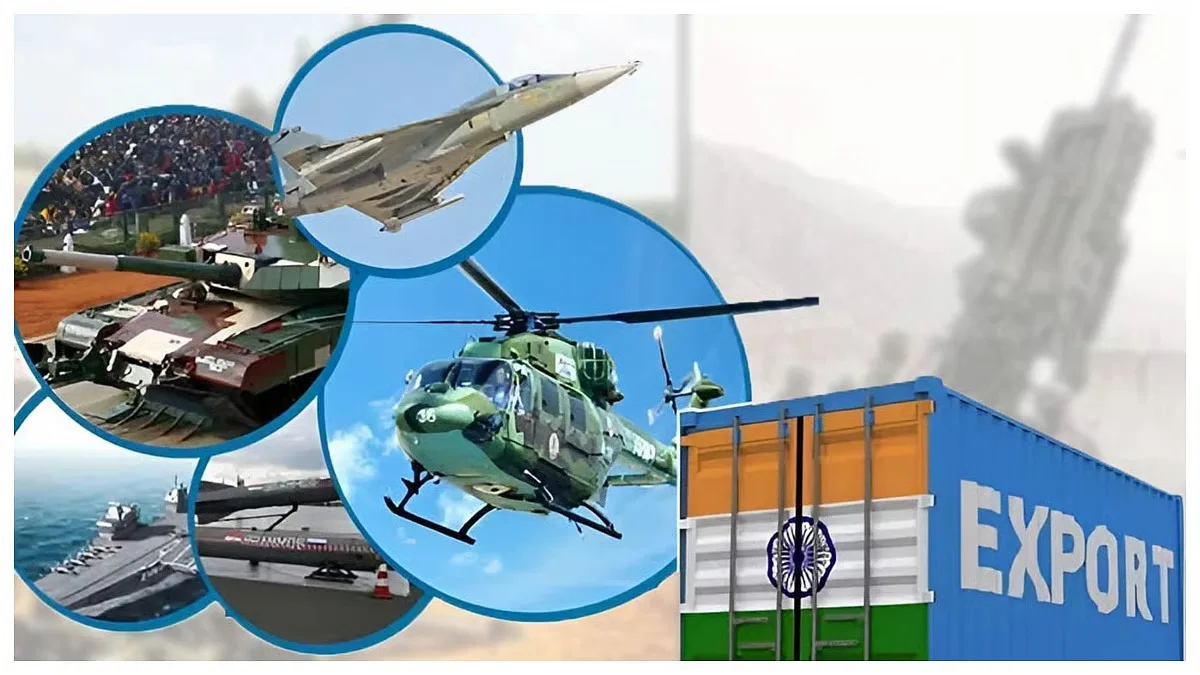
India’s journey toward strategic autonomy under the Atmanirbhar Bharat mission has fundamentally reshaped the nation’s defence landscape. The past decade has marked a turning point, driven by sustained policy changes, investments in research and development and a conscious push to strengthen domestic industry. India is now witnessing unprecedented growth in defence production, which touched Rs 1,27,434 crore in 2023-24 compared to Rs 46,429 crore in 2014-15.
The numbers reflect an ecosystem that is expanding in depth, scale and capability. They also underline a clear intent to reduce dependence on external suppliers and build a military-industrial base aligned with India’s long-term security priorities.
This transformation is supported by a consistent rise in the defence budget. For 2025-26, the allocation stands at Rs 6.81 lakh crore, significantly higher than the Rs 2.53 lakh crore allocated in 2013-14. The expansion of financial outlays has ensured greater resources for procurement, infrastructure, R&D, modernisation and capacity building. With global security threats evolving rapidly, this strategic investment strengthens India’s readiness to respond to both traditional and emerging security challenges.
One of the most crucial reforms in this period was the restructuring of the historic Ordnance Factory Board into seven independent and specialised defence companies. This decentralisation has improved competitiveness, accountability and production efficiency.
Alongside this, the Defence Research and Development Organisation has introduced various innovation grants that support the scientific community, academia and start-ups in developing cutting-edge technologies. Over 16,000 MSMEs have now become part of the defence supply chain, adding flexibility, innovation and cost-effectiveness to the sector. These structural and institutional shifts have allowed India to transition from a heavily import-dependent model to one where domestic production now accounts for at least 65 percent of defence equipment requirements.
The private sector has emerged as a major stakeholder in this new defence economy. Its share in total production has risen from 21 percent to 23 percent in the past year. This growth is not accidental. Policy reforms, including Make in India, liberalised foreign investment rules and streamlined procurement procedures, have encouraged private companies to enter the sector with confidence. From electronics and ammunition to warship sub-systems and aerospace components, private industry is increasingly complementing the public sector in delivering quality products at competitive prices.
As domestic manufacturing strengthens, India’s presence in the global defence export market has expanded dramatically. Defence exports soared to Rs 23,622 crore in FY 2024-25, registering a 12.04 percent increase over the previous year. This marks a phenomenal rise considering that a decade ago, India’s exports were only a fraction of this figure.
Today, Indian-made defence products are being shipped to more than 100 countries. These products range from bulletproof jackets and lightweight torpedoes to patrol vessels, radars, avionics and helicopters. The private sector accounted for Rs 15,233 crore of these exports, underscoring its pivotal role in pushing India toward international competitiveness. Defence Public Sector Undertakings also recorded a significant 42.85 percent surge in exports.
Government-led reforms have been central to this export expansion. The simplification of licensing rules has reduced red tape and enabled faster project approvals. The creation of a fully digital online portal for export authorisations has further enhanced transparency and efficiency.
Rationalised procedures allow companies to pursue international defence tenders, partnerships and supply contracts without the bureaucratic hurdles that previously slowed progress. These reforms have also strengthened India’s defence diplomacy, as equipment sales are increasingly accompanied by training, technological support, maintenance services and long-term logistical commitments. This holistic ecosystem has helped India build trust and durable partnerships with defence forces around the world.
Looking ahead, India is positioning itself for even greater global relevance through innovation-driven manufacturing. The government’s Rs 1 lakh crore Research, Development and Innovation Scheme aims to accelerate technological breakthroughs by integrating academia, industry and defence laboratories. Liberalised FDI policies allow up to 74 percent foreign direct investment under the automatic route, attracting global giants that bring advanced technologies and manufacturing expertise. At the same time, targeted support for MSMEs and defence start-ups ensures that innovation is not restricted to large corporations.
This momentum is reflected in expanded industrial participation. A total of 788 industrial licenses have been issued to 462 companies, indicating rising investor confidence in the sector. The year 2024-25 also saw a record 193 contracts signed, with an overwhelming 177 awarded to domestic companies. This signals the government’s commitment to making India not just a manufacturing hub but also a centre for research-driven innovation and high-value production.
The long-term targets are ambitious yet achievable. India aims to increase annual defence manufacturing to Rs 3 lakh crore by 2029 and raise defence exports to Rs 50,000 crore. Given the current trajectory, these goals align well with the expanding capabilities of domestic industry, the maturing supply chain network and the government’s sustained focus on reform-oriented growth. With improvements in quality control, testing infrastructure and indigenous design capacity, India is set to move from being a buyer to becoming one of the world’s major suppliers of advanced defence systems.
India’s rise in the defence sector is no longer symbolic. The numbers, policy reforms, growing global footprint and technological advancements reflect a nation prepared to shape its own security destiny. The Atmanirbhar Bharat vision in defence is not merely an economic or industrial strategy. It is a national commitment to sovereignty, capability and global leadership.
















Comments