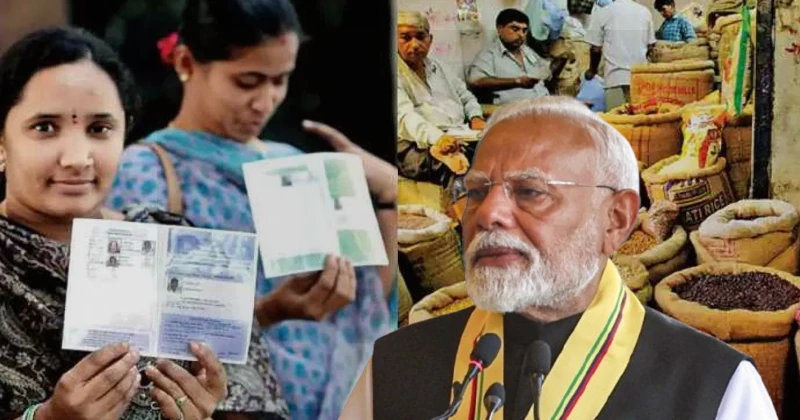
Under the National Food Security Act (NFSA) in one of the largest clean-up drives undertaken since its rollout, the Union government has removed approximately 2.25 crore ineligible beneficiaries from the free monthly ration scheme over the last four to five months. The move follows a strong directive issued by the Union to all states, requiring them to purge inflated and erroneous beneficiary lists by September 30 to ensure that only the legitimately poor continue to access subsidised food grains.
Speaking to reporters on November 18, Food Secretary Sanjeev Chopra confirmed the scale of the nationwide purge. “Around 2.25 crore ineligible beneficiaries have been weeded out from the NFSA,” he said, emphasising that the exercise is part of an intensified push to improve the targeting efficiency of one of India’s largest welfare programmes.
According to senior officials from the Ministry of Consumer Affairs, Food and Public Distribution, the beneficiaries removed include:
- Individuals owning four-wheelers,
- Persons with monthly incomes above state-specified thresholds,
- Individuals holding directorships of registered companies,
- And a significant number of people who had passed away but whose names remained on active ration rolls.
Officials explained that the Union undertook a data-driven analysis to flag likely ineligible names, which were then forwarded to state governments for verification. Only after state-level confirmation were these names deleted from the list.
Under the NFSA, passed in 2013, 81.35 crore people nearly two-thirds of India’s population are entitled to subsidised foodgrains. This includes:
- Antyodaya Anna Yojana (AAY) households, receiving 35 kg of food grains per month, and
- Priority Household (PHH) members, receiving 5 kg of food grains per person per month.
However, states had previously identified only 80.56 crore beneficiaries, leaving room for another 0.79 crore eligible persons to be added.
The Union argues that an inflow of unintended or ineligible beneficiaries had weakened the programme’s ability to deliver sustenance to the poorest families. “The exercise has been made to ensure better targeting of the rightful beneficiaries,” Chopra reiterated. States have now begun adding newly verified, eligible households in place of those removed.
India’s food subsidy schemes rest on a vast logistical foundation:
- 19+ crore ration cards,
- 5 lakh fair price shops,
- And the responsibility of coordination across all states and Union Territories.
Despite Aadhaar-based authentication and digitisation efforts, irregularities persisted ranging from income discrepancies to outdated family records and misuse of ration cards.