An event that reads like the script of a mystery drama, the Election Commission’s Special Intensive Revision (SIR) has inadvertently reunited a family with a man believed dead for 28 years. The revelation has not only stunned the Bagda community but has also sparked an intense debate over the accuracy of electoral rolls in the state.
On a quiet Monday afternoon, Supriya Mandal opened the door of her Bagda residence to find the man she had performed last rites for, her husband, Jagbandhu Mandal, now 55, standing before her. His father, Bijay Mandal, reportedly recognised him immediately, confirming the identity that the state machinery had long erased.
Disappearance in 1997
Jagbandhu vanished on a cold morning in February 1997, leaving behind a young wife and two small children. What followed was years of frantic searching, appeals to relatives, police inquiries, and even consultations declared him dead. The family, devastated yet exhausted, eventually performed his last rites. For nearly three decades, the Mandals believed they had lost him forever.
SIR Revision brings the past crashing back
The surprise homecoming coincides with the Election Commission’s rigorous SIR revision, a process that has already stirred political controversy in West Bengal. According to local accounts, Jagbandhu’s voter ID had long been erased from Bagda’s electoral rolls, disappearing completely after 2002. Only his father’s name continued to appear.
Local booth committee member Samir Guha confirmed that the Booth Level Officer had no documentation tracing Jagbandhu’s whereabouts for 28 years. “His name simply vanished from the rolls after 2002. Now he has resurfaced, without any paper trail,” Guha remarked.
The SIR process, which requires residents to produce original voter IDs, land papers, and proof of residence, reportedly compelled Jagbandhu to return. He allegedly needed these documents to restore his electoral status.
The twist deepened when officials discovered that Jagbandhu’s name still appeared on the voter list in Bankura, dozens of kilometres away. In the Bankura records, his name is listed alongside a woman identified as Sulekha Mandal, whose husband is also recorded as Jagbandhu Mandal. This duplication has sparked rumours of a second marriage.
Villagers and local political workers have been buzzing with speculation, but Jagbandhu has denied any such relationship, insisting he spent time in Gujarat, Mumbai, Bankura, and later Chhattisgarh, where he says he recently lost his job, prompting his return.
Election officials now face a complicated task: verifying the identity and legal existence of a man absent from all official records for nearly 30 years.
With his old entries deleted and no documentation confirming his activities, travels or employment, the process of reinstating his voter eligibility is expected to be “far from straightforward,” according to local officers.
While the SIR exercise has attracted criticism from the ruling Mamata government, the Bagda case adds an unexpected dimension, how electoral documentation can reshape lives in ways no one anticipates.
Ironically, the very revision process that sparked protests and debates across West Bengal has now become central to assessing the true identity of a man long believed dead.
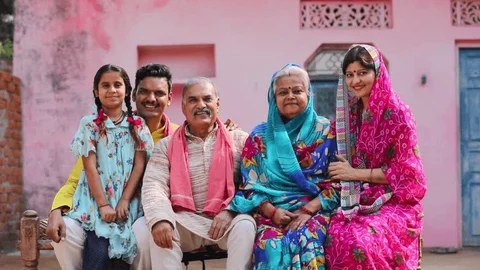
For the Mandal family, however, the bureaucratic maze is secondary. After 28 years of grief and acceptance, they are still processing the return of a man who walked back from the pages of memory into their living room, thanks, in part, to the revision of a voter list.