





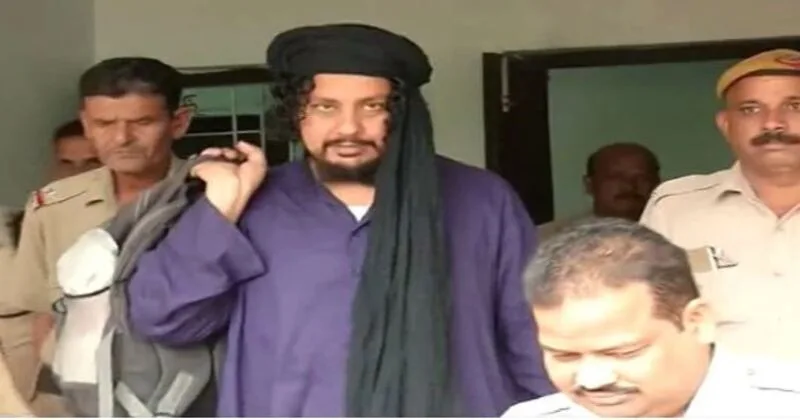
Bhubaneswar: The Orissa High Court on November 11 rejected the bail plea of Al-Qaeda operative Mohd Abdur Rehman, a resident of Paschimkachha under Salepur in Cuttack district. He has been in jail since December 2015 following his arrest for involvement in extremist and terror-related activities.
In its decision to deny bail, the High Court cited the seriousness of the charges and the ongoing implications for national security, noting that his release at this stage could adversely affect the ongoing investigations.
According to official sources, Rehman was arrested during a coordinated operation between the Special Cell of Delhi Police and Odisha Police on December 16, 2015. The operation was based on specific intelligence suggesting his involvement in recruiting and radicalising youths for terrorist activities. Rehman was apprehended near Jagatpur in Cuttack, where he was reportedly operating an unregistered madrasa in Tangi, which allegedly served as a hub for indoctrinating students with extremist ideologies.
Police investigations revealed that Rehman, a cleric by profession, was using religious platforms to disseminate radical thoughts. He is accused of delivering inflammatory speeches at various religious gatherings, known as Jalsa functions, across Odisha and Jharkhand, where he purportedly promoted extremist ideologies and attempted to influence vulnerable youths.
Following his arrest, the Special Task Force (STF) of the Odisha Crime Branch took over the investigation and filed a detailed charge sheet against him in August 2023. The case is currently pending trial before the Sessions Court in Salipur, Cuttack. The High Court, in denying bail, acknowledged the pending trial and the severity of the allegations under the Unlawful Activities (Prevention) Act (UAPA).
This is not Rehman’s first conviction under anti-terror laws. In February 2023, a Patiala House Court in New Delhi convicted him alongside three others—Mohd Asif, Zafar Masood, and Abdul Sami—under Sections 18 (conspiracy for terror acts) and 18B (recruitment for terror acts) of the UAPA. The court found the accused guilty of conspiring to spread extremist ideologies and recruiting youths for Al-Qaeda-linked activities.
The Delhi court sentenced Rehman to seven years and five months of rigorous imprisonment and imposed a fine of Rs 25,000. He began serving the sentence shortly after the verdict. Although he has completed that prison term, Rehman remains in judicial custody in connection with a second case filed by Odisha Police under the same Act.
Investigators have further alleged that Rehman travelled to Pakistan in 2015 on a fake passport, where he reportedly met key Lashkar-e-Taiba commanders, including Zaki-ur-Rehman Lakhvi and Sajid Mir, both of whom are key accused in the 26/11 Mumbai terror attacks. Reports published in 2018 indicated that during interrogation, Rehman admitted to maintaining links with individuals involved in the 1999 Kandahar plane hijack and the 2002 American Centre blast in Kolkata.
Police sources revealed that Rehman had been under surveillance for several months prior to his arrest. His frequent visits to religious gatherings and attempts to connect with known radical elements had attracted the attention of national security agencies. Intelligence officials characterised his arrest as part of a broader initiative to dismantle Al-Qaeda’s recruitment network in eastern India.
Notably, one of Rehman’s brothers was named as an accused in the 2002 American Centre attack case; however, he was later acquitted by the court due to insufficient evidence.
While local police officials have refrained from commenting publicly on the High Court’s decision, sources confirmed that the investigation into Rehman’s network and connections is ongoing under the joint supervision of both central and state intelligence agencies.














Comments