Al Qaeda and JNIM seize momentum in Mali
August 16, 2026
  • Read Ecopy
  • Circulation
  • Advertise
  • Careers
  • About Us
  • Contact Us
Android AppiPhone AppArattai
Organiser
  • ‌
  • Bharat
    • Assam
    • Bihar
    • Chhattisgarh
    • Jharkhand
    • Maharashtra
    • View All States
  • World
    • Asia
    • Europe
    • North America
    • South America
    • Africa
    • Australia
  • Editorial
  • International
  • Opinion
  • RSS @ 100
  • More
    • Op Sindoor
    • Analysis
    • Sports
    • Defence
    • Politics
    • Business
    • Economy
    • Culture
    • Special Report
    • Sci & Tech
    • Entertainment
    • G20
    • Azadi Ka Amrit Mahotsav
    • Vocal4Local
    • Web Stories
    • Education
    • Employment
    • Books
    • Interviews
    • Travel
    • Law
    • Health
    • Obituary
  • Subscribe
    • Subscribe Print Edition
    • Subscribe Ecopy
    • Read Ecopy
  • ‌
  • Bharat
    • Assam
    • Bihar
    • Chhattisgarh
    • Jharkhand
    • Maharashtra
    • View All States
  • World
    • Asia
    • Europe
    • North America
    • South America
    • Africa
    • Australia
  • Editorial
  • International
  • Opinion
  • RSS @ 100
  • More
    • Op Sindoor
    • Analysis
    • Sports
    • Defence
    • Politics
    • Business
    • Economy
    • Culture
    • Special Report
    • Sci & Tech
    • Entertainment
    • G20
    • Azadi Ka Amrit Mahotsav
    • Vocal4Local
    • Web Stories
    • Education
    • Employment
    • Books
    • Interviews
    • Travel
    • Law
    • Health
    • Obituary
  • Subscribe
    • Subscribe Print Edition
    • Subscribe Ecopy
    • Read Ecopy
Organiser
  • Home
  • Bharat
  • World
  • Operation Sindoor
  • Editorial
  • Analysis
  • Opinion
  • Culture
  • Defence
  • International Edition
  • RSS @ 100
  • Magazine
  • Read Ecopy
Home World

Al Qaeda and JNIM seize momentum in Mali, fueling fears of another African nation edging toward Islamist rule

Mali is crashing toward disaster, and the junta is powerless to stop al-Qaeda-linked militants closing in on Bamako. As the capital runs dry of food and fuel, warnings are growing that an Islamist takeover could trigger mass persecution and violent cleansing of non-Islamic communities

Dr Vishnu AravindDr Vishnu Aravind
Nov 8, 2025, 09:00 am IST
inWorld, Africa, International Edition
Follow on Google News
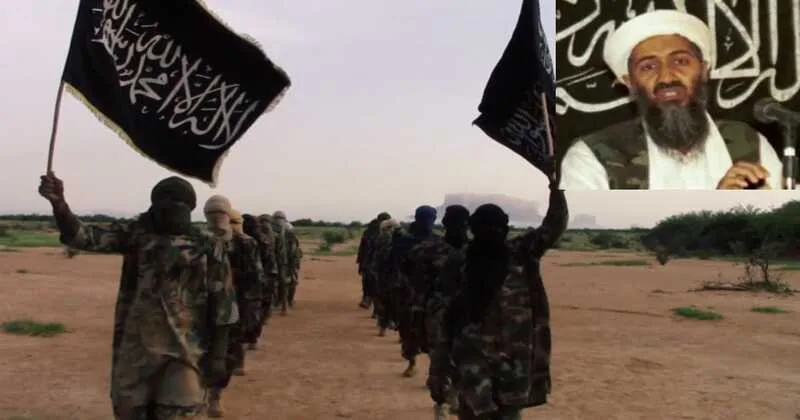
A familiar nightmare is returning, Al Qaeda is no longer hiding in the shadows, it is knocking at the gates of another capital

A familiar nightmare is returning, Al Qaeda is no longer hiding in the shadows, it is knocking at the gates of another capital

Facebook
Twitter
WhatsAppTelegramEmail

Al-Qaeda, the global jihadist network, is on the brink of capturing political power in a sovereign nation again, something the world has not witnessed in almost four decades. Now, all eyes are on Mali, where rapid developments suggest a dramatic shift. The situation has deteriorated to such an extent that France has issued an urgent advisory, asking all its citizens to leave Mali “as soon as possible”. The French Foreign Ministry has instructed its nationals to rely on commercial flights while they are still operating and to avoid travelling by road, underscoring the depth of the crisis.

The immediate threat arises from the rapid expansion of Jamaat Nusrat al-Islam wal-Muslimeen (JNIM), an al-Qaeda affiliate that is gaining remarkable ground in the West African nation. The crisis has been exacerbated by a crippling two-month fuel blockade imposed by the group, which has brought life in the capital city, Bamako, to an almost complete halt. There is widespread anxiety that Bamako could fall into jihadist hands at any moment, marking a terrifying turn in Mali’s long, unstable political trajectory. JNIM’s blockade strategy involves attacking fuel tankers on major transport routes. Being a landlocked country, Mali relies heavily on fuel brought by road from Senegal and the Ivory Coast. By targeting these lifelines, the group has successfully paralysed the capital. Major international actors have taken note. MSC, the world’s largest shipping company, announced the suspension of all operations in Mali, citing the deepening security crisis. The United States embassy recently evacuated non-essential diplomatic staff and their families, warning of electricity disruptions, fuel shortages, and deteriorating safety.

A junta losing control as jihadists advance

Mali is currently ruled by a military junta led by General Assimi Goita, who came to power following a 2020 coup. The junta’s rise to power was justified on the promise of restoring internal stability and crushing the jihadist insurgency that had grown out of an earlier Tuareg separatist rebellion in northern Mali. That rebellion was soon hijacked by Islamist militants affiliated with al-Qaeda. For years, French troops and UN peacekeepers operated inside Mali to contain the militants. But after the junta seized power, relations with Western governments soured, forcing both French forces and UN peacekeepers to withdraw. The military government then turned to Russian mercenaries to fight the insurgency. Yet despite these efforts, the jihadists now hold significant territory in the north and east, and their reach has crept dangerously close to the capital.

#KhabarDuniyaKi | Al-Qaeda-linked Jama’at Nusrat al-Islam al-Muslimin ( JNIM) surrounds Mali’s capital Bamako, blocks fuel, and aims to topple the government to impose a pre-modern caliphate on four million residents.

Watch the full program:https://t.co/9S06egbbUi@CS_Joshii… pic.twitter.com/kt8gYkc2cp

— DD News (@DDNewslive) November 5, 2025

While the junta claims to be in control, the ground reality is far bleaker. JNIM has consolidated power across vast stretches of Mali, except for the capital itself. Their latest strategy, cutting food and fuel supplies into Bamako, reveals both their confidence and the government’s military weakness. Analysts estimate that nearly 6,000 fighters are part of JNIM, and the group is gaining momentum not only in Mali, but also in Niger and Burkina Faso, expanding the threat across the Sahel region. Mali, Africa’s eighth-largest country with a population exceeding 23 million, now faces the frightening prospect of an Islamist takeover.

Also Read: Lal Krishna Advani: A stalwart leader, veteran politician & architect of modern Indian politics

Al-Qaeda’s a global terror network finds new ground in Mali

The world is no stranger to al-Qaeda’s destructive history. The terrorist organisation first gained global notoriety for orchestrating the September 11, 2001 attacks in the United States. Nearly 3,000 people were killed when hijacked planes struck New York’s Twin Towers, the Pentagon, and a third target that ultimately crashed in Pennsylvania. Within months, the United States launched military intervention in Afghanistan, dethroning the Taliban regime that had sheltered al-Qaeda. Osama bin Laden, the group’s leader, fled and eventually established a covert hideout in Pakistan. He was killed in 2011 in a US special forces raid in Abbottabad. As al-Qaeda’s influence shrank in Afghanistan and the Middle East, its command structure shifted toward Africa, where weak governments and vast ungoverned spaces made expansion easier.

The group’s record of terrorism stretches back much further. Al-Qaeda was responsible for attacks such as the 1992 bombing of hotels in Yemen that housed US troops, the 1995 bombing near a US military training facility in Riyadh, and the devastating 1998 US embassy bombings in Kenya and Tanzania. Over time, multiple affiliated organisations appeared across Africa, from Somalia to Nigeria to Mali. JNIM, formed in 2017 through the merger of several jihadist factions, is the most active wing of al-Qaeda in the Sahel. Its long-term objective is not only territorial control but regime change, and now, Mali stands closer to this reality than ever before.

Bamako’s blockade shows how close JNIM is to seizing power

The current economic strangulation of Bamako highlights how sophisticated JNIM’s strategy has become. For months, fuel shortages have disrupted all aspects of daily life. Roads are empty, public transport has collapsed, and fuel queues stretch for kilometres. Schools have shut down, with authorities announcing closures lasting until November 9, as teachers and workers are unable to commute. Electricity supply is increasingly unreliable, raising fears of a total blackout. Malians, already weary from years of war, are now confronting a humanitarian emergency. Security analysts say the blockade is designed to turn public anger against the military government. Beverly Ochieng, a regional analyst at Control Risks, notes that this is JNIM’s first attempt to deploy this tactic directly against the capital, an alarming sign of both their capability and ambition. By choking economic life, the militants aim to force negotiations or weaken the state enough for a takeover.

In recent weeks, Western nations, including the United States, Britain, and France, have urged their citizens to evacuate Mali. Diplomatic withdrawal is often the clearest indicator that a government is losing control. The fear is that Mali could soon resemble Afghanistan in 2021, when the Taliban overran the capital in a matter of days. Mali’s military junta, once adamant that they could defeat jihadists without Western assistance, is now under immense pressure. The blockade has revealed how vulnerable the state truly is. Fuel shortages are worsening by the day, transportation networks are crippled, and economic activity is frozen. A silent city, once loud with markets, traffic and commerce, now stands still. As Mali edges closer to collapse, the international community is watching anxiously. The possibility that an al-Qaeda-linked organization could seize control of a sovereign state again is no longer unthinkable. The blockade of Bamako is not just a military tactic, it’s a warning of what might come next.



Topics: Al Qaedamilitary juntaMali CrisisJNIMSahel SecurityBamako BlockadeJihadist InsurgencyWest Africa Conflict
Dr Vishnu Aravind
Dr Vishnu Aravind
Dr Vishnu Aravind is a researcher, political commentator and writer based in New Delhi, with a PhD from Jawaharlal Nehru University (JNU). His areas of interest include international politics, Indian foreign policy, electoral politics, election analysis, political developments, and cultural affairs. [Read more]
Share
Tweet
SendShareSend
✮ Subscribe Organiser YouTube Channel. ✮
✮ Join Organiser's WhatsApp channel for Nationalist views beyond the news. ✮
Previous News

NIA chargesheets Mohsin Khan, Mohammad Alam & 16 others in Bhopal Hizb-ut-Tahrir terror case

Next News

IF-IHC Panel Discussion: Reflecting on RSS@100 and its role in nation-building

Related News

Red Fort Attack: UN report links AQIS to Delhi Blast; Warns expanding Al Qaeda terror network in Indian subcontinent

Posters of wanted terrorists displayed by Delhi Police across Delhi ahead of 80th Independence Day

Delhi on alert ahead of Independence Day: Posters of 19 terrorists linked to Al-Qaeda & Khalistani groups displayed

Maharashtra government has ordered the forfeiture of 114 publications and documents (AI-generated Image)

Maharashtra: 114 ISIS, Al-Qaeda, Hizbul Mujahideen publications seized across physical & digital space

‘India secretly eliminated 40 of our men in the last 3-4 years’: LeT leader Rizwan Hanif admits on camera

Fresh polling shifts focus to Hamas sentiment within sections of the US Muslim community

Beyond Pro-Israel Lobby in America: New polls turn spotlight on Hamas sympathy among US Muslims

Ahead of Rath Yatra, Gujarat ATS Busts Suspected JeM Network, 12 Detained

Gujarat ATS Crackdown: 12 suspected Jaish-e-Mohammed operatives held ahead of Jagannath Rath Yatra

Load More

Latest News

Great Calcutta Killings 1946

Great Calcutta Killings in August 1946: Urban pogrom and the teleology of partition in colonial Bengal and India

Independence Day 2026: World leaders wish India, hail its global rise & growth story; Signals deeper strategic ties

Kerala: Halal Fayida Islamic Banking Cooperative Society depositors stranded as crores remain unaccounted for

Abusive language used during recent protest in Delhi cannot be the language of Bharatiya youth. It is time to introspect yourself where are we making mistakes in guiding our future generation

80th Independence Day: Youth and Nation – Change begins with responsibility

The Tiranga embodies India’s freedom, unity and values, inspiring us to turn patriotism into responsible action

From Tiranga in Every Home to Tiranga in Every Heart: Turning national pride into everyday patriotism

Atul Limaye, Sah Sarkaryavah, RSS, while addressing at an Akhil Bharatiya Vidyarthi Parishad (ABVP), the student wing of the RSS, event held in Chhatrapati Sambhajinagar in Maharashtra, on August 2

Independence Day 2026: Youth and Nation – The Anarchic alternative

Keralam: CM Satheeshan omits Vande Mataram on Independence Day at govt offices; BJP events render full version

Decolonisation saw nations across Africa and Southeast Asia reclaim their cultures, languages and identities after independence (This image is generated by AI)

From Colonial Rule to Cultural Revival: How African and Southeast Asian nations shed their colonial legacies

Rashtriya Swayamsevak Sangh (RSS) Sarsanghchalak Dr Mohan Bhagwat went viral by adopting the Gen Z slang phrase "clock it" and making the corresponding hand gesture during a youth conference in Mumbai on August 6

Independence Day 2026: Anarchy vs Freedom – Revisiting Ambedkar on protest in democracy

The Pakistan-Saudi Arabia-Türkiye defence pact faces an early test amid rising regional tensions and security challenges

Pakistan-Saudi Arabia-Turkiye Defence Pact: A shaky beginning and growing questions over its strategic credibility

Load More
  • Privacy
  • Terms
  • Cookie Policy
  • Refund and Cancellation
  • Delivery and Shipping

© Bharat Prakashan (Delhi) Limited.
Tech-enabled by Ananthapuri Technologies

  • Home
  • Search Organiser
  • Bharat
    • Assam
    • Bihar
    • Chhattisgarh
    • Jharkhand
    • Maharashtra
    • View All States
  • World
    • Asia
    • Africa
    • North America
    • South America
    • Europe
    • Australia
  • Editorial
  • Operation Sindoor
  • Opinion
  • Analysis
  • Defence
  • Culture
  • Sports
  • Business
  • RSS @ 100
  • Entertainment
  • More ..
    • Sci & Tech
    • Vocal4Local
    • Special Report
    • Education
    • Employment
    • Books
    • Interviews
    • Travel
    • Health
    • Politics
    • Law
    • Economy
    • Obituary
  • Subscribe Magazine
  • Read Ecopy
  • Advertise
  • Circulation
  • Careers
  • About Us
  • Contact Us
  • Policies & Terms
    • Privacy Policy
    • Cookie Policy
    • Refund and Cancellation
    • Terms of Use

© Bharat Prakashan (Delhi) Limited.
Tech-enabled by Ananthapuri Technologies