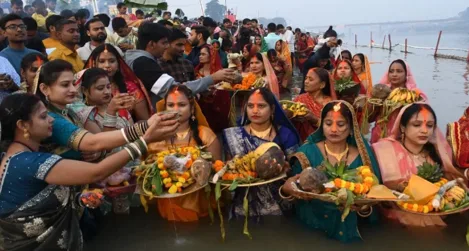
Chhath Puja, India’s ancient Sun God worship festival, has accelerated to take gigantic economic speed. In 2025, the festival aims to be worth more than Rs 50,000 crore in India, which represents tremendous growth compared to previous years. The increase demonstrates how much the festival has grown across the country, through even more participants, and with participants spending an even greater amount inside their homes, not to mention the government-supported development of infrastructure. Chhath Puja spread from its traditional areas in Bihar and eastern Uttar Pradesh to become an all-Indian festival that not only reinforces belief but inspires strong economic activity.
Fundamentally, Chhath Puja’s economic prowess lies in mass participation. In 2025, more than ten crore Indians actively practiced the rituals, aided by families, consumers, and service providers. Bihar accounted for nearly Rs 15,000 crore of local business, followed by Delhi, driven by its vast Purvanchali population celebrating on the banks of the Yamuna and specifically designed ghats, while Jharkhand contributed Rs 5,000 crore. The economics of the festival has spilled much farther from its traditional heartlands, with active trade being witnessed across Maharashtra, West Bengal, Madhya Pradesh, Rajasthan, and southern cities Bengaluru and Hyderabad, assisted by migrants and local worshippers. Most of this occurs because preparation and ritual extend for several weeks prior to the event. The Delhi government alone prepared 1,500 ghats along the Yamuna to welcome thousands of pilgrims, with proportionate-scaled investment in other cities improving cleanliness, security, and illumination to the benefit of construction companies, contractors, and event organizers. The mass migration during the festival season saw experienced trains, buses, and ride-hailing options fully booked, facilitating heavy growth in transportation and hotel sectors. Growth signifies alterations in both migration and social patterns families originally from Bihar and eastern Uttar Pradesh that are now residing in Delhi, Mumbai, and Bengaluru are continuing their celebrations of Chhath and creating new market places for traditional economies. Sweet shops will work late shifts just to have enough time to build up their stock of thekua and rice laddoos. There are numerous small and mid-sized businesses that do similar work. There is a frenzy in textile bazaars for sarees, lehengas, and dhotis when it is Chhath season. Beyond just the season, this frenzy infects all facets of production, supply chain, retail, logistics, etc., turning Chhath into a cultural and economic force. Infrastructure construction has grown with increasing economic power of Chhath Puja, changing urban and rural landscapes alike. The Delhi authorities alone prepared 1,500 ghats along Yamuna to welcome thousands of pilgrims, while proportionate investment in the other cities increased sanitation, security, and lighting to the benefit of the construction companies, contractors, and event organizers. The mass migration during the festival season saw experienced trains, buses, and ride-hailing completely booked, thereby recording high growth in transportation and hotel industries. Growth implies alteration in the pattern of migration as well as in the social pattern-the families originally from Bihar and eastern Uttar Pradesh and now staying in Delhi, Mumbai, and Bengaluru are continuing the celebration of Chhath and creating new marketplaces for traditional economies.
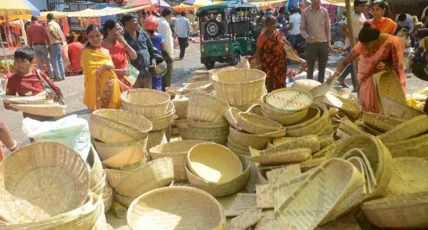
Seasonal migrants returning to their villages with remittances sent from opportunities in Gulf countries provide vital cash to their villages, stimulating significant economic activity from coastal areas of Mumbai to hill stations in Uttarakhand. The tuna-based activity remains the small ‘dukaan’ (shop) and local artisans are in demand. Demand for bamboo basketers, pots and jaggery producers peaks; demand for handspun, sustainable products creates a viable sustainable livelihood in the villages. Likewise, as India’s food and beverage industry expands, retailers, vendors, and caterers respond to rising demand for fruits, grains, milk-based and sweets, while satvik menus linked to Chhath encourage local niche sourcing possibilities for restaurants and home cooks. Festival expenditure is all-encompassing and has wide spread benefits, reaching clothing markets, flower vendors, and puja-accessory vendors, with decorative services, sound0 providers, and transport operators reaping the benefits of colorful community festivities and cultural events at ghats rendering Chhath, not only a faith festival, but an overall impetus to grassroots economic development.
The environment-friendly aspect of Chhath Puja continues to foster sustainability along with economic development. Its rituals stress the use of biodegradable stuff (for example, bamboo baskets, fruits, earthen-ware) and avoid, whenever possible, the use of plastics, promoting environmentally-friendly consumption. Sanitation drives clean rivers and ponds in advance of the festival, thus upgrading the local ecosystem and offering temporary jobs to sanitation workers. Government efforts have enhanced this effect further campaigns for the use of Swadeshi products fall hand-in-hand with Chhath tradition, as believers favor native products. The 2025 GST reforms lowering tax rates on items of mass consumption, easy festival shopping at lower prices, increased expenditure in markets, while digital participation has only increased the economic depth of Chhath coverage of the festival expenditure as a gauge of consumer mood, social media, and large-scale digital payments have increased visibility for small shopkeepers and craftsmen, fueling cashless, inclusive, and sustainable growth in urban and rural India.
Chhath Puja creates massive activity throughout the hospitality, entertainment, and transport industries, generating domestic and international interest. Train and bus networks observe additional services during the festival to meet millions of people traveling from metros to Bihar, Jharkhand, and eastern Uttar Pradesh, and hotels and guesthouses around major ghats run at full capacity. For app-based taxis and auto-rickshaws, this demand reaches all-time highs in urban towns like Delhi, especially during peak rates. Simultaneously, mobilized weeks in advance, services such as river cleaning, mobile toilets, security arrangements, water tankers, tents, and emergency medical support provide huge seasonal employment and a fillip to the local economy. The organized efficiency of the festival, as evidenced by clean ghats and stable infrastructure, has now become a template for the management of events in urban cities. Chhath Puja also has an international presence outside India, as diaspora populations in North America, Europe, the Middle East, and Australasia have been organizing similar festivals. But while most of its economic returns still remain local, increased global visibility fosters cultural diplomacy and has the potential to bring religious tourists to major sites in Bihar and Uttar Pradesh, which expands India’s cultural presence around the world.
Multiplier impacts of Chhath Puja are significant, stimulating growth in various industries of the Indian economy while maintaining strong cultural and religious roots. Seasonal revenues coming in during the festival allow artisans to invest gains, small enterprises to grow, transport operators to improve fleets, and street vendors to broaden products. Increased demand for farm produce of bananas, coconuts, sugarcane, and jiggery stimulates improved farm planning and sustains rural incomes. Local governments invest in religious and civic infrastructure through festival-related spending, accumulating long-term community capital. In addition to the economic contribution, there is the educational and cultural transmission component: schools, internet sites, and cultural organizations help to preserve customs, and the markets for books, devotional media, and handicrafts are growing. The locus of this change is also feminine: women as vratin, or sharp observers and central household decision-makers, influence patterns of consumption and power home-based businesses like sweet making, decoration, and micro-scale vending, putting income directly into households and fueling neighborhood entrepreneurship. Though modernized and commercially developed, Chhath Puja still maintains purity, discipline, and thanksgiving towards nature, with the use of natural material guaranteeing minimum environmental effects as its economic and social returns multiply generation after generation.
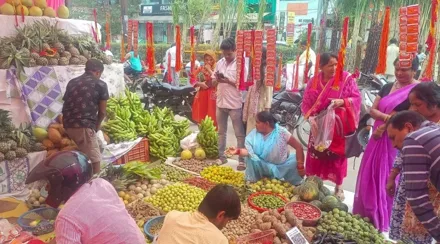
When compared to other great Indian festivals, the economic significance of Chhath Puja becomes evident in its increasing economic stature. While Diwali remains the largest contributor to festive spending, Chhath Puja and Durga Puja have now emerged as economic drivers in their own right. Sectoral forecasts for 2025 show Chhath spending at more than Rs 15,000 crore in food and beverage spending, Rs 8,000 crore in puja-related materials and decor, Rs 7,000 crore in garments and textiles, and greater than Rs 10,000 crore in infrastructure and services, contributing to greater than Rs 1 lakh crore overall autumn festive spending in India. The clear positive socio-economic impact of the festival continued to expand, despite challenges related to cleaning water bodies, crowd safety, and assistance to workers in the informal economy-is not only uplifting to contemplate, but intuitive given the capacity of ancient traditions to engender inclusive and sustainable change.
As participation, migration, disposable income, and pro-poor government policies expand, Chhath Puja can anticipate even more economic potential in the years ahead. Intentional investment in infrastructure, tourism and artisan well-being might go the extra mile in converting cultural festivalism into a sustainable economic power. Consequently, Chhath Puja 2025 is proof that India is capable of bringing together faith and development as Khudaibari’s spillover effects,-from rural villages to urban centers, from craftspeople to online marketplaces- are felt for days well beyond the ghats showcasing a living harmony between piety, economic exchange, and national development.