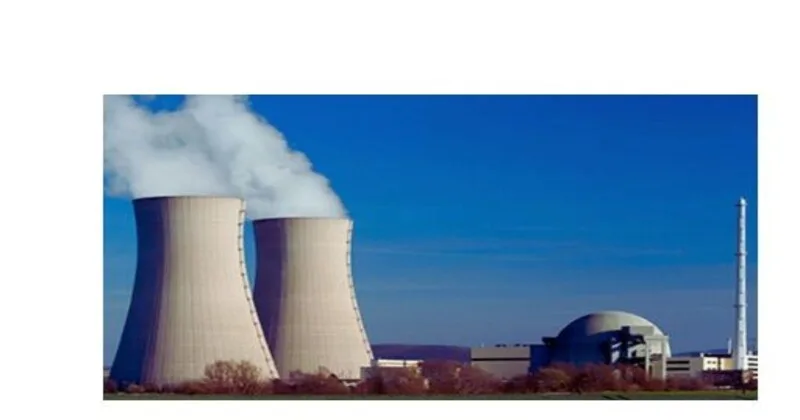
Bharat is about to create a new chapter in nuclear revolution with the construction of 200 MW, a compact nuclear reactor that are likely to redefine the way the country produces and distributes electricity. The scientists at the Bhabha Atomic Research Centre (BARC) are leading the innovation by creating Bharat Small Modular Reactors (BSMR) that are safe and efficient and also capable of being used on land and even in the ocean.
These reactors are milestone in the quest to increase the share of nuclear power in the national energy basket, by minimizing carbon dependence and providing reliable baseload power. “Nuclear power is produced by inducing nuclear fission to generate heat leading to electricity generation. This reactor can be relocated wherever you like even on an oceanic vessel,” explained senior government officials. It can also work as a compact powerhouse for Industry and Maritime.
The BARC design team is developing two small modular reactors (SMRs) one of them is 55 MW and another is of 200 MW capacity. The smaller reactors will serve energy-intensive industries like cement and steel production with dedicated captive power solutions that operate cleanly and continuously.
The huge traditional nuclear power plants need larges cooling systems and space, these tiny SMRs can be fabricated in modular forms and installed near consumption centers. Authorities have even suggested their possible application for powering merchant navy ships, quoting their high degree of safety and small size.
Though Bharat already has nuclear-powered submarines INS Arihant and INS Arighaat, both are powered with 83 MW reactors. The BSMRs are a step towards civilian and commercial applications of nuclear energy. INS Aridhaman a third submarine is in trials, with its steady development in indigenous nuclear propulsion capabilities.
Why Small Modular Reactors Matter
Small Modular Reactors are coming to be regarded as the nuclear energy frontier of the future around globe. They are safer, quicker to construct and more versatile than conventional gigawatt-sized reactors. More than 80 SMR designs are being worked on around the globe in United States to Russia and China, according to the International Atomic Energy Agency (IAEA).
As the country moves toward Net Zero emissions by 2070 it needs a reliable with clean energy source to complement solar and wind power. Nuclear energy with a capacity factor above 90% provides that stability. Bharat’s entry into this domain is timely
BARC modular concept also allows for rapid assembly of future plants and scaling up or down as required by energy demand. It’s a technology that is not only for Bharat, but perhaps for export to friendly developing countries that want cheap and safe nuclear power.
Policy Reforms Powering Nuclear Expansion
The government is set to modify the Atomic Energy Act (AEA), 1962 to facilitate private sector involvement in the civil nuclear energy space. This historic step would allow private players to run nuclear plants, invest in supply chains and manage the front end of the fuel cycle from procurement of uranium to running reactors. According to the proposed amendments, foreign sources of nuclear fuel could also be sourced by private players under clear return agreements for spent fuel management.
Parallel discussions are ongoing to streamline the Civil Liability for Nuclear Damage Act to provide a balanced regime for operators and suppliers. The revised draft is likely to limit supplier liability against mutually agreed contracts and define unequivocally what constitutes a “supplier” generally the person who supplies key reactor equipment.
These regulatory reforms can bring international partnerships and provide confidence to local players like Larsen & Toubro, Tata Projects and Hindustan Construction Company which all have experience in nuclear infrastructure in the past.
Road to 100 GW Nuclear Capacity by 2047
Prime Minister Narendra Modi has given an ambitious goal of raising Bharat nuclear power generation potential from the existing 8.8 GW to 100 GW by 2047, the year the country marks its centenary of independence.
To achieve that objective Bharat is working on a multi-layered approach increasing conventional reactors, fast breeder reactors and now the modular reactors. This long-term plan is being synchronized by the Department of Atomic Energy (DAE) in the Prime Minister’s Office, with the Nuclear Power Corporation of Bharat Limited (NPCIL), BARC and other research centers.
Bharat has 23 working nuclear reactors at seven sites, namely Tarapur, Kakrapar, Kalpakkam, Kaiga, Rawatbhata and Kudankulam with more in the pipeline. The 700 MW Pressurised Heavy Water Reactor (PHWR) project at Kakrapar and the 1,000 MW Russian-helmed units at Kudankulam are landmarks in indigenous as well as foreign collaboration.
The planned BSMR units would introduce a new form of distributed nuclear energy. They may be installed in clusters of smaller sizes along industrial corridors, providing scalability and safety. The government hopes these reactors will curtail the dependence on coal-based captive power plants by minimizing emissions and enhancing energy security.
Safety and Self-Reliance at the Core
BARC officials have emphasized that safety is the top concern in the design of BSMR. The involvement of reactors will utilize passive safety systems, which automatically halt operations in case of anomalies without requiring human action. They will also utilize low-enriched uranium fuel, which improves safety while meeting international standards.
Bharat nuclear programme from its start under Dr Homi Bhabha, has been based on the three-stage approach employing natural uranium, breeding plutonium and finally using thorium, for which Bharat possesses one of the world’s largest endowments. The BSMR plan is well within this vision of Aatmanirbhar Bharat (self-reliant India) by integrating local research with international collaboration.
A Global Vision in Nuclear Mission
According to the Ministry of Power and New & Renewable Energy, Bharat electricity need is expected to double by 2040. This will be met by expanding renewable and nuclear sources. Solar and wind will still be leaders but nuclear gives the stability required in a decarbonized grid.
In 2023 nuclear power contributed about 3% of Bharat electricity, but experts estimate that the BSMR rollout could triple that share within the next decade. Unlike large projects that require thousands of acres, these modular units will have minimal land footprints through allowing faster environmental clearances and local employment.
Bharat’s nuclear policy also has a significant diplomatic component. Through the Indo-US Civil Nuclear Agreement (2008) and other international safeguards, Bharat is able to participate in international nuclear trade. Small modular reactors make the country a possible exporter of secure, low-cost nuclear technology to energy-hungry countries in Asia and Africa.
Through the blending of innovation, policy renewal and strategic foresight, Bharat is constructing not only power stations but also a secure and sustainable energy future. The next 200 MW small reactors in BARC laboratories and fostered by national vision, may soon illuminate factories, power ships and drive Bharat green growth narrative for decades to come.