





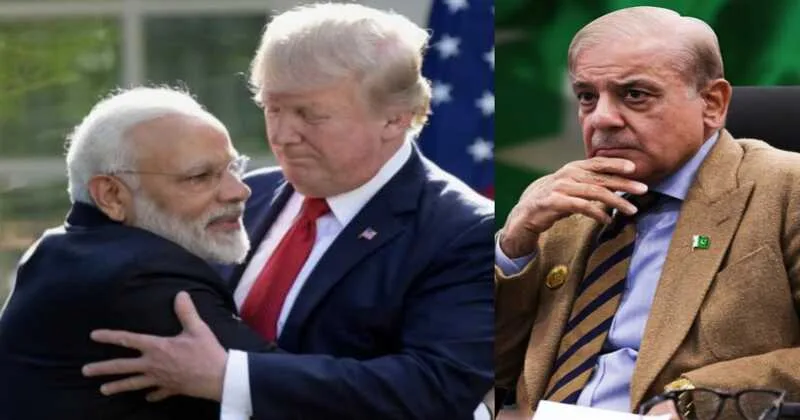
A long-awaited trade agreement between India and the United States is on the verge of completion, marking a potentially transformative moment in bilateral economic relations. The deal between the world’s largest democracy and the world’s largest economic power is seen as a crucial step toward ending the ongoing tariff war and strengthening the strategic and economic partnership between the two nations. The long-term objective of this pact is to raise bilateral trade from the current $191 billion to $500 billion by 2030. Once the agreement takes effect, it is expected to result in a significant reduction in tariffs, by as much as 50%, that were earlier imposed unilaterally by the United States. The new tariff rate is likely to hover around 15–16%, providing substantial relief to Indian exporters. The sectors set to benefit the most include textiles, gems and jewellery, engineering goods, and marine products, which have been key contributors to India’s export basket.
For Washington, the primary goal is to secure a greater foothold in the Indian market by negotiating lower tariffs on American agricultural products, medical equipment, and selected industrial goods. There are active discussions about granting market access in India for American corn and soybeans, which could provide a new boost to US farmers and agribusinesses. Beyond economics, the deal carries significant geopolitical weight. With US–China trade relations continuing to deteriorate, a stronger economic partnership with India, a trusted ally in the Indo-Pacific, is strategically vital for Washington. Strengthening trade with India will help the US diversify its global supply chains, reduce over dependence on China, and reinforce its presence in Asia’s rapidly growing markets.
However, the negotiations are not without friction. One of the key sticking points is the US demand for India to reduce its dependence on Russian oil. The US has indicated that the removal of high tariffs on Indian goods could depend on New Delhi’s willingness to cut back on energy imports from Moscow. In response, India is exploring the possibility of increasing oil imports from the US, which could help it diversify energy sources and secure competitive prices. However, India will follow a balancing approach, keeping strategic partnership with the US and its historical ties with Russia, particularly in the energy and defence sectors.
Other hurdles remain on the path to finalising the trade pact. India’s strict animal welfare laws and its opposition to genetically modified (GM) crops have become major obstacles for US agricultural exports. Moreover, India has taken a firm stand on intellectual property rights, particularly concerning pharmaceutical patents, and insists on protecting its micro, small, and medium enterprises (MSMEs) from market disruptions. Both sides are now seeking common ground to overcome these disagreements and create a mutually beneficial framework. The finalisation of this crucial deal will ultimately depend on the political will and flexibility of leadership in both countries.
Pakistan faces soaring prices and economic turmoil after Afghan clashes
Meanwhile, Pakistan is reeling under severe economic distress following its recent border conflict with Afghanistan. The closure of key border crossings after intense clashes has triggered a steep rise in the prices of essential commodities, deepening the crisis in an already fragile economy. The price of tomatoes in Pakistan has surged fivefold, reflecting the extent of disruption to cross-border trade. The hostilities, which broke out earlier this month, resulted in several casualties and prompted Islamabad to seal its 2,600-kilometre border with Afghanistan on October 11 following land skirmishes and air strikes. The decision effectively halted all commercial activity between the two countries, both of which depend heavily on each other for essential supplies.
According to Khan Jan Alokozay, head of the Pak-Afghan Chamber of Commerce, trade and transportation have come to a complete standstill. He estimated that both nations are losing about $1 million per day due to the shutdown. Annual bilateral trade between Pakistan and Afghanistan is valued at approximately $2.3 billion, with fruits, vegetables, minerals, medicines, wheat, rice, sugar, meat, and dairy products forming the bulk of traded goods. The price shock has hit Pakistani consumers hard. The cost of tomatoes, an essential cooking ingredient, has skyrocketed by over 400 per cent, reaching 600 Pakistani rupees ($2.13) per kilogram. Similarly, prices of apples imported from Afghanistan have risen sharply. Around 5,000 containers of goods are reportedly stranded at border points, worsening shortages in local markets. “There is already an acute shortage of tomatoes, apples, and grapes,” Alokozay noted, warning that the crisis could deepen if the impasse continues. The Pakistani Ministry of Commerce has yet to issue an official statement on the crisis.
Amid mounting economic losses, Pakistan and Afghanistan have signed a ceasefire agreement following talks held in Qatar, but cross-border trade remains suspended. The next round of negotiations is scheduled for October 25 in Istanbul, where both sides are expected to discuss reopening trade routes and easing tensions. The clashes were reportedly triggered by Islamabad’s demand that Kabul rein in militants allegedly operating from Afghan territory and launching attacks inside Pakistan. Pakistan claims that these groups are using safe havens across the border, a charge the Taliban administration has strongly denied. As diplomatic efforts continue, the border shutdown has become a major humanitarian and economic challenge, cutting off vital supplies of food and medicines and putting further strain on Pakistan’s struggling economy. The outcome of the Istanbul talks will be crucial in determining whether normalcy can be restored in the volatile region.














Comments