





Bread and butter are not the only things that sustain Humanity. It requires mental renewal and sustenance. Culture provides this. The entirety of human civilization includes religious culture. Hindu Dharmic and cultural tradition has been passed down through the generations, and festivals like Deepawali, Dusshera, and Holi are part of it. This is the scientific justification for these celebrations, but it must be demonstrated in your own mental laboratory rather than in a real one. The scientific rationale behind these festivals is that they are a great way to refresh your mind. In a spiritual sense, Deepavali represents the triumph of good over evil, and worshiping Bhagwan Ganesh and Lakshmi Mata is thought to bring luck, wealth, and success. Deepawali is observed for nearly five days in a row.Deepavali is historically observed on Naraka Chathurdasi day, whereas the rest of Bharat celebrates it on the next day, the no moon night (Amavasya). In some parts of South Bharat, this is known as Deepavali Bhogi. People wake up early to celebrate with oil baths, pooja, and festivals.
Deepawali celebrations offer spiritual, social, economic, scientific, and psychological benefits.
Seasonal date and agricultural cycle: Deepawali occurs in late autumn (often October-November). It corresponds with the conclusion of the harvest season for many crops in South Asia, making it an ideal time for thanksgiving, wealth settlement, inventory, and excess redistribution—all of which were significant in pre-industrial agrarian economies.
Social and economic synchronization: By coordinating economic activities markets, account settlement, and new business endeavors, the festival stabilizes credit connections and trade cycles, all of which are critical for community resilience.
With consumer spending expected to reach an all-time high of Rs 4.25 lakh crore in 2025 after reaching Rs 3.75 lakh crore in 2023, it creates a significant amount of economic activity. Millions of temporary jobs are created, with the biggest gains going to small firms, retail, and e-commerce. India’s GDP is greatly increased by the event, confirming its position as a key economic engine.
During Deepawali, there is a great sense of community. Families get closer, long-standing disputes are settled, and loved ones get together to rejoice, pray, and eat delicious cuisine. It emphasizes the value of family and the happiness that comes from spending time together. Needless to say Deepawali holds great economic importance. The entrepreneurs make a lot of money. In addition to many other items, people purchase clothing, jewelry, cars, candies, lamps, and rangoli. Old clothing is donated while new clothing is purchased. For Hindu/Sanatan Dharmic businessmen, the new fiscal year has begun as well.
Rituals involving light and fire: Lighting lamps and fireworks signaled the return of longer evenings following autumnal shifts and had utilitarian functions, such as illuminating lengthy community gatherings, promoting social cohesiveness, and removing insects from homes that were increased. In grain warehouses, conventional oil lights also lessen moisture and pests. Cleaning, fresh clothing, and domestic customs: Thorough cleaning and repainting prior to Deepawali lowers the amount of mold, microbiological growth, and pests (insects, rodents) in dwellings following the humid monsoon season. Wear-related contamination can be decreased by replacing utensils and materials.
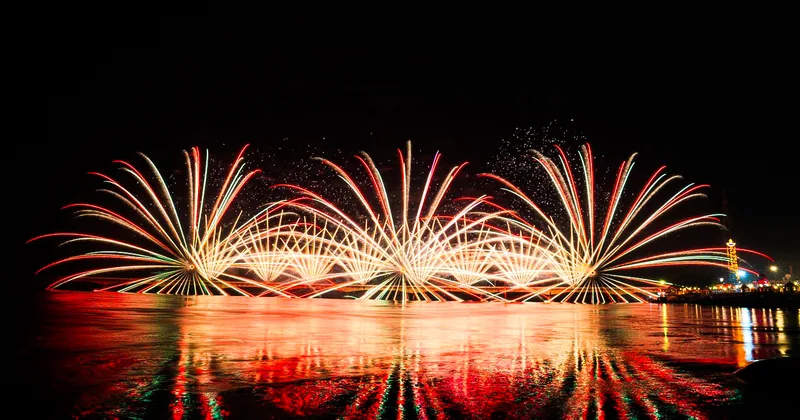
In Bharat, Deepawali is celebrated shortly before winter arrives. The purpose of the crackers and lamps is to increase the temperature. As a result of crackers burning, gasses filled the sky, absorbing more heat from the Sun and lessening the impact of cold. We light firecrackers at Deepawali to help us focus on the here and now. Have you ever had the feeling that your brain is going to explode when your mind is overloaded with cravings and aversions? We burst crackers for this reason; the external blast calms something inside, making you feel light and a live.
It is intended as a time to take stock of our current situation, our past actions, and our future goals. The lamp’s illumination represents the illumination of oneself. Yes, enlightenment is the message! On the eve of Deepawali, three primary gods are worshipped: Ganesh, Saraswati, and Lakshmi. Each of these deities symbolizes a spiritual concept. Ganesh is a symbol of intelligence and problem-solving skills. Since intelligence is required to solve any problem, he should be worshipped first. Saraswati is a symbol for wisdom and knowledge. Intelligence alone is insufficient. You must always be learning; you must be knowledgeable. Furthermore, wisdom is necessary; knowledge alone is insufficient.
Lakshmi is a symbol of prosperity and wealth. Money is not represented by Lakshmi, despite popular assumption. Kuber is in charge of money. Prosperity and wealth are intended in a comprehensive sense. total well-being of the body, mind, and spirit. It is about thriving in areas other than economics, science, or psychology. It has to do with thriving spiritually. We are symbolized by the lamp. The lamp will die if it does not receive oxygen, just as we will die if we do not receive oxygen. Our “Atma” has always been connected to light in Sanatan Dharm. The lamp’s illumination signifies the “Atma” becoming enlightened. The implication is that individuals must radiate happiness and success.
But we light more than one lamp. We light tens, hundreds, and thousands of lamps. We don’t want to be the only ones to shine. We want society as a whole to shine. Lighting a single bulb might not be enough to chase away the world’s darkness means ignorance/negativity. Deepawali is a symbol for the idea that we may see and feel the light all around us once the light of wisdom and knowledge burns from within. “Aappah Deepo Bhavah” is another statement made by Gautam Buddha. According to his teaching, true essence comes when you shine with knowledge and wisdom as well, illuminating the lives of many others.
Social and psychological well-being: Group lighting, visiting, and gift-giving enhance communal trust, lessen loneliness, and develop social ties—all of which have been related in studies to mental health. Deepawali is a very significant spiritual holiday. Like New Year’s resolutions, it’s a time to purify the soul and let go of negativity. Deepawali encourages us to ignite the positive light and drive out the inner darkness.
It is intended to serve as a gathering place for family members who might not otherwise have the opportunity to see one another. People can escape boredom and loneliness because to this. You get holidays, don’t you? It’s intended to help you unwind mentally, physically, and spiritually. The goal is to cultivate the idea that “all worlds are one family,” or “Vasudhaiv Kutumbakam.” In addition to celebrating the festival of joy and prosperity, you are expected to extend forgiveness to your enemies and even to your adversaries however be aware and alert with a victorious mindset to defeat the enemies of our great culture and nation. Its goal is to instill the values of generosity and cleanliness. Cleaning your home and workplace is also linked to psychological benefits, such as clearing your own conscience and thoughts.
Rishi Patanjali stated, “Murdha jyotishi siddha darshanam,” in the Yoga Sutras (Vibhuti pada 32). It implies that numerous siddhis will be awakened and that you will achieve liberation once you acknowledge the light (divine) inside yourself. It will light up your soul.
Let us celebrate the festival of unity and strength, and bring the entire nation together under the banner of “Bharatiyatva” to strengthen humanity. Shubh Deepavali to everyone.
















Comments