Strategic significance of the Afghan Foreign Minister visit to India
June 26, 2026
  • Read Ecopy
  • Circulation
  • Advertise
  • Careers
  • About Us
  • Contact Us
Android AppiPhone AppArattai
Organiser
  • ‌
  • Bharat
    • Assam
    • Bihar
    • Chhattisgarh
    • Jharkhand
    • Maharashtra
    • View All States
  • World
    • Asia
    • Europe
    • North America
    • South America
    • Africa
    • Australia
  • Editorial
  • International
  • Opinion
  • RSS @ 100
  • More
    • Op Sindoor
    • Analysis
    • Sports
    • Defence
    • Politics
    • Business
    • Economy
    • Culture
    • Special Report
    • Sci & Tech
    • Entertainment
    • G20
    • Azadi Ka Amrit Mahotsav
    • Vocal4Local
    • Web Stories
    • Education
    • Employment
    • Books
    • Interviews
    • Travel
    • Law
    • Health
    • Obituary
  • Subscribe
    • Subscribe Print Edition
    • Subscribe Ecopy
    • Read Ecopy
  • ‌
  • Bharat
    • Assam
    • Bihar
    • Chhattisgarh
    • Jharkhand
    • Maharashtra
    • View All States
  • World
    • Asia
    • Europe
    • North America
    • South America
    • Africa
    • Australia
  • Editorial
  • International
  • Opinion
  • RSS @ 100
  • More
    • Op Sindoor
    • Analysis
    • Sports
    • Defence
    • Politics
    • Business
    • Economy
    • Culture
    • Special Report
    • Sci & Tech
    • Entertainment
    • G20
    • Azadi Ka Amrit Mahotsav
    • Vocal4Local
    • Web Stories
    • Education
    • Employment
    • Books
    • Interviews
    • Travel
    • Law
    • Health
    • Obituary
  • Subscribe
    • Subscribe Print Edition
    • Subscribe Ecopy
    • Read Ecopy
Organiser
  • Home
  • Bharat
  • World
  • Operation Sindoor
  • Editorial
  • Analysis
  • Opinion
  • Culture
  • Defence
  • International Edition
  • RSS @ 100
  • Magazine
  • Read Ecopy
Home World

The strategic significance of the Afghan Foreign Minister visit to India

The visit by the Afghan Foreign Minister was not just a diplomatic formality — rather it was an indication of South Asia's changing power structure, resource politics and strategic equations. Afghanistan's minerals, especially lithium, are no longer just underground wealth — they have become the new linchpin of the global economy

Gajendra SinghGajendra Singh
Oct 18, 2025, 09:00 pm IST
in World, South Asia, India, Asia
Follow on Google News
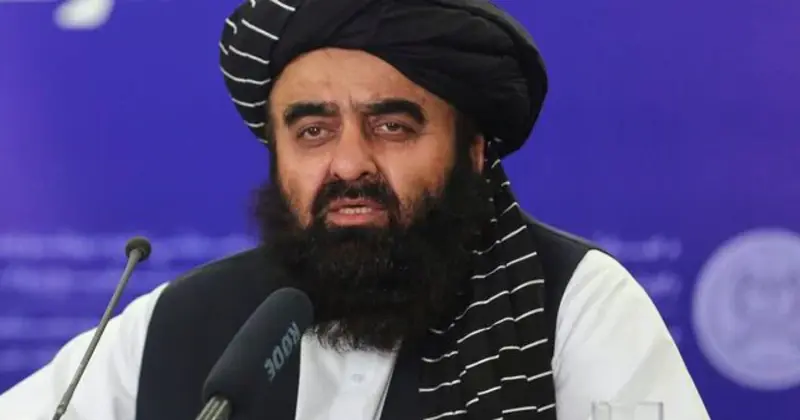
Foreign Minister of Afghanistan Amir Khan Muttaqi

Foreign Minister of Afghanistan Amir Khan Muttaqi

FacebookTwitterWhatsAppTelegramEmail

Amid ongoing social media trends, women journalists in Delhi made a powerful statement for women’s rights and dignity by attending the Afghan Foreign Minister’s press conference at the Afghan Embassy without wearing the hijab.  In such a situation, the question arises – was this visit of the Afghan Foreign Minister just a diplomatic meeting or is there a bigger game going on behind it in the geopolitical strategy of South Asia? Was there a deliberate attempt by some sections to create controversy during this visit, so as to divert the attention from the real issues of geopolitical bargain? In fact, just few days before coming to India, Afghan Foreign Minister Aamir Khan Muttaqi had said: “We have invited India to invest in Afghanistan’s mineral and energy sector. For these rare minerals, the Western countries and the Trump administration are eyeing Pakistan – sometimes by intimidation, sometimes by cajoling and sometimes by luring, in an effort to further their interests.

Afghanistan’s mineral sector is not only vast but also very important from a strategic point of view. According to a report by the US Geological Survey, Afghanistan has mineral resources worth about ₹83 lakh crore. These include lithium, copper, iron, cobalt, gold and rare earth elements. Large reserves of lithium and copper have been found in particular in the provinces of Ghazni, Herat and Logar—which have become the focus of the global race for lithium, the so-called “white oil” of the 21st century. Since the withdrawal of the Taliban rule in 2021, China, Russia and Iran have intensified efforts to increase their economic-strategic influence in the region. In 2023, Chinese company Xinjiang Central Asia Petroleum and Gas Company signed a $540 million contract for oil extraction in Afghanistan’s Amu Darya Basin. Similarly, China Metallurgical Corporation of China recently got the green light to restart the Mes Aynak copper project — believed to be one of the largest disused copper mines in the world. Western countries are also not behind. The EU has classified Afghanistan as a “potential supply source” in its “Critical Raw Materials Act” for 2024. According to a US Department of Energy report (2023), “If Afghanistan provides stable governance and a secure investment framework, it could become the next global hub of the lithium supply chain.

This situation has brought both opportunities and challenges for India. India’s lithium import dependence is more than 95%. Given the increasing demand for electric vehicles and energy storage by 2030, Afghanistan can become a long-term strategic partner for India. India had earlier also proposed investment in Hajigak iron mine project in 2011, but it was stopped due to security reasons. Now Taliban is showing a “pragmatic investment” attitude towards India, which opens a new diplomatic window. This partnership with Afghanistan can provide an opportunity to convert India’s soft power into strategic power. India’s “humanitarian assistance” can now evolve into an “economic reconstruction” dimension — strengthening India’s credibility not only in South Asia but also in Central Asia.

This visit is not just bilateral but is part of the geopolitical realignment of South Asia. Since 2021, China has “accelerated Pakistan-Afghan connectivity under the Belt and Road Initiative; while India has stepped up diplomatic efforts towards strengthening alternative access to Afghanistan through the Chabahar Port and the International North-South Transit Corridor. Amidst all this, Afghanistan’s mineral wealth is emerging as a long-term strategic prize —  that indeed has potential to redefine superpower competition, energy security and economic impact.

Also Read: US lawmaker hails Indian women journalists for boldly voicing for their rights during Afghan FM Muttaqi press meet

However, this strategic opportunity also comes with some serious risks: the Taliban regime still lacks international recognition and stability. The local instability make any foreign investment unsafe. Direct mining operations are extremely risky for India. China is already investing in the Afghan mining sector and has practical advantages in security, logistics and border access. Any effort by India will have to either compete with China or indirectly balance it—which will be a long-term strategic challenge. India does not formally recognize the Taliban regime. In such a situation, questions may arise in the international community (especially western countries) regarding economic partnership.

The visit by the Afghan Foreign Minister was not just a diplomatic formality — rather it was an indication of South Asia’s changing power structure, resource politics and strategic equations. Afghanistan’s minerals, especially lithium, are no longer just underground wealth — they have become the new linchpin of the global economy. It is time for India to move forward with its diplomatic acumen, strategic prudence and a balance of regional cooperation — so that this “mineral diplomacy” becomes the foundation of the future and not a part of someone else’s strategy.


Topics: Afghan Foreign Minister Amir Khan MuttaqiIndiaAfghanistanBilateral relationsDiplomatic Visit
ShareTweetSendShareSend
✮ Subscribe Organiser YouTube Channel. ✮
✮ Join Organiser's WhatsApp channel for Nationalist views beyond the news. ✮
Previous News

Tamil Nadu: Hindu organisations slam state govt’s Deepawali firecracker time restrictions as discriminatory

Next News

Bangladesh: Fire breaks out at Dhaka Airport, all flight operations suspended

Related News

The Emergency: India’s darkest chapter, the struggle for democracy and the ban on the RSS

Exposing Western Media’s Climate Hypocrisy: When Europe burns it’s just weather, When India heats up it’s a crisis

UAE President Sheikh Mohamed bin Zayed Al Nahyan and Prime Minister Narendra Modi(File Photo)

UAE to buy BrahMos & Akashteer: Big win for India’s defence ecosystem to seal regional security amid West Asia crisis

United States Trade Representative Jamieson Greer and Union Commerce and Industry Minister Piyush Goyal

India-US Trade Agreement: Historic deal enters final stretch as USTR Jamieson Greer heads to New Delhi

Universities Adopt ‘Bharat’ on Degrees and Certificates

Madhya Pradesh: ‘Bharat’ replaces ‘India’ on degrees as academic institutions reclaim ancient identity

Representative Image

Europe’s Supremacy: A manufactured narrative imposed via colonial power is counterd by India’s civilizational memory

Load More

Latest News

Tension escalated in Uttarakhand after a group of Nihang Sikhs allegedly breached police barricades at state border

Uttarakhand: Nihang Sikhs breach police barricades, trigger massive security alert across the state

Massive explosion rocks Agartala Apartment

Tripura Blast: Massive explosion in Agartala apartment leaves several injured, probe underway

Joint Drill being held by security forces in Arunachal Pradesh

Arunachal Pradesh: Army-ITBP joint drill boosts border security readiness

Tamil Nadu: ED raids 21 sites in probe into 2017 TRB polytechnic lecturer recruitment scam, freezes 56 bank accounts

FCRA 2026: Centre bans foreign funds for religious conversion activities (This is an AI generated image)

FCRA 2026: Centre bans use of foreign funds for religious conversion, tightens NGO oversight

Uttar Pradesh's education system undergoes transformation under Yogi government

Uttar Pradesh’s Education Sector’s Transformation Story: From access to excellence under the Yogi government

Mounting debt and shrinking revenues are forcing Beijing to rethink the size and structure of its sprawling bureaucracy

China’s Economic Crisis Reaches the Bureaucracy: Beijing downgrades officials amid debt and fiscal strain

Y.D. Manjunath, Additional Excise Commissioner and brother-in-law of Karnataka PWD Minister Satish Jarkiholi

ED raids Karnataka Excise Dept officials: Rs 13.3 Cr seized, Minister Satish Jarkiholi’s brother-in-law under scanner

Former -DMK Minister EV Velu (File Photo)

Tamil Nadu: Anti-graft agency raids 13 locations linked to ex-DMK Minister EV Velu over alleged contract irregularities

Government introduces AIR SUVIDHA portal following WHO Ebola emergency for international travellers

Load More
  • Privacy
  • Terms
  • Cookie Policy
  • Refund and Cancellation
  • Delivery and Shipping

© Bharat Prakashan (Delhi) Limited.
Tech-enabled by Ananthapuri Technologies

  • Home
  • Search Organiser
  • Bharat
    • Assam
    • Bihar
    • Chhattisgarh
    • Jharkhand
    • Maharashtra
    • View All States
  • World
    • Asia
    • Africa
    • North America
    • South America
    • Europe
    • Australia
  • Editorial
  • Operation Sindoor
  • Opinion
  • Analysis
  • Defence
  • Culture
  • Sports
  • Business
  • RSS @ 100
  • Entertainment
  • More ..
    • Sci & Tech
    • Vocal4Local
    • Special Report
    • Education
    • Employment
    • Books
    • Interviews
    • Travel
    • Health
    • Politics
    • Law
    • Economy
    • Obituary
  • Subscribe Magazine
  • Read Ecopy
  • Advertise
  • Circulation
  • Careers
  • About Us
  • Contact Us
  • Policies & Terms
    • Privacy Policy
    • Cookie Policy
    • Refund and Cancellation
    • Terms of Use

© Bharat Prakashan (Delhi) Limited.
Tech-enabled by Ananthapuri Technologies