Strategic significance of the Afghan Foreign Minister visit to India
December 5, 2025
  • Read Ecopy
  • Circulation
  • Advertise
  • Careers
  • About Us
  • Contact Us
Android AppiPhone AppArattai
Organiser
  • ‌
  • Bharat
    • Assam
    • Bihar
    • Chhattisgarh
    • Jharkhand
    • Maharashtra
    • View All States
  • World
    • Asia
    • Europe
    • North America
    • South America
    • Africa
    • Australia
  • Editorial
  • International
  • Opinion
  • RSS @ 100
  • More
    • Op Sindoor
    • Analysis
    • Sports
    • Defence
    • Politics
    • Business
    • Economy
    • Culture
    • Special Report
    • Sci & Tech
    • Entertainment
    • G20
    • Azadi Ka Amrit Mahotsav
    • Vocal4Local
    • Web Stories
    • Education
    • Employment
    • Books
    • Interviews
    • Travel
    • Law
    • Health
    • Obituary
  • Subscribe
    • Subscribe Print Edition
    • Subscribe Ecopy
    • Read Ecopy
  • ‌
  • Bharat
    • Assam
    • Bihar
    • Chhattisgarh
    • Jharkhand
    • Maharashtra
    • View All States
  • World
    • Asia
    • Europe
    • North America
    • South America
    • Africa
    • Australia
  • Editorial
  • International
  • Opinion
  • RSS @ 100
  • More
    • Op Sindoor
    • Analysis
    • Sports
    • Defence
    • Politics
    • Business
    • Economy
    • Culture
    • Special Report
    • Sci & Tech
    • Entertainment
    • G20
    • Azadi Ka Amrit Mahotsav
    • Vocal4Local
    • Web Stories
    • Education
    • Employment
    • Books
    • Interviews
    • Travel
    • Law
    • Health
    • Obituary
  • Subscribe
    • Subscribe Print Edition
    • Subscribe Ecopy
    • Read Ecopy
Organiser
  • Home
  • Bharat
  • World
  • Operation Sindoor
  • Editorial
  • Analysis
  • Opinion
  • Culture
  • Defence
  • International Edition
  • RSS @ 100
  • Magazine
  • Read Ecopy
Home World

The strategic significance of the Afghan Foreign Minister visit to India

The visit by the Afghan Foreign Minister was not just a diplomatic formality — rather it was an indication of South Asia's changing power structure, resource politics and strategic equations. Afghanistan's minerals, especially lithium, are no longer just underground wealth — they have become the new linchpin of the global economy

Gajendra SinghGajendra Singh
Oct 18, 2025, 09:00 pm IST
in World, South Asia, India, Asia
Follow on Google News
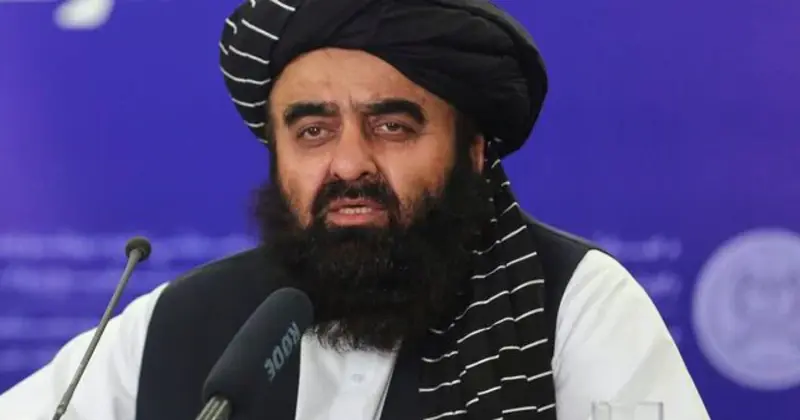
Foreign Minister of Afghanistan Amir Khan Muttaqi

Foreign Minister of Afghanistan Amir Khan Muttaqi

FacebookTwitterWhatsAppTelegramEmail

Amid ongoing social media trends, women journalists in Delhi made a powerful statement for women’s rights and dignity by attending the Afghan Foreign Minister’s press conference at the Afghan Embassy without wearing the hijab.  In such a situation, the question arises – was this visit of the Afghan Foreign Minister just a diplomatic meeting or is there a bigger game going on behind it in the geopolitical strategy of South Asia? Was there a deliberate attempt by some sections to create controversy during this visit, so as to divert the attention from the real issues of geopolitical bargain? In fact, just few days before coming to India, Afghan Foreign Minister Aamir Khan Muttaqi had said: “We have invited India to invest in Afghanistan’s mineral and energy sector. For these rare minerals, the Western countries and the Trump administration are eyeing Pakistan – sometimes by intimidation, sometimes by cajoling and sometimes by luring, in an effort to further their interests.

Afghanistan’s mineral sector is not only vast but also very important from a strategic point of view. According to a report by the US Geological Survey, Afghanistan has mineral resources worth about ₹83 lakh crore. These include lithium, copper, iron, cobalt, gold and rare earth elements. Large reserves of lithium and copper have been found in particular in the provinces of Ghazni, Herat and Logar—which have become the focus of the global race for lithium, the so-called “white oil” of the 21st century. Since the withdrawal of the Taliban rule in 2021, China, Russia and Iran have intensified efforts to increase their economic-strategic influence in the region. In 2023, Chinese company Xinjiang Central Asia Petroleum and Gas Company signed a $540 million contract for oil extraction in Afghanistan’s Amu Darya Basin. Similarly, China Metallurgical Corporation of China recently got the green light to restart the Mes Aynak copper project — believed to be one of the largest disused copper mines in the world. Western countries are also not behind. The EU has classified Afghanistan as a “potential supply source” in its “Critical Raw Materials Act” for 2024. According to a US Department of Energy report (2023), “If Afghanistan provides stable governance and a secure investment framework, it could become the next global hub of the lithium supply chain.

This situation has brought both opportunities and challenges for India. India’s lithium import dependence is more than 95%. Given the increasing demand for electric vehicles and energy storage by 2030, Afghanistan can become a long-term strategic partner for India. India had earlier also proposed investment in Hajigak iron mine project in 2011, but it was stopped due to security reasons. Now Taliban is showing a “pragmatic investment” attitude towards India, which opens a new diplomatic window. This partnership with Afghanistan can provide an opportunity to convert India’s soft power into strategic power. India’s “humanitarian assistance” can now evolve into an “economic reconstruction” dimension — strengthening India’s credibility not only in South Asia but also in Central Asia.

This visit is not just bilateral but is part of the geopolitical realignment of South Asia. Since 2021, China has “accelerated Pakistan-Afghan connectivity under the Belt and Road Initiative; while India has stepped up diplomatic efforts towards strengthening alternative access to Afghanistan through the Chabahar Port and the International North-South Transit Corridor. Amidst all this, Afghanistan’s mineral wealth is emerging as a long-term strategic prize —  that indeed has potential to redefine superpower competition, energy security and economic impact.

Also Read: US lawmaker hails Indian women journalists for boldly voicing for their rights during Afghan FM Muttaqi press meet

However, this strategic opportunity also comes with some serious risks: the Taliban regime still lacks international recognition and stability. The local instability make any foreign investment unsafe. Direct mining operations are extremely risky for India. China is already investing in the Afghan mining sector and has practical advantages in security, logistics and border access. Any effort by India will have to either compete with China or indirectly balance it—which will be a long-term strategic challenge. India does not formally recognize the Taliban regime. In such a situation, questions may arise in the international community (especially western countries) regarding economic partnership.

The visit by the Afghan Foreign Minister was not just a diplomatic formality — rather it was an indication of South Asia’s changing power structure, resource politics and strategic equations. Afghanistan’s minerals, especially lithium, are no longer just underground wealth — they have become the new linchpin of the global economy. It is time for India to move forward with its diplomatic acumen, strategic prudence and a balance of regional cooperation — so that this “mineral diplomacy” becomes the foundation of the future and not a part of someone else’s strategy.
Topics: Diplomatic VisitAfghan Foreign Minister Amir Khan MuttaqiIndiaAfghanistanBilateral relations
ShareTweetSendShareSend
✮ Subscribe Organiser YouTube Channel. ✮
✮ Join Organiser's WhatsApp channel for Nationalist views beyond the news. ✮
Previous News

Tamil Nadu: Hindu organisations slam state govt’s Deepawali firecracker time restrictions as discriminatory

Next News

Bangladesh: Fire breaks out at Dhaka Airport, all flight operations suspended

Related News

Prime Minister Narendra Modi and Russian President Vladimir Putin

India on the side of “peace” in Russia-Ukraine conflict, PM Modi asserts for swift peaceful solution

Russian Economic Development Minister Maxim Reshetnikov and Commerce and Industry Minister Piyush Goyal

Piyush Goyal holds talks with Russian counterpart, discusses cooperation in textiles, automobiles and agriculture

Prime Minister Narendra Modi and Russian President Vladimir Putin(File Photo)

President Putin hails leadership of PM Modi, says, India has right to buy Russian oil just like the US

Pakistan's Prime Minister Shehbaz Sharif Afganistan's Foreign Minister Amir Muttaqi and India's Foreign Minister S Jaishankar

Afghanistan rebukes Pakistan, defends right to build stronger ties with India

Kremlin Spokesperson Dimitry Peskov

“We respect the position of PM Modi”, Kremlin Spokesperson says on the stance of India in the Russia-Ukraine conflict

Russian President Vladimir Putin and Prime Minister Narendra Modi

Reminiscing India-Russia Relations: A testament for strategic autonomy & timetested trust in the great power playbook

Load More

Comments

The comments posted here/below/in the given space are not on behalf of Organiser. The person posting the comment will be in sole ownership of its responsibility. According to the central government's IT rules, obscene or offensive statement made against a person, religion, community or nation is a punishable offense, and legal action would be taken against people who indulge in such activities.

Latest News

Fact Check: Rahul Gandhi false claim about govt blocking his meet with Russian President Putin exposed; MEA clears air

Union Minister for Road Transport and Highways Nitin Gadkari (Right)

India set for highway overhaul as Union Minister Nitin Gadkari unveils nationwide shift to MLFF electronic tolling

RSS Akhil Bharatiya Prachar Pramukh Shri Sunil Ambekar

When Narrative Wars result in bloodshed, countering them becomes imperative: Sunil Ambekar

Ministry of Civil Aviation mandates emergency action: IndiGo ordered to stabilise flight operations by midnight

Chhattisgarh CM Vishnu Deo Sai at Panchjanya Conclave, Nava Raipur, Image Courtesy - Chhattisgarh govt

Panchjanya Conclave: Chhattisgarh CM Sai shares views on development projects in Maoist hotbed, women empowerment

Union Finance Minister Nirmala Sitharaman

‘TMC is holding Bengal back’: Sitharaman slams Mamata govt over industrial & healthcare setbacks

Karnataka: Muslim youth Mohammed Usman accused of sexual assault, blackmail & forced conversion in Bengaluru

Social Justice Is a cover; Anti-Sanatana dharma is the DMK’s real face at Thirupparankundram

Karnataka: Hindus demand reclaiming of Anjaneya Mandir at the site of Jamia Masjid; Setting wrongs of Tipu Sultan right

Assam govt proscribes all forms of Jihadi literatures in state; Islamic terror groups trying to recruit Muslim youth

Load More
  • Privacy
  • Terms
  • Cookie Policy
  • Refund and Cancellation
  • Delivery and Shipping

© Bharat Prakashan (Delhi) Limited.
Tech-enabled by Ananthapuri Technologies

  • Home
  • Search Organiser
  • Bharat
    • Assam
    • Bihar
    • Chhattisgarh
    • Jharkhand
    • Maharashtra
    • View All States
  • World
    • Asia
    • Africa
    • North America
    • South America
    • Europe
    • Australia
  • Editorial
  • Operation Sindoor
  • Opinion
  • Analysis
  • Defence
  • Culture
  • Sports
  • Business
  • RSS @ 100
  • Entertainment
  • More ..
    • Sci & Tech
    • Vocal4Local
    • Special Report
    • Education
    • Employment
    • Books
    • Interviews
    • Travel
    • Health
    • Politics
    • Law
    • Economy
    • Obituary
  • Subscribe Magazine
  • Read Ecopy
  • Advertise
  • Circulation
  • Careers
  • About Us
  • Contact Us
  • Policies & Terms
    • Privacy Policy
    • Cookie Policy
    • Refund and Cancellation
    • Terms of Use

© Bharat Prakashan (Delhi) Limited.
Tech-enabled by Ananthapuri Technologies