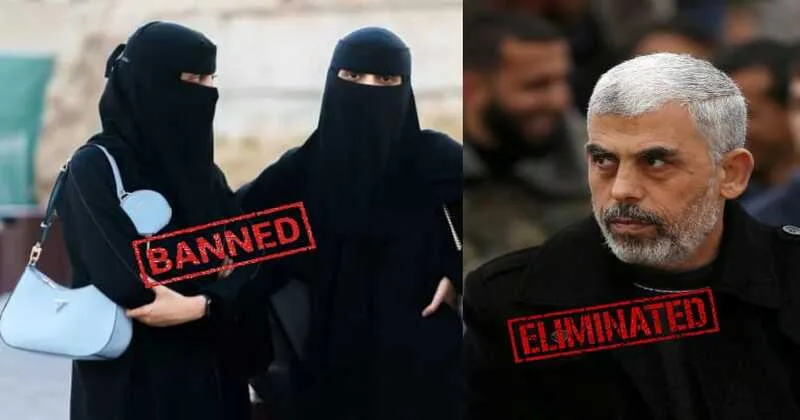
In a decisive week against Islamic extremism, two landmark developments have unfolded across continents, Italy has introduced a bill to ban burqas and niqabs in public places, while Hamas has been forced to accept a US-brokered peace plan in Gaza, ending two years of relentless conflict. Together, these moves mark a strong global pushback against radical Islamist ideologies that have long challenged state authority and social cohesion.
In Europe, Italian Prime Minister Giorgia Meloni’s government has unveiled a bill aimed at banning the wearing of burqas and niqabs across the nation. Introduced by Meloni’s nationalist ‘Brothers of Italy’ party, the legislation is presented as a measure to curb Islamic separatism and the spread of fundamentalist ideology. Backed by the nationalist coalition’s comfortable majority in parliament, the bill is expected to pass without major resistance. Once enacted, the law will prohibit the use of full-face coverings such as burqas and niqabs in public spaces, including offices, shops, schools, and universities. Violators will face fines ranging from 260 to 2,600 euros. The legislation also introduces tougher penalties for practices labelled as ‘cultural crimes,’ such as virginity tests and forced marriages, acts often defended under religious pretexts. Under the proposed law, religious coercion will be considered valid evidence in criminal proceedings.
“The spread of Islamic fundamentalism is a breeding ground for Islamist terrorism,” the draft states, underscoring the government’s intent to root out ideological extremism that threatens national unity and public security. The bill further mandates that all mosques and Islamic educational institutions disclose their sources of foreign funding, specifically prohibiting financial support from unapproved or potentially subversive entities. While some regions, like Lombardy, had already restricted face coverings in public buildings since 2015, this legislation extends the ban nationwide, symbolising Italy’s commitment to defending its secular values and preventing parallel religious enclaves from taking root within its borders.
Trump-brokered Gaza peace deal forces Hamas to surrender hostages
At the same time, in West Asia, another critical front of Islamic militancy witnessed a dramatic turn. The Israeli government has officially approved a historic peace and hostage swap agreement, effectively ending two years of anti-terrorists operations in Gaza. The deal, brokered by US President Donald Trump, will see all 20 surviving Israeli hostages released by Monday in exchange for a phased ceasefire and a structured Israeli military withdrawal from Gaza along fixed borders.
Israeli Prime Minister Benjamin Netanyahu’s office confirmed the development, announcing, “The government has approved a framework for the release of all hostages, both living and dead.” The move, finalized just days after the second anniversary of the October 7 massacre, marks a rare diplomatic breakthrough following 734 days of violence and uncertainty. Despite internal opposition from nationalist parties demanding the elimination of Hamas rule, Netanyahu secured approval by reaffirming that the Islamist group’s authority would ultimately be dismantled. Celebrations erupted in Tel Aviv’s Hostages Square as the news spread, with citizens hailing the agreement as the first real step toward restoring peace and stability after years of extremist terror.
From Rome to Gaza, these parallel developments signal a growing global resolve to confront and contain Islamic extremism, through legislation, diplomacy, and direct action, reaffirming the determination of democratic governments to defend their people and principles against radical ideologies.